
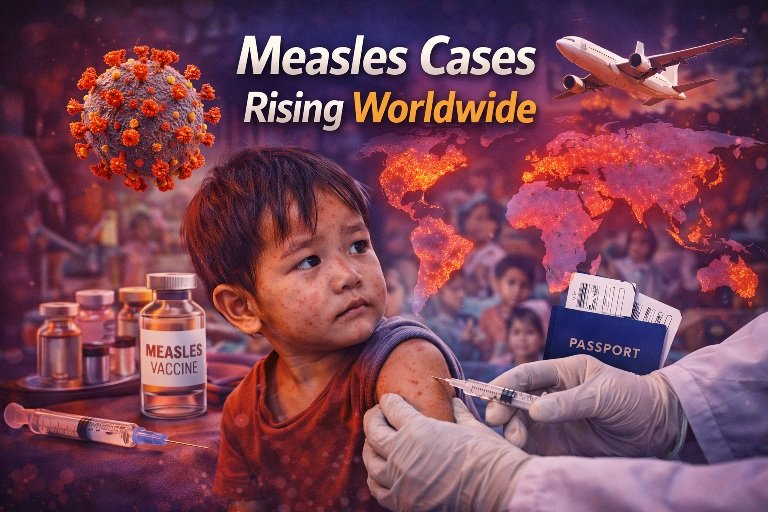

Over the past few years, health experts have been sounding the alarm about a worrying trend: Measles Cases Rising Worldwide. A disease once considered nearly eliminated in many countries is now reappearing across continents, causing outbreaks, hospitalizations, and public health emergencies.
Measles is not a new disease. In fact, it has existed for centuries. But thanks to widespread vaccination programs introduced in the 20th century, measles deaths dropped dramatically. The World Health Organization estimates that measles vaccination saved nearly 59 million lives since 2000, reducing global deaths by about 88%.
However, recent data shows a troubling shift. In many countries, Measles Cases Rising Worldwide have become a significant concern again due to declining vaccination coverage, international travel, and disruptions in health systems.
This article explores why Measles Cases Rising Worldwide, what risks it poses to global health, and what governments and communities can do to stop the spread.
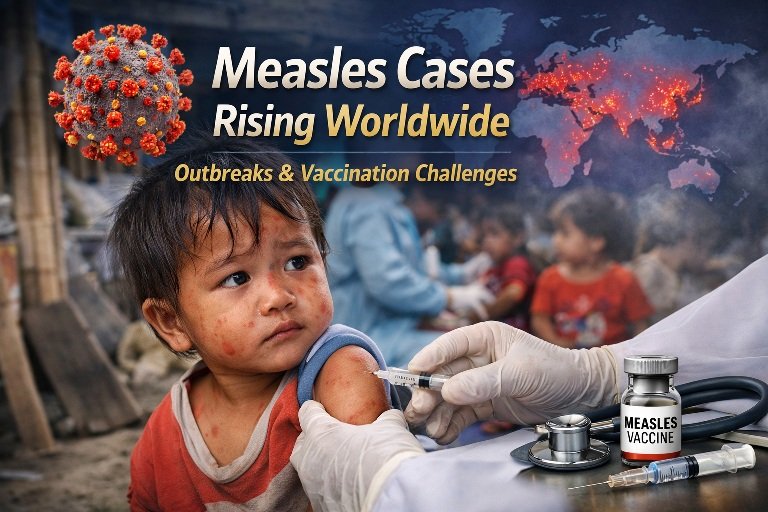
Understanding the Disease Behind Measles Cases Rising Worldwide
To understand why Measles Cases Rising Worldwide, we must first understand the disease itself.Measles is a highly contagious viral infection that primarily affects children but can infect people of any age. It spreads through airborne droplets when an infected person coughs, sneezes, or breathes.
Once infected, the virus attacks the respiratory system and spreads throughout the body.
Common Symptoms of Measles
The early signs of measles can look similar to the flu, which often delays diagnosis.
Typical symptoms include:
- High fever
- Persistent cough
- Runny nose
- Red, watery eyes
- White spots inside the mouth (Koplik spots)
- A red rash that spreads across the body
In severe cases, measles can lead to complications such as:
- Pneumonia
- Brain swelling (encephalitis)
- Severe dehydration
- Blindness
- Death in rare cases
Because measles spreads so easily, even a small drop in vaccination rates can cause outbreaks. This is one of the main reasons Measles Cases Rising Worldwide has become a serious concern.
The Global Trend: Why Measles Cases Rising Worldwide
The phrase Measles Cases Rising Worldwide is not just a headline — it reflects a real global public health trend.
Over the last five years, measles outbreaks have occurred in more than 100 countries, affecting regions across Asia, Africa, Europe, and the Americas.
In 2024 alone, health agencies estimated around 11 million measles infections globally, showing that the disease continues to spread widely despite available vaccines.
Several major factors explain why Measles Cases Rising Worldwide today.
Declining Vaccination Rates
The most important factor behind Measles Cases Rising Worldwide is falling vaccination coverage.
To prevent measles outbreaks, about 95% of the population must receive two doses of the measles vaccine.
But in many regions, vaccination rates have dropped below that threshold.
This decline has happened due to:
- Vaccine misinformation
- Fear of side effects
- Reduced access to healthcare
- Distrust in medical systems
When vaccination rates fall, communities lose “herd immunity.” That means the virus can spread rapidly among unvaccinated populations.
Disruptions During the COVID-19 Pandemic
Another major reason Measles Cases Rising Worldwide is the disruption of routine vaccination programs during the COVID-19 pandemic.
Many countries paused or delayed childhood immunization campaigns because healthcare systems were overwhelmed.
As a result:
- Millions of children missed their measles vaccine doses.
- Some communities went years without proper immunization programs.
Experts estimate that over 20 million children missed their first measles vaccine dose in 2024 alone, creating immunity gaps that allowed outbreaks to occur.
These immunity gaps are now fueling the global resurgence.
International Travel and Virus Importation
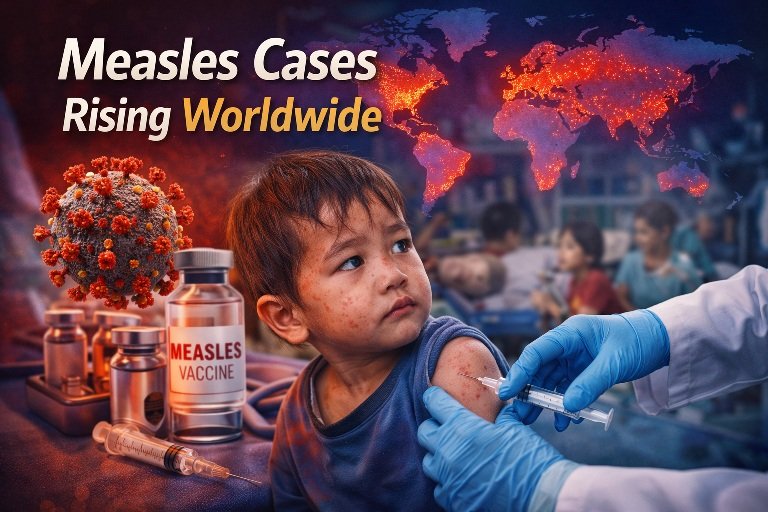
Travel has also played a significant role in why Measles Cases Rising Worldwide.
Even countries that eliminated measles decades ago still face risk from imported infections.
For example:
- Travelers infected abroad can bring the virus back home.
- Once inside communities with low vaccination rates, outbreaks can begin.
Recent reports show measles infections in Australia linked to travel from Southeast Asia, highlighting how quickly the virus can spread across borders.
In today’s interconnected world, infectious diseases can move from one continent to another within hours.
Vaccine Hesitancy
Another critical factor behind Measles Cases Rising Worldwide is vaccine hesitancy.
Vaccine hesitancy refers to people delaying or refusing vaccines despite availability. This phenomenon has grown due to misinformation circulating online.
Common misconceptions include:
- False claims about vaccine safety
- Conspiracy theories about vaccines
- Distrust in pharmaceutical companies
These beliefs have created pockets of unvaccinated populations where measles can spread easily.
Studies show vaccine hesitancy is one of the key drivers of recent measles outbreaks globally.
Major Countries Experiencing Measles Cases Rising Worldwide
Although measles affects many regions, certain countries have seen particularly severe outbreaks.
Understanding these examples helps illustrate the scale of Measles Cases Rising Worldwide.
United States
The United States declared measles eliminated in 2000 due to high vaccination coverage.
However, outbreaks have returned.
Recent reports show measles cases exceeding 1,200 infections nationwide, with multiple outbreaks across states.
In South Carolina alone, a large outbreak reached nearly 1,000 cases, mostly among unvaccinated children.
This situation demonstrates how quickly measles can return when vaccination rates decline.
United Kingdom
The United Kingdom has also seen Measles Cases Rising Worldwide reflected in domestic outbreaks.
Health authorities reported a 21% increase in measles cases within one week, mostly affecting children under 10 years old.
Some regions have even considered banning unvaccinated children from schools during outbreaks to prevent further transmission.
Americas
Across the Americas, several countries have experienced large outbreaks.
Between January and April 2025:
- Over 2,300 measles cases were reported across six countries.
- The majority occurred in Canada, Mexico, and the United States.
Children under five years old were among the most affected age groups.
Asia and Southeast Asia
Asia remains one of the most important regions in the global measles situation.
Some countries experience repeated outbreaks due to population density, uneven healthcare access, and vaccination coverage gaps.
Travel-linked infections from Southeast Asia have contributed to cases in several developed countries as well.
This illustrates how Measles Cases Rising Worldwide is truly a global issue rather than a regional one.
Why Measles Spreads So Easily
One reason Measles Cases Rising Worldwide is particularly concerning is the virus’s extreme contagiousness.
Measles has one of the highest transmission rates of any infectious disease.
Its reproduction number (R0) is estimated between 12 and 18, meaning one infected person can spread the virus to up to 18 others in a susceptible population.
To put this into perspective:
- Seasonal flu has an R0 around 1–2.
- COVID-19 originally had an R0 of around 2–3.
Because measles spreads so easily, outbreaks can escalate rapidly if vaccination coverage drops even slightly.
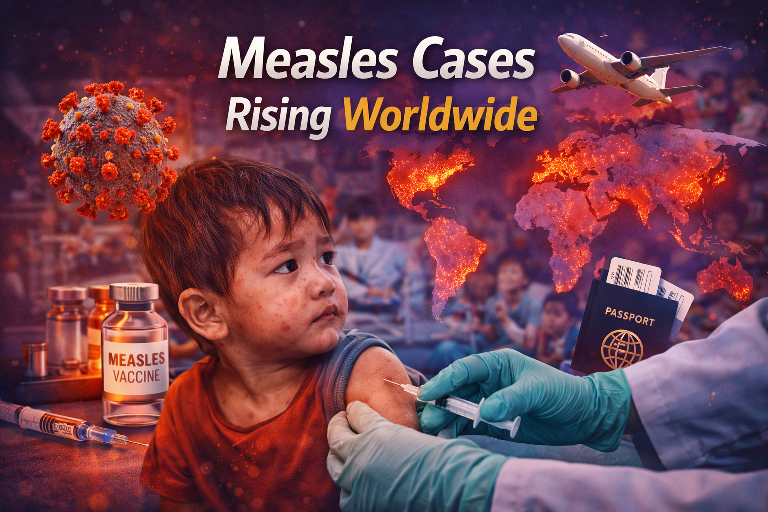
Who Is Most at Risk as Measles Cases Rising Worldwide
Although anyone can get measles, some groups face higher risks.
Children Under Five
Young children are the most vulnerable because their immune systems are still developing.
Complications like pneumonia and brain inflammation are more common in young patients.
Unvaccinated Individuals
People who have not received the measles vaccine are the most likely to become infected.
During recent outbreaks, more than 90% of cases occurred in unvaccinated individuals.
Pregnant Women
Pregnant women infected with measles face increased risks including premature birth or miscarriage.
People With Weak Immune Systems
Individuals undergoing cancer treatment or living with immune disorders may experience severe complications.
These vulnerable populations are why Measles Cases Rising Worldwide is such a serious concern for public health officials.
The Economic Impact of Measles Outbreaks
Beyond health consequences, Measles Cases Rising Worldwide also carries significant economic costs.
Managing outbreaks requires:
- Emergency vaccination campaigns
- Hospital treatment
- Contact tracing
- Public health communication
In the United States alone, measles outbreaks cost an estimated $244 million in 2025, highlighting the financial burden on healthcare systems.
These costs could increase if outbreaks become more frequent.
How Vaccination Stops Measles Cases Rising Worldwide
The good news is that measles is preventable.
The MMR vaccine (measles, mumps, rubella) is one of the most effective vaccines ever developed.
Two doses provide about 97–99% protection against measles infection.
Recommended Vaccination Schedule
Most countries follow a similar vaccination timeline:
- First dose: around 9–12 months of age
- Second dose: around 15–18 months or before school entry
Maintaining high vaccination coverage is the most important strategy to stop Measles Cases Rising Worldwide.
Global Health Efforts to Control Measles
Health organizations around the world are actively working to stop Measles Cases Rising Worldwide.
These efforts involve collaboration between governments, international agencies, and local communities.
Major Initiatives Include
- Expanded vaccination campaigns
- Emergency outbreak responses
- Improved disease surveillance
- Public education campaigns
Organizations like the World Health Organization, UNICEF, and Gavi play major roles in funding and coordinating immunization programs worldwide.
The Role of Public Awareness
One often overlooked factor in preventing Measles Cases Rising Worldwide is public awareness.
Education campaigns can help communities understand:
- Why vaccination matters
- How measles spreads
- When to seek medical care
When communities trust healthcare information, vaccination rates increase and outbreaks decline.
What Individuals Can Do to Prevent Measles
While governments and global organizations lead large-scale prevention efforts, individuals also play an important role.
Here are simple steps people can take:
- Ensure children receive both doses of the measles vaccine
- Check vaccination records before international travel
- Avoid close contact with infected individuals
- Follow local public health guidance during outbreaks
These actions help reduce the risk of Measles Cases Rising Worldwide.
The Future Outlook
Despite the current surge, experts believe measles can still be controlled.
The vaccine already exists, and public health systems know how to prevent outbreaks.
However, success depends on rebuilding vaccination coverage and addressing vaccine hesitancy.
If countries restore strong immunization programs and improve global cooperation, the trend of Measles Cases Rising Worldwide can be reversed.
But if vaccination rates continue to fall, measles could once again become one of the world’s most dangerous childhood diseases.
Conclusion
The recent surge in Measles Cases Rising Worldwide serves as a reminder that infectious diseases can return if public health protections weaken.
Measles was once close to elimination in many parts of the world. Yet declining vaccination rates, misinformation, and global travel have allowed the virus to re-emerge.
The solution is clear: strong immunization programs, accurate public information, and global cooperation.
With the right strategies, the world can once again push measles toward elimination — and ensure that future generations are protected from this preventable disease.



Nice Article