
If you think cyberattacks are just about hackers trying random tricks, think again. The reality in 2025 has shifted dramatically—and nowhere is this clearer than in the UAE DDoS attacks triple H2 2025 trend that has shocked cybersecurity experts and businesses alike.
We’re not just talking about “more attacks.” We’re talking about smarter, longer, and more dangerous campaigns that are rewriting the rules of digital security.
So what’s actually going on? And more importantly—should you be worried?
Let’s break it down in plain English.

The big headline: What happened in H2 2025?
The phrase UAE DDoS attacks triple H2 2025 isn’t just a catchy headline—it reflects a real, data-backed surge in cyber threats.
According to recent cybersecurity reports:
- DDoS incidents jumped from 3,477 in H1 to over 10,000 in H2 2025
- Attack duration increased from 27 minutes to nearly 12 hours
- Campaigns became multi-layered and highly coordinated
That’s not just growth—it’s an evolution.
And honestly? That’s the more concerning part.
What exactly is a DDoS attack (and why should you care)?
Let’s simplify things.
A DDoS (Distributed Denial-of-Service) attack is like a digital traffic jam—except it’s intentional.
Imagine thousands (or even millions) of fake users flooding a website or server at the same time. The system gets overwhelmed… and crashes.
Now imagine that happening to:
- Banks
- Government portals
- E-commerce platforms
- Telecom networks
That’s exactly what’s happening behind the UAE DDoS attacks triple H2 2025 surge.
Why did attacks triple in the UAE?
So, what triggered this sudden spike?
It wasn’t just one factor—it was a perfect storm.
1. Rapid digital growth
The UAE is one of the most digitally advanced economies in the Middle East. More digital services = more attack surfaces.
- Smart cities
- Cloud infrastructure
- Online banking
- E-government systems
All of these create opportunities for attackers.
2. High-value targets
Cybercriminals go where the money is.
In H2 2025, the most targeted sectors included:
- Telecommunications (over 6,000 incidents)
- Cloud and hosting services
- Finance and retail
Why? Because disrupting these sectors causes maximum chaos.
3. Rise of botnets and AI-powered attacks
This is where things get scary.
Modern attacks aren’t run manually—they’re automated using:
- Massive botnets (thousands of infected devices)
- AI-driven attack tools
- DDoS-for-hire services
Some botnets in 2025 grew 4× larger than previous years .
So yes, launching a cyberattack has become easier than ever.
4. Shift in attacker motivation
Earlier, many attacks were politically motivated.
But in H2 2025?
- Financial extortion became dominant
- Businesses were targeted for ransom
- Attackers aimed for downtime, not just disruption
This shift explains why UAE DDoS attacks triple H2 2025 became such a major concern.
The real shocker: Attacks aren’t just bigger—they’re smarter
Here’s the twist.
Cybersecurity experts say size is no longer the main issue.
Instead, attackers are using:
Multi-vector attacks
Instead of one method, attackers combine multiple techniques:
- Network flooding
- Application-layer attacks
- Protocol exploitation
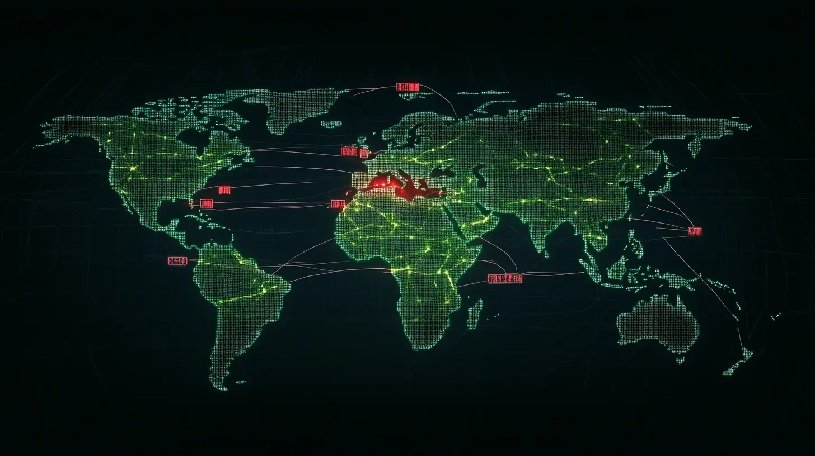
These increased by 92% in 2025 .
Carpet bombing strategies
Rather than targeting one server, attackers hit entire networks.
Result?
- Harder to detect
- Harder to block
- More widespread damage
Probing before attacking
Attackers now “test” systems first.
They:
- Send small traffic bursts
- Identify weaknesses
- Launch precise attacks later
This makes defenses much less effective.
Why longer attack durations are a big deal
Earlier, most attacks lasted under 30 minutes.
Now?
They can stretch to 12 hours or more .
That changes everything.
Here’s why:
- IT teams get exhausted
- Systems face prolonged strain
- Revenue losses multiply
- Customer trust drops
In simple terms: longer attacks = bigger damage.
Industries most affected in the UAE
The UAE DDoS attacks triple H2 2025 trend didn’t hit all sectors equally.
Top impacted industries:
1. Telecommunications
The backbone of digital connectivity.
When telecom networks are attacked:
- Internet slows down
- Services fail
- Entire ecosystems are affected
2. Financial services
Banks and fintech platforms became prime targets.
Why?
- Direct financial gain
- High dependency on uptime
3. Retail and e-commerce
Online businesses saw increased attacks, especially during peak sales periods.
Even a few minutes of downtime = huge losses.
4. Cloud and hosting providers
Attacking these providers affects multiple businesses at once.
That’s maximum impact with minimal effort.
Global context: It’s not just the UAE
While the UAE saw a major spike, this is part of a global trend.
- Over 8 million DDoS attacks recorded worldwide in H2 2025
- Attack sizes reached 30 Tbps (record-breaking scale)
- AI tools are increasingly used by attackers
So yes, the UAE is a hotspot—but the problem is global.
How these attacks impact everyday users
You might be thinking: “I’m not a company, why should I care?”
Fair question.
Here’s how it affects you:
- Banking apps may stop working
- Online shopping sites crash
- Government services go offline
- Internet speeds drop
Basically, your digital life gets disrupted.
The hidden cost of DDoS attacks
The damage goes far beyond downtime.
Businesses face:
- Revenue loss
- Brand reputation damage
- Customer churn
- Legal risks
And here’s the kicker—many companies underestimate the impact until it’s too late.
How organizations can defend themselves
Now the important part: what can be done?
To counter the UAE DDoS attacks triple H2 2025 trend, companies must upgrade their defenses.
Key strategies:
- Real-time traffic monitoring
- AI-based threat detection
- Scalable cloud protection systems
- Redundant network infrastructure
Early detection is everything
Since attacks now last longer, detecting them early is critical.
The sooner you respond:
- The less damage occurs
- The faster recovery happens
Automation is no longer optional
Manual defense systems can’t keep up anymore.
Organizations need:
- Automated mitigation tools
- Self-learning security systems
- Continuous monitoring

The future of DDoS attacks in the UAE
Let’s be real—the trend isn’t slowing down.
Experts predict:
- More AI-powered attacks
- Larger botnets
- Increased targeting of mid-sized businesses
If anything, the UAE DDoS attacks triple H2 2025 phase might just be the beginning.
What makes this trend different from the past?
Earlier, cybersecurity was reactive.
Now?
It has to be proactive.
Key differences in 2025:
- Attacks are planned, not random
- Campaigns are long-lasting
- Tools are more accessible
- Targets are broader
This is a completely new era of cyber threats.
A quick reality check
Let’s summarize what’s really happening:
- Attacks tripled in just six months
- Duration increased massively
- Complexity skyrocketed
- More industries are being targeted
And most importantly—attackers are getting smarter.
Final thoughts
The phrase UAE DDoS attacks triple H2 2025 isn’t just a statistic—it’s a warning sign.
A warning that:
- Cyber threats are evolving rapidly
- Traditional defenses are no longer enough
- Every digital business is at risk
Whether you’re running a startup, managing a large enterprise, or simply using online services daily—this shift matters.