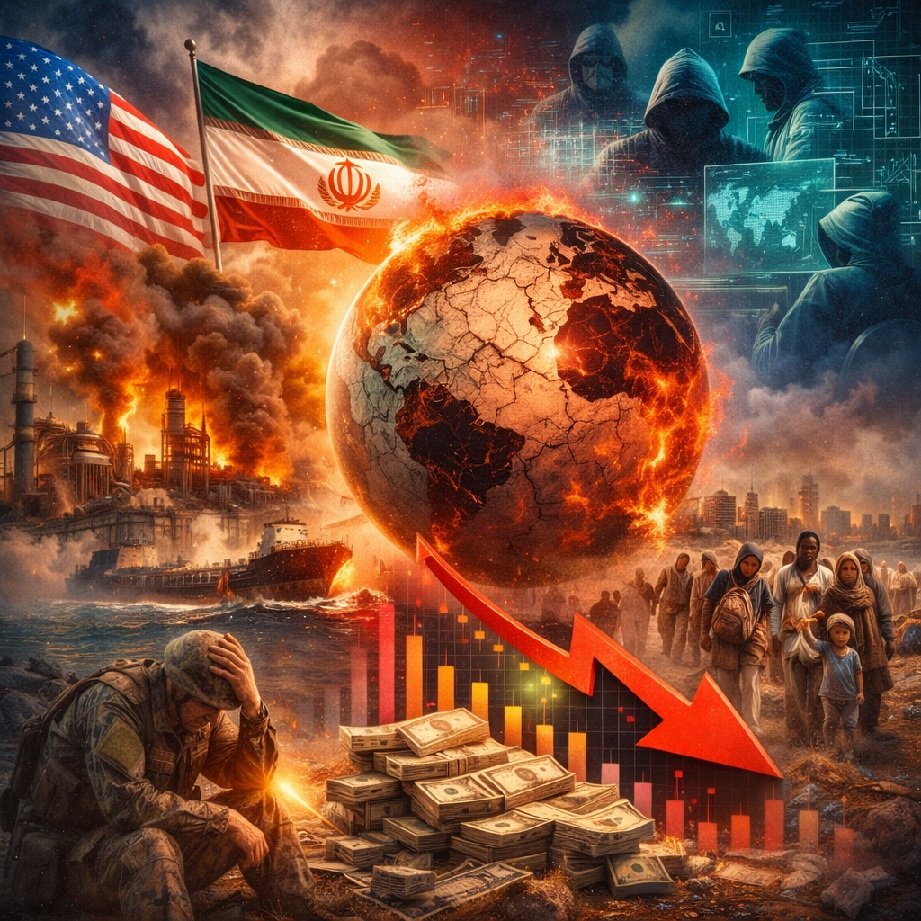

When people talk about war, they often focus on the immediate headlines—missiles, troop movements, and political speeches. But the real story usually unfolds years later. The long term damage US Iran war scenario isn’t just about battlefield outcomes—it’s about ripple effects that reshape economies, alliances, and even everyday life across the globe.
So what actually happens when two powerful nations like the United States and Iran engage in a prolonged conflict? Let’s break it down in a way that feels real, not textbook-heavy.
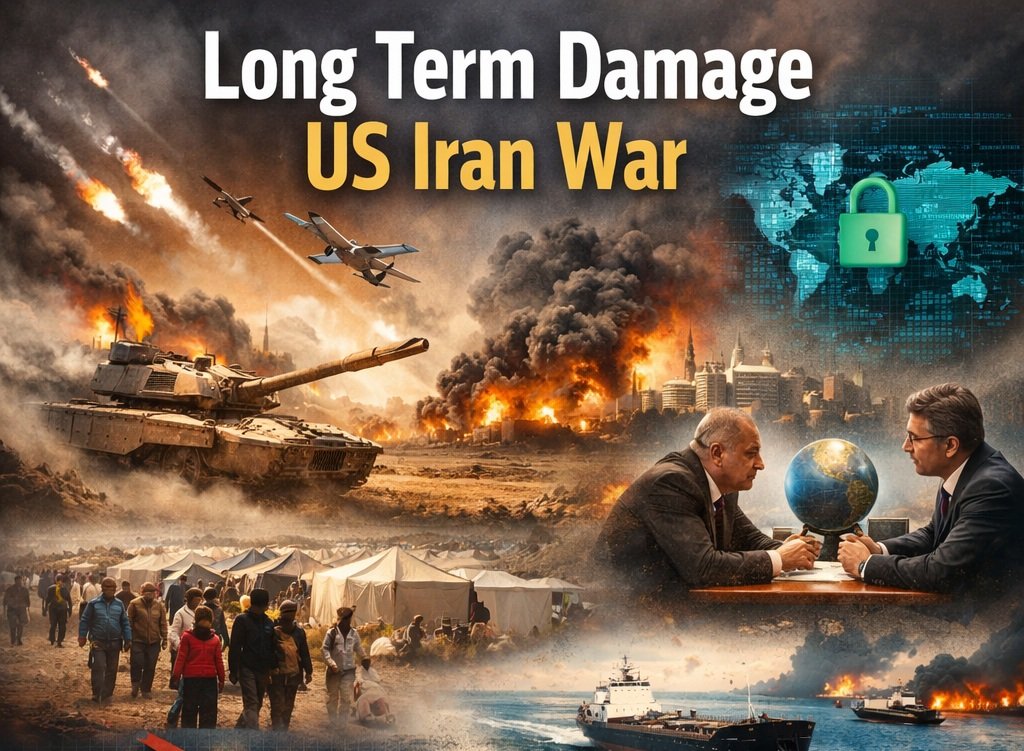
Understanding the Bigger Picture
At first glance, a war might look like a series of tactical wins or losses. But zoom out, and you’ll notice something deeper: wars between major geopolitical players rarely end cleanly.
The long term damage US Iran war scenario would likely extend far beyond the Middle East, affecting global systems that most people don’t even think about daily—like oil supply chains, international trade routes, and financial markets.
Why This Conflict Is Different
Unlike smaller regional conflicts, this one involves:
- A global superpower with vast military reach
- A strategically positioned regional power with influence across the Middle East
- Critical energy corridors that the world depends on
This combination makes the consequences far more complex—and long-lasting.
Economic Fallout That Doesn’t Fade Quickly
One of the most immediate yet persistent consequences of war is economic disruption. But here’s the twist: the real damage often shows up years after the fighting slows down.
The long term damage US Iran war would likely trigger a chain reaction across global markets.
Oil Prices and Energy Shock
Iran sits near the Strait of Hormuz, one of the world’s most critical oil chokepoints. Any disruption here could:
- Spike global oil prices dramatically
- Increase transportation and manufacturing costs
- Lead to inflation in multiple countries
And inflation, as we all know, doesn’t politely go away overnight.
Impact on the US Economy
Even though the U.S. is less dependent on Middle Eastern oil than before, it wouldn’t escape unscathed.
- Military spending would surge
- National debt could increase significantly
- Domestic programs might face funding cuts
In short, the long term damage US Iran war could quietly reshape economic priorities within the U.S. itself.
Iran’s Economic Collapse Risk
Iran’s economy, already under sanctions pressure, would face:
- Severe infrastructure destruction
- Currency devaluation
- Long-term unemployment spikes
This creates a situation where recovery could take decades, not years.
Political Instability Across Regions
War doesn’t just destroy buildings—it destabilizes entire political systems.
The long term damage US Iran war would likely create a power vacuum in parts of the Middle East, leading to unpredictable consequences.
Rise of Proxy Conflicts
Iran has strong ties with various groups across the region. A direct conflict could:
- Intensify proxy wars in countries like Iraq, Syria, and Yemen
- Increase regional fragmentation
- Make diplomatic resolutions harder to achieve
Strained Alliances
The U.S. would also face challenges with its allies.
- European nations might resist prolonged involvement
- Asian economies dependent on oil may push for neutrality
- Regional allies could be dragged deeper into conflict
This tension would contribute significantly to the long term damage US Iran war in diplomatic terms.
Military Consequences Beyond the Battlefield
Let’s be honest—modern wars aren’t just fought with tanks and jets anymore.
Asymmetric Warfare
Iran has developed strategies that don’t rely on traditional military strength.
- Cyberattacks targeting infrastructure
- Naval disruptions in strategic waterways
- Use of regional allies for indirect attacks
These tactics ensure that even if conventional fighting ends, the conflict continues in other forms.
US Military Overstretch
The U.S. already maintains a global military presence. A prolonged war would:
- Stretch resources thin
- Increase fatigue among personnel
- Reduce readiness in other regions
All of this adds to the long term damage US Iran war from a defense perspective.
Humanitarian Crisis and Social Impact
This is where things hit closer to home. Beyond geopolitics, real people bear the cost.
Civilian Displacement
War often forces millions to leave their homes.
- Refugee crises would likely expand
- Neighboring countries could become overwhelmed
- Long-term resettlement challenges would arise
Generational Trauma
Children growing up in war zones face:
- Interrupted education
- Psychological stress
- Limited economic opportunities
These effects don’t just disappear—they shape societies for decades.
The long term damage US Iran war in human terms might be the most heartbreaking aspect of all.
Global Trade Disruptions
Think about how interconnected the world is today. A conflict in one region can affect supply chains globally.
Shipping and Logistics
The Strait of Hormuz again becomes a focal point.
- Delays in shipping routes
- Increased insurance costs for cargo
- Disruptions in global supply chains
Impact on Developing Nations
Countries that rely heavily on imports would feel the pressure the most.
- Rising food prices
- Energy shortages
- Economic instability
These cascading effects reinforce the long term damage US Iran war on a global scale.
Technological and Cyber Warfare Expansion
Modern warfare increasingly includes digital battlegrounds.
Cybersecurity Threats
Both nations have cyber capabilities that could target:
- Financial systems
- Power grids
- Communication networks
Long-Term Digital Instability
Even after physical conflict ends:
- Cyber threats could persist
- Trust in digital systems might decline
- Governments may increase surveillance
This adds another layer to the long term damage US Iran war, one that’s harder to see but equally impactful.

Environmental Consequences
War leaves scars not just on people, but on the planet.
Oil Spills and Pollution
Damage to oil infrastructure could result in:
- Massive spills
- Air pollution from fires
- Long-term ecological damage
Infrastructure Destruction
Rebuilding cities isn’t just expensive—it’s environmentally costly.
- Increased carbon emissions
- Waste management challenges
- Loss of natural habitats
The environmental side of the long term damage US Iran war often gets overlooked, but it’s significant.
Impact on Global Power Balance
Here’s where things get really interesting.
Shift in Influence
A prolonged conflict could allow other global powers to step in.
- China might expand economic influence
- Russia could strengthen regional ties
- Emerging powers may reposition themselves
Weakening of Global Institutions
Organizations meant to maintain peace might struggle to respond effectively.
- Reduced trust in international systems
- Increased unilateral actions by nations
This geopolitical shift is a major part of the long term damage US Iran war.
Cultural and Social Division
War narratives don’t stay confined to borders.
Rising Nationalism
Both countries could experience:
- Increased patriotic sentiment
- Reduced tolerance for opposing views
- Polarization within societies
Media and Information Wars
Misinformation campaigns could:
- Shape public opinion
- Influence elections
- Deepen global divides
These social consequences contribute heavily to the long term damage US Iran war beyond physical destruction.
Reconstruction Challenges
Ending a war is one thing. Rebuilding afterward is another story entirely.
Financial Burden
Reconstruction costs could reach hundreds of billions.
- Infrastructure rebuilding
- Healthcare systems restoration
- Education system recovery
Governance Issues
Post-war governance often struggles with:
- Corruption
- Lack of stability
- External interference
These factors ensure that the long term damage US Iran war doesn’t just fade away—it lingers.
Lessons from Past Conflicts
History offers valuable insights.
Iraq and Afghanistan Comparisons
Previous U.S. engagements show:
- Long-term military presence doesn’t guarantee stability
- Nation-building is complex and unpredictable
- Economic costs often exceed initial estimates
These lessons highlight how the long term damage US Iran war could follow a similar trajectory—if not worse.
Psychological Impact on Soldiers and Citizens
War changes people, often permanently.
Veteran Challenges
Returning soldiers may face:
- PTSD
- Difficulty reintegrating into civilian life
- Long-term healthcare needs
Civilian Mental Health
Populations exposed to conflict experience:
- Anxiety and depression
- Loss of trust in institutions
- Social fragmentation
This emotional toll is a critical part of the long term damage US Iran war.

Media Influence and Public Perception
How people understand the war matters almost as much as the war itself.
Narrative Control
Governments and media outlets shape the story.
- Selective reporting
- Propaganda efforts
- Framing of victories and losses
Long-Term Trust Issues
Over time, this can lead to:
- Distrust in media
- Confusion about facts
- Increased polarization
Again, the long term damage US Iran war extends into how societies think and communicate.
Conclusion
War between the United States and Iran wouldn’t just be another chapter in geopolitical history—it would be a defining moment with consequences stretching across decades.
The long term damage US Iran war is not limited to one country, one region, or one generation. It’s a complex web of economic strain, political instability, human suffering, and global transformation.
And perhaps the most important takeaway? The real cost of war is rarely visible at the beginning. It reveals itself slowly, quietly, and often when it’s already too late to undo the damage.
The reality of a long term damage US Iran war goes far beyond immediate conflict headlines. While short-term outcomes might show tactical victories or strategic gains, the deeper consequences unfold slowly—impacting economies, global stability, and human lives for decades.
From rising oil prices and disrupted trade routes to political instability and humanitarian crises, the ripple effects would be felt worldwide. Both nations, along with many others, would face economic strain, social challenges, and shifting global alliances. More importantly, the human cost—displacement, trauma, and lost opportunities—would leave lasting scars across generations.
In the end, history consistently shows that wars of this scale rarely produce clear winners. Instead, they reshape the global order while leaving behind complex challenges that take years, sometimes decades, to resolve. The true cost is not just measured in military terms, but in the long-lasting impact on societies, economies, and the future of international relations.