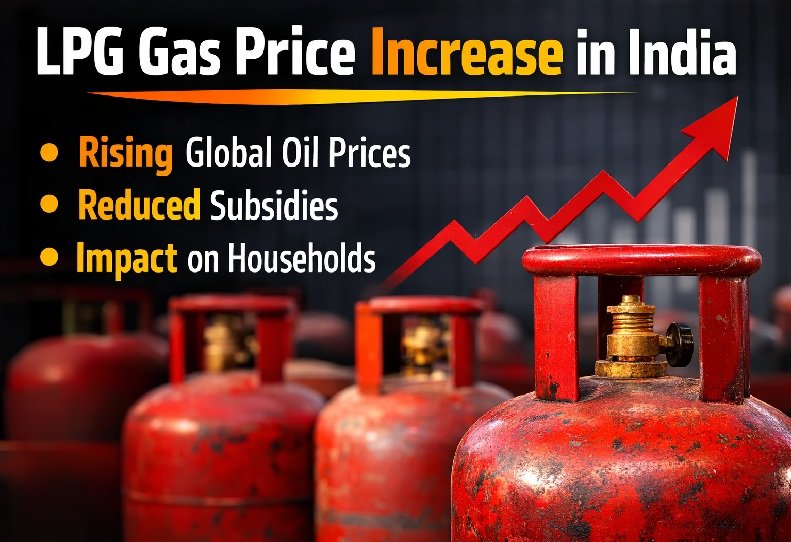

The LPG Gas Price Increase in India has become a major concern for millions of households across the country. Cooking gas is one of the most essential household fuels, used daily in kitchens from villages to metropolitan cities. Whenever LPG prices rise, it directly affects the monthly budget of families, especially middle-class and lower-income households.
In recent years, the LPG Gas Price Increase in India has been driven by several factors such as global crude oil prices, currency fluctuations, government subsidy policies, and supply chain costs. As LPG cylinders become more expensive, people naturally begin asking questions: Why are LPG prices increasing? Can the government provide relief? What can households do to manage the rising cost?
In this article, we will explore the main reasons behind the LPG Gas Price Increase in India, its impact on common people, and possible ways to reduce the burden.
Understanding LPG Pricing in India
Before discussing the LPG Gas Price Increase in India, it is important to understand how LPG prices are determined.
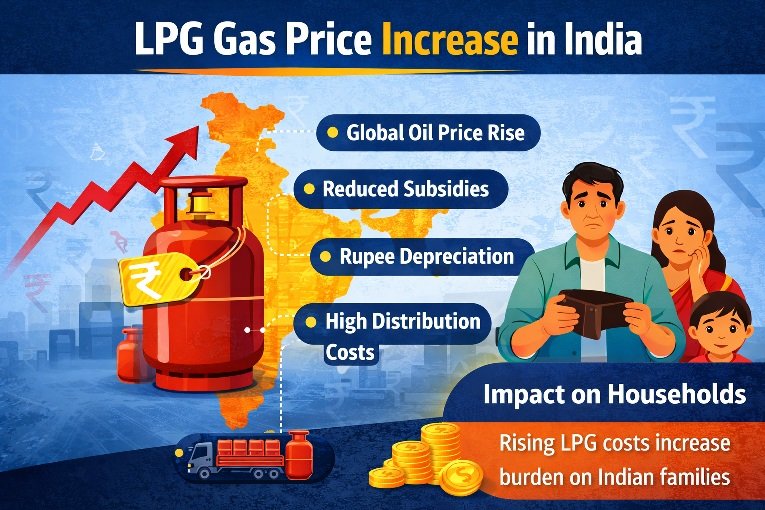
LPG prices in India are influenced by both international and domestic factors. India imports a large portion of its LPG requirement from other countries. Because of this, global fuel prices play a major role in determining the final price consumers pay.
Key elements affecting LPG prices include:
- International crude oil prices
- Import costs and shipping charges
- Exchange rate of the Indian Rupee against the US Dollar
- Government subsidies and taxes
- Distribution and transportation costs
When these factors change, it often leads to an LPG Gas Price Increase in India.
Major Causes of LPG Gas Price Increase in India
1. Rising Global Crude Oil Prices
One of the biggest reasons behind the LPG Gas Price Increase in India is the fluctuation in global crude oil prices. LPG is derived from petroleum products, so when crude oil prices increase internationally, LPG costs also rise.
Global events such as geopolitical tensions, supply disruptions, or increased demand can push oil prices higher. These global market changes eventually impact LPG prices in India.
2. Reduced Government Subsidies
Earlier, the Indian government provided significant subsidies on LPG cylinders to make cooking fuel affordable. However, over time, subsidy levels have reduced.
This reduction has contributed to the LPG Gas Price Increase in India, as consumers now pay closer to the market price for LPG cylinders. Although some subsidy schemes still exist for eligible households, many urban users no longer receive them.
3. Currency Exchange Rate
India imports a large portion of LPG, and payments for imports are made in US dollars. When the Indian Rupee weakens against the dollar, import costs increase.
A weaker currency often leads to an LPG Gas Price Increase in India because oil marketing companies must pay more for imported fuel.
4. Transportation and Distribution Costs
Another factor contributing to the LPG Gas Price Increase in India is transportation and logistics. Delivering LPG cylinders across a large country like India requires a vast distribution network.
Fuel costs, transportation expenses, and storage charges all add to the final retail price of LPG cylinders.
Impact of LPG Gas Price Increase in India
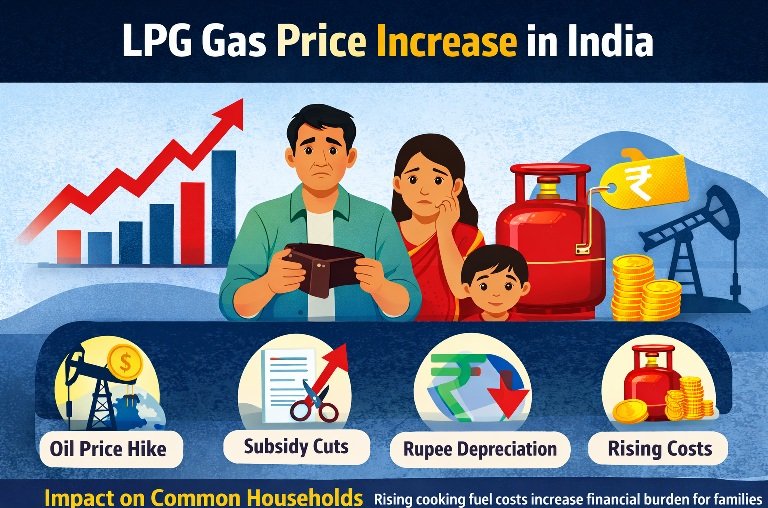
The LPG Gas Price Increase in India has several economic and social impacts, especially on households that rely heavily on LPG for cooking.
Household Budget Pressure
When LPG cylinder prices rise, the monthly budget of families becomes tighter. Middle-class households often feel the biggest impact because they may not qualify for subsidies but still struggle with rising living costs.
Impact on Rural Areas
In rural areas, the LPG Gas Price Increase in India sometimes pushes families to return to traditional fuels like firewood or coal. This can lead to health problems and environmental damage.
Government initiatives such as the Pradhan Mantri Ujjwala Yojana (PMUY) aim to ensure access to clean cooking fuel, but rising prices can still affect affordability.
Inflation and Cost of Living
The LPG Gas Price Increase in India also contributes to overall inflation. Restaurants, food vendors, and small businesses rely on LPG cylinders for cooking. When LPG prices rise, food prices may also increase.
Government Relief Measures
Subsidy Schemes
To help reduce the impact of the LPG Gas Price Increase in India, the government provides subsidies to certain groups, especially low-income households.
Programs like PMUY offer financial support to ensure that poor families can continue using LPG instead of traditional fuels.
Price Stabilization Policies
The government sometimes intervenes by adjusting taxes or offering temporary subsidies to control the LPG Gas Price Increase in India during periods of extreme price volatility.
Increasing Domestic Production
Another long-term solution is increasing domestic production of LPG and improving energy infrastructure. Reducing dependence on imports could help stabilize LPG prices in the future.
How Consumers Can Manage Rising LPG Costs
While the LPG Gas Price Increase in India is largely influenced by global factors, households can take small steps to reduce their LPG consumption.
Efficient Cooking Practices
Using pressure cookers, covering pots while cooking, and maintaining a proper flame can reduce LPG usage.
Regular Stove Maintenance
Keeping LPG stoves clean and ensuring proper burner efficiency can help save gas and reduce overall expenses.
Avoiding Gas Wastage
Turning off the gas immediately after cooking and checking for leaks can prevent unnecessary LPG consumption.
Future Outlook for LPG Prices in India
The future of LPG pricing depends largely on global energy markets and government policies. If international oil prices remain stable, the LPG Gas Price Increase in India may slow down.
However, as India continues to grow economically and energy demand rises, LPG prices could remain sensitive to global market changes.
At the same time, the expansion of renewable energy and alternative cooking fuels could reduce dependence on LPG in the long term.
Conclusion
The LPG Gas Price Increase in India is a complex issue influenced by global oil prices, currency fluctuations, government policies, and distribution costs. For millions of households, rising LPG prices directly affect daily life and household budgets.
While government subsidy programs and policy measures provide some relief, long-term solutions may require increased domestic energy production and improved efficiency.
Until then, understanding the causes of the LPG Gas Price Increase in India and adopting smart cooking practices can help families manage the impact of rising LPG costs.
LPG Cylinder Price Trends in India Over the Years
The LPG Gas Price Increase in India has not happened overnight. Over the past decade, LPG cylinder prices have gradually increased due to changes in global energy markets and government policies. Earlier, LPG cylinders were heavily subsidized, making them affordable for most households.
However, as the government started reforming fuel subsidies and linking LPG prices more closely to international rates, consumers began experiencing periodic price revisions. This gradual LPG Gas Price Increase in India reflects the country’s growing energy demand and its dependence on imported fuel.
Price Fluctuations in Recent Years
In the last few years, LPG prices have changed multiple times. Sometimes prices increased due to higher crude oil rates, while in other cases the government reduced prices to offer relief to consumers.
Because of these frequent adjustments, the LPG Gas Price Increase in India often becomes a trending topic whenever a new price revision is announced.
Difference Between Subsidized and Non-Subsidized LPG
Understanding the difference between subsidized and non-subsidized LPG is essential when discussing the LPG Gas Price Increase in India.
Subsidized LPG
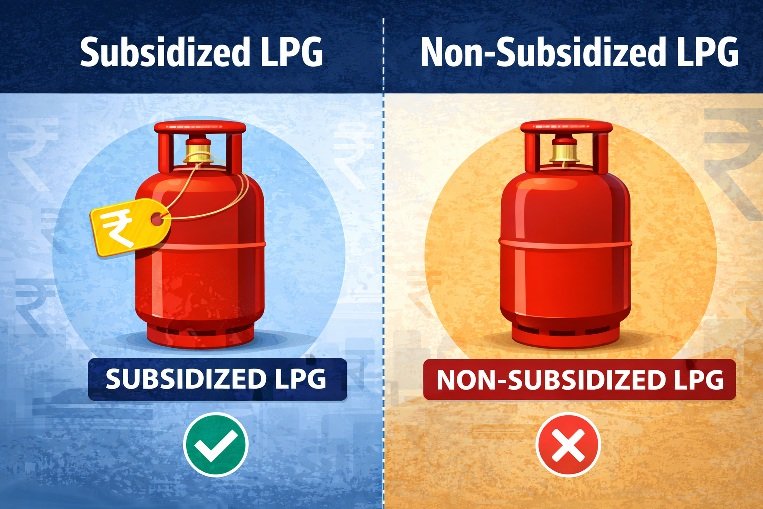
Subsidized LPG cylinders are provided mainly to eligible households under government welfare schemes. In these cases, the consumer pays the full price initially, and the subsidy amount is later transferred directly to their bank account through the Direct Benefit Transfer (DBT) system.
This helps reduce the financial burden caused by the LPG Gas Price Increase in India, especially for economically weaker sections.
Non-Subsidized LPG
Non-subsidized LPG cylinders are purchased at market price. Most urban households fall into this category and are therefore more directly affected whenever there is an LPG Gas Price Increase in India.
Role of Oil Marketing Companies
The pricing and distribution of LPG in India are handled mainly by government-owned oil marketing companies such as:
- Indian Oil Corporation
- Bharat Petroleum Corporation Limited
- Hindustan Petroleum Corporation Limited
These companies adjust LPG cylinder prices based on international LPG benchmarks, transportation costs, and other operational factors.
Whenever these companies revise their pricing structure, consumers notice the LPG Gas Price Increase in India in their monthly household expenses.
Alternative Cooking Fuels in India
Due to the LPG Gas Price Increase in India, many households are exploring alternative cooking solutions. While LPG remains the most convenient and widely used cooking fuel, other options are gaining attention.
Electric Cooking Appliances
Electric induction cooktops and electric stoves are becoming more popular in urban areas. These appliances can reduce dependence on LPG cylinders, particularly when electricity costs are lower.
Biogas and Renewable Energy
In rural areas, some households are adopting biogas systems that convert organic waste into cooking fuel. This not only reduces dependence on LPG but also provides an environmentally friendly solution.
However, despite these alternatives, LPG remains the most reliable cooking fuel for millions of families.
Long-Term Solutions to Control LPG Prices
To address the ongoing LPG Gas Price Increase in India, experts suggest several long-term strategies.
Increasing Domestic LPG Production
If India increases its domestic production of LPG, the country could reduce its dependence on imports. This could help stabilize prices and reduce the impact of international market fluctuations.
Expanding Renewable Energy Options
Promoting renewable cooking solutions such as solar cooking and biogas could gradually reduce reliance on LPG.
Improving Energy Efficiency
Encouraging households to adopt energy-efficient cooking appliances can also help reduce LPG consumption and lower the financial impact of the LPG Gas Price Increase in India.
Environmental Impact of LPG Usage
Although the LPG Gas Price Increase in India creates financial challenges, LPG remains one of the cleaner cooking fuels compared to traditional options such as coal, wood, and kerosene.
LPG produces fewer harmful emissions, which helps improve indoor air quality and reduces health risks. This is especially important in rural areas where traditional fuels often cause respiratory problems due to smoke exposure.
However, when the LPG Gas Price Increase in India makes cylinders less affordable, some households may return to using firewood or other polluting fuels. This can lead to increased air pollution and environmental damage.
Therefore, maintaining affordable LPG access is important not only for economic reasons but also for public health and environmental protection.
Government Initiatives to Improve LPG Accessibility
To reduce the burden caused by the LPG Gas Price Increase in India, the government has launched several initiatives aimed at improving access to affordable cooking fuel.
One of the most well-known programs is the Pradhan Mantri Ujjwala Yojana (PMUY). This scheme provides free LPG connections to women from low-income households, enabling millions of families to shift from traditional fuels to LPG.
Even though the LPG Gas Price Increase in India continues to occur periodically, such programs ensure that economically weaker sections can still access clean cooking energy.
Additionally, digital platforms and online booking systems have made LPG cylinder ordering easier and more transparent for consumers.
Consumer Awareness and Smart Usage
Another important way to deal with the LPG Gas Price Increase in India is increasing consumer awareness about efficient LPG usage.
Many households unknowingly waste LPG due to inefficient cooking practices. Simple steps such as using the correct burner size, cooking with covered utensils, and maintaining gas stoves can significantly reduce LPG consumption.
When consumers adopt these practices, the financial impact of the LPG Gas Price Increase in India becomes more manageable.
Awareness campaigns by government agencies and LPG distributors also help educate people about safe handling and efficient usage of LPG cylinders.