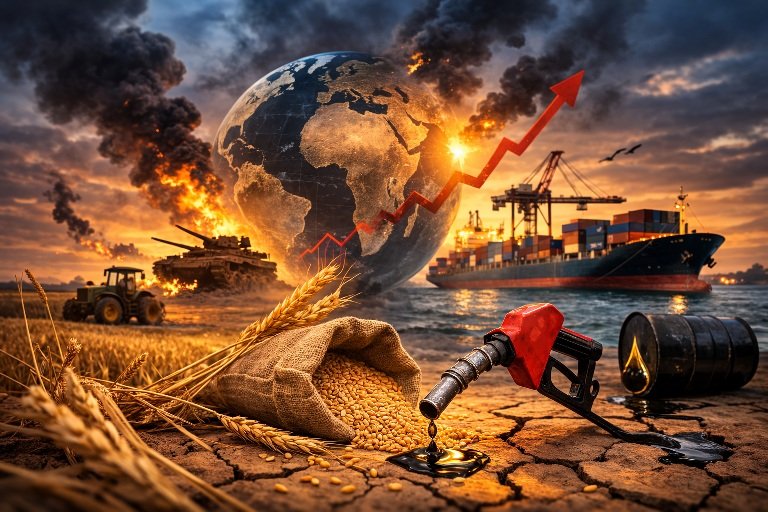

The modern global food system is deeply interconnected. Food grown in one country often travels thousands of kilometers before reaching supermarket shelves in another. This system depends heavily on energy, transportation, fertilizers, and stable geopolitical conditions. When war erupts and fuel becomes scarce, the delicate balance of food production and distribution begins to break down.
In recent years, experts have increasingly warned that War Fuel Shortages Global Food challenges are becoming one of the biggest threats to food security worldwide. Armed conflicts disrupt trade routes, increase energy prices, and limit access to critical farming inputs. As a result, food production slows while prices rise.
For billions of people who rely on affordable food imports, the consequences can be severe. Hunger levels increase, food inflation accelerates, and governments struggle to stabilize supply chains.
Understanding how War Fuel Shortages Global Food systems are connected is essential to grasp why conflicts in one region can affect dinner tables across the world.
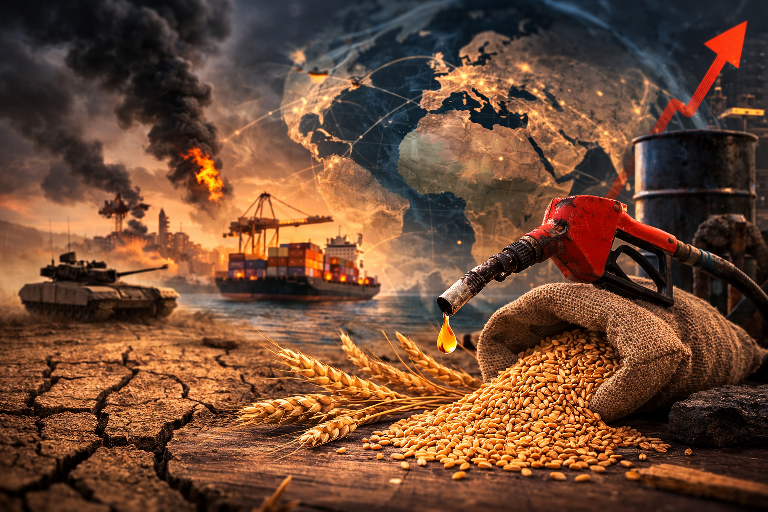
The Global Food System Depends on Energy
Food production may seem like a simple process—plant seeds, grow crops, and harvest them. In reality, modern agriculture is extremely energy intensive.
From tractors to irrigation systems, energy powers nearly every step of farming.
Fuel is required for:
- Operating tractors and harvesting equipment
- Transporting crops from farms to markets
- Producing fertilizers and pesticides
- Running food processing factories
- Refrigerating and storing perishable goods
When war disrupts energy markets, fuel prices surge. This directly increases the cost of producing and transporting food.
Energy shortages also affect fertilizer production because natural gas is a key ingredient in many fertilizers. When gas prices rise, fertilizer production falls, reducing agricultural output.
This connection explains why the War Fuel Shortages Global Food problem quickly spreads beyond the battlefield.
How War Disrupts Global Food Supply Chains
Wars do far more than damage infrastructure. They disrupt the complex network that moves food from farms to consumers.
When conflict occurs, shipping routes may close, ports become unsafe, and transportation costs rise.
For example:
- Ships avoid conflict zones
- Insurance costs for cargo increase
- Fuel prices spike globally
- Airspace restrictions slow logistics
These disruptions slow the movement of grains, vegetables, and essential food ingredients.
During major conflicts, global supply chains often experience cascading effects. When a major exporter stops shipping grain, other countries rush to secure supplies, pushing prices higher.
Experts say conflict can block supply routes, slow goods flow, and reduce food availability in international markets.
This domino effect is a central factor in the War Fuel Shortages Global Food crisis.
Rising Fuel Prices Increase Food Costs
One of the fastest impacts of war is the sudden rise in oil prices.
When energy supply routes are threatened, global oil markets react immediately. Oil is the foundation of transportation and logistics. As oil becomes expensive, the cost of moving food also increases.
Recent geopolitical conflicts have caused massive disruptions in energy supply. Analysts estimate that millions of barrels of oil per day could disappear from global markets due to war-related disruptions.
Higher fuel prices affect food in several ways:
- Farmers spend more on diesel for equipment
- Trucking companies charge higher delivery fees
- Food processors face higher energy bills
- Retailers increase prices to maintain margins
For consumers, this often means rising grocery bills.
For poorer nations, however, the consequences are much more severe.
Fertilizer Shortages and Agricultural Production
Another critical link between war and food supply is fertilizer due to War Fuel Shortages Global Food.
Fertilizer production relies heavily on natural gas and chemical supply chains. War can interrupt both.
In recent conflicts, fertilizer prices have surged dramatically due to supply disruptions and rising gas prices.
Without adequate fertilizer, crop yields can fall sharply. Experts warn that yield reductions could reach up to 50% for some crops if fertilizer supplies remain constrained.
Lower crop yields mean less food entering the global market.
Farmers may also reduce planting areas because fertilizer becomes too expensive. This further decreases production.
These challenges demonstrate how War Fuel Shortages Global Food problems directly affect agricultural output.
Impact on Major Food Exporting Regions
Certain regions play an outsized role in global food production. When war occurs in these areas, the consequences ripple worldwide.
Some of the world’s largest exporters of grain and fertilizer include:
- Eastern Europe
- The Middle East
- North America
- South America
Conflicts in these regions can disrupt key commodities such as wheat, corn, and vegetable oils.
For example, earlier conflicts involving major grain exporters caused global wheat prices to surge dramatically and disrupted shipments through critical sea routes.
Countries that depend heavily on imported food are especially vulnerable.
This highlights how the War Fuel Shortages Global Food issue can affect regions far removed from the conflict zone.
Developing Nations Face the Biggest Risks
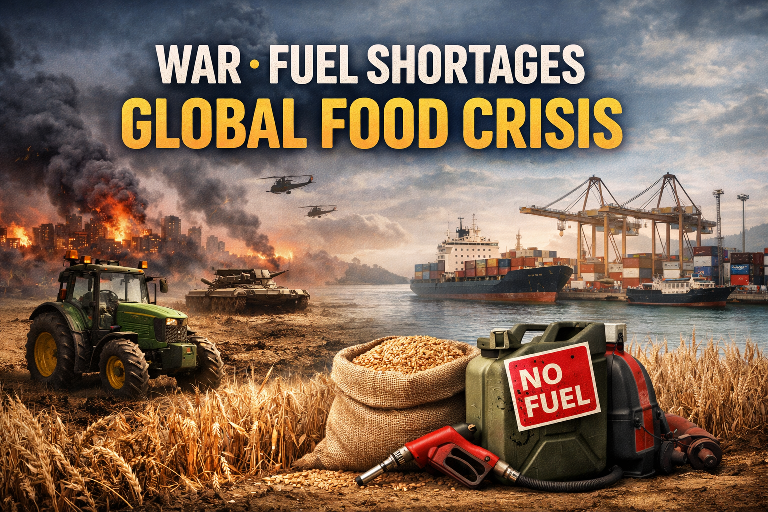
While food price increases affect everyone, developing nations suffer the most.
Many low-income countries rely on imported staples such as wheat, rice, and cooking oil. When prices rise due to war-related supply disruptions, governments struggle to afford imports.
For millions of families already living near the poverty line, even small price increases can lead to hunger.
Research suggests that conflicts affecting energy and food markets could push hundreds of millions more people into food insecurity.
Humanitarian agencies warn that the War Fuel Shortages Global Food crisis could significantly worsen global hunger if conflicts persist.
Transportation Bottlenecks in Wartime
Transport is the backbone of the global food system.
Food often travels through several stages:
- Farm production
- Processing facilities
- Storage warehouses
- Export ports
- International shipping
- Distribution centers
- Retail stores
War disrupts multiple steps in this chain.
Blocked shipping routes, damaged infrastructure, and security risks slow transportation. When major maritime routes become unsafe, cargo ships must travel longer routes, increasing both costs and delays.
For example, disruptions in strategic shipping corridors have halted major energy and fertilizer shipments, affecting agricultural supply chains worldwide.
These bottlenecks worsen the War Fuel Shortages Global Food problem by limiting access to essential resources.
Food Inflation and Economic Pressure
When supply decreases and costs increase, food inflation becomes inevitable.
Food inflation is particularly dangerous because food is a basic necessity. Unlike luxury goods, consumers cannot easily stop buying food.
As a result:
- Household budgets become strained
- Governments must subsidize food imports
- Social tensions increase
- Economic instability grows
In many countries, food price spikes have historically triggered protests or political unrest.
The War Fuel Shortages Global Food crisis therefore has not only economic consequences but also social and political implications.
Effects on Farmers Around the World
Farmers themselves are among the first to feel the impact of war-driven fuel shortages.
Rising input costs force farmers to make difficult decisions.
They may:
- Reduce fertilizer usage
- Plant fewer crops
- Switch to less resource-intensive crops
- Delay planting seasons
In some cases, farmers cannot afford the fuel required for irrigation or harvesting.
Reports from several regions indicate that farmers are already facing financial strain due to rising fuel and fertilizer prices linked to geopolitical conflicts.
These pressures reduce agricultural productivity and worsen the War Fuel Shortages Global Food challenge.
Food Supply Risks for Urban Populations
Urban populations rely heavily on consistent food distribution networks.
Unlike rural communities that may grow some of their own food, cities depend almost entirely on imported supplies.
When fuel shortages slow transportation, supermarkets and markets experience supply gaps.
This can lead to:
- Temporary shortages of vegetables and grains
- Rationing of certain foods
- Panic buying among consumers
In extreme cases, empty supermarket shelves become visible signs of a disrupted food system.
Some analysts warn that continued conflict and energy disruptions could cause supply shortages in grocery stores worldwide.
Urban areas are therefore particularly vulnerable to the War Fuel Shortages Global Food crisis.
How Governments Respond to Food Supply Threats
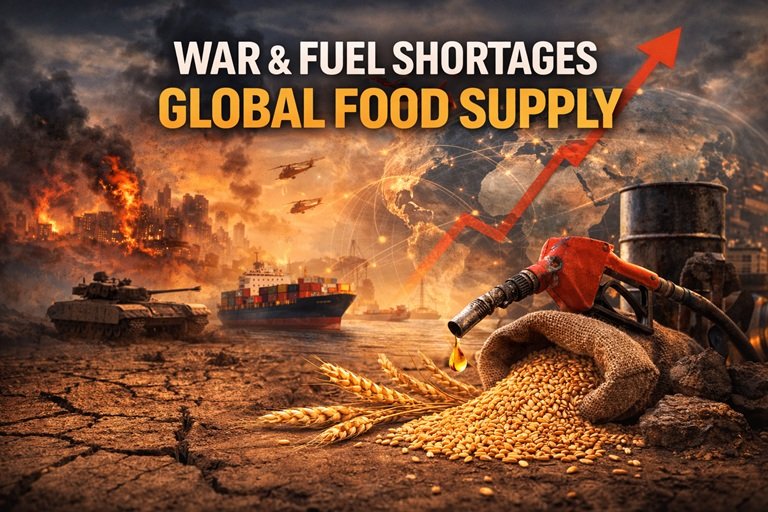
Governments often take emergency measures when food security is threatened.
These actions may include:
- Increasing food reserves
- Subsidizing fuel for farmers
- Limiting food exports
- Providing food assistance programs
- Diversifying import sources
However, these policies sometimes create unintended consequences.
For example, export bans can stabilize domestic prices but reduce food availability on the global market.
This further intensifies the War Fuel Shortages Global Food situation for countries that depend on imports.
The Role of Global Trade in Food Security
Global trade has long helped balance food supply and demand.
Regions with surplus food export crops to regions with limited production capacity.
However, war disrupts this system by creating uncertainty and limiting trade flows.
Countries may become more protective of their food supplies, prioritizing domestic needs over international markets.
This shift toward protectionism can deepen the War Fuel Shortages Global Food crisis by reducing the availability of key staples.
Maintaining open and reliable trade channels is therefore crucial for global food stability.
Long-Term Consequences for Global Agriculture
The impact of war and fuel shortages does not disappear quickly.
Even after conflicts end, the agricultural system may take years to recover.
Long-term consequences may include:
- Damaged farming infrastructure
- Reduced investment in agriculture
- Loss of agricultural labor
- Soil degradation from neglected fields
These effects reduce food production capacity and make the global system more fragile.
If multiple conflicts occur simultaneously, the cumulative impact could severely strain the War Fuel Shortages Global Food system.
Technology and Innovation as Possible Solutions
Despite these challenges, technological innovations may help mitigate some risks.
New approaches in agriculture and logistics aim to reduce dependency on fossil fuels and vulnerable supply chains.
Examples include:
- Electric farming equipment
- Precision agriculture technologies
- Localized food production systems
- Vertical farming in urban areas
- Renewable energy powered irrigation
While these solutions cannot fully eliminate the War Fuel Shortages Global Food threat, they can improve resilience.
Building more sustainable food systems is increasingly seen as essential for long-term food security.
Why the World Must Address Food Security Risks
The growing connection between conflict, energy shortages, and food production highlights a major vulnerability in the global economy.
Food security is no longer just an agricultural issue—it is a geopolitical challenge.
The War Fuel Shortages Global Food crisis demonstrates how interconnected modern systems have become.
Energy markets influence fertilizer production. Transportation networks determine food distribution. Political stability shapes global trade.
When these systems break down simultaneously, the consequences reach every household on the planet.
Understanding these risks is the first step toward building a more resilient global food system capable of withstanding future shocks.