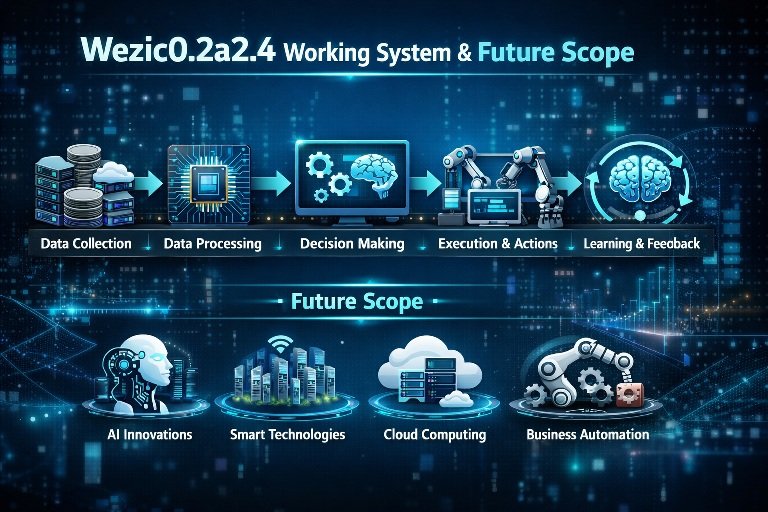

Technology is evolving at a pace where new models and frameworks are constantly introduced to improve how digital systems operate. One such emerging concept is the Wezic0.2a2.4 model, which is gaining attention for its structured approach to handling complex data and automation processes.
If you’re wondering how this model actually works and what its future potential looks like, you’re in the right place. Let’s break it down in a simple, human way—no heavy jargon, just clear understanding.
What is the Wezic0.2a2.4 Model?
Before diving into the working system, it’s important to understand the basics. The Wezic0.2a2.4 model is a conceptual digital framework designed to improve how systems process data, make decisions, and adapt over time.
Think of it like a smart system that doesn’t just follow instructions but learns, improves, and becomes more efficient with use. It is built using a modular structure, meaning different parts of the system handle different tasks while staying connected.
Working System of the Wezic0.2a2.4 Model
Now let’s talk about the most important part — how the Wezic0.2a2.4 model actually works.
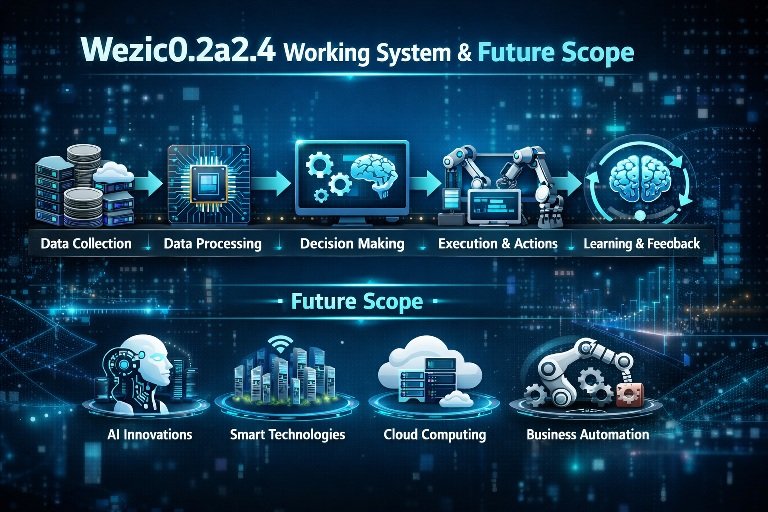
Instead of being a single-layer system, it operates in multiple stages. Each stage has a specific role, and together they create a smooth and intelligent workflow.
1. Data Collection Layer
Everything starts with data.
The system collects information from multiple sources such as:
- User inputs
- Databases
- Sensors
- External APIs
This step is crucial because the quality of data directly affects how well the system performs. The Wezic0.2a2.4 model is designed to handle large volumes of data efficiently without slowing down.
2. Data Processing and Analysis
Once the data is collected, the next step is processing.
Here, the system uses advanced algorithms to:
- Analyze patterns
- Filter unnecessary data
- Organize information
- Extract meaningful insights
This stage is where the “intelligence” of the system comes into play. Instead of just storing data, the model actively works on it to generate useful results.
3. Decision-Making Layer
After analyzing the data, the system moves to decision-making.
Based on the processed information, the Wezic0.2a2.4 model can:
- Generate recommendations
- Trigger automated actions
- Predict possible outcomes
For example, in a business system, it might suggest strategies based on customer behavior. In a tech platform, it might automatically optimize performance.
4. Execution Layer
This is where the action happens.
The system implements the decisions made in the previous stage. It could involve:
- Running automated tasks
- Updating system processes
- Communicating outputs to users
This layer ensures that the system is not just thinking but actually doing something useful.
5. Feedback and Learning Loop
Here’s what makes the Wezic0.2a2.4 model truly powerful — it learns.
After execution, the system reviews the results and feeds that information back into itself. This helps it:
- Improve accuracy
- Reduce errors
- Adapt to changing conditions
Over time, the system becomes smarter and more efficient. This continuous learning is similar to how modern AI systems work.
Key Advantages of the Working System
The working structure of the Wezic0.2a2.4 model offers several benefits:
Efficient Data Handling
It can process large datasets without performance issues.
Automation
Reduces manual work by automating repetitive tasks.
Flexibility
Modular design allows easy updates and changes.
Scalability
The system can grow as demand increases.
Smart Decision-Making
Uses data-driven insights rather than fixed rules.
Real-World Applications
Although the model is still evolving, its working system makes it suitable for many modern applications:
- Artificial intelligence platforms
- Cloud computing systems
- Financial technology (FinTech)
- Smart city infrastructure
- E-commerce platforms
- Industrial automation
In all these areas, the ability to process data quickly and make intelligent decisions is extremely valuable.
Future Scope of the Wezic0.2a2.4 Model
Now let’s talk about the exciting part — the future scope.
The Wezic0.2a2.4 model aligns perfectly with current technology trends like AI, big data, and automation. Because of this, its future potential looks very promising.
1. Growth in Artificial Intelligence
As AI continues to grow, frameworks like Wezic0.2a2.4 can become the backbone of intelligent systems.
Its adaptive learning and decision-making capabilities make it ideal for AI-driven applications such as:
- Chatbots
- Recommendation systems
- Predictive analytics
2. Expansion in Cloud Computing
Cloud platforms require systems that are scalable and flexible.
The Wezic0.2a2.4 model fits perfectly here because it can:
- Handle distributed systems
- Scale resources dynamically
- Improve cloud performance
This makes it useful for companies managing large online platforms.
3. Role in Smart Technologies
From smart homes to smart cities, future technologies rely heavily on data and automation.
The model’s ability to process real-time data and make instant decisions can support:
- Traffic management systems
- Energy optimization
- IoT (Internet of Things) devices
4. Improved Business Automation
Businesses are increasingly looking for ways to automate operations.
With the Wezic0.2a2.4 model, companies can:
- Automate workflows
- Improve customer experience
- Make faster decisions
This can lead to higher efficiency and reduced operational costs.
5. Integration with Emerging Technologies
In the future, the model could integrate with technologies like:
- Machine learning
- Blockchain
- Advanced robotics
Such integration could create highly advanced systems capable of handling complex real-world challenges.
Challenges and Considerations
While the future looks promising, there are still some challenges:
- Implementation complexity
- High development costs
- Need for skilled professionals
- Data privacy concerns
However, as technology advances, these challenges are likely to become easier to manage.
Conclusion
The Wezic0.2a2.4 working system is built on a smart, layered approach that focuses on data collection, processing, decision-making, execution, and continuous learning. This makes it a powerful framework for modern digital systems.
Looking at its future scope, the model has strong potential in areas like artificial intelligence, cloud computing, smart technologies, and business automation. As industries continue to embrace digital transformation, frameworks like Wezic0.2a2.4 could become essential in building smarter and more efficient systems.