
Foot pain can sneak into your life quietly. One day you’re walking normally, and the next—every step feels like a challenge. If you’ve heard about pavatalgia or are dealing with unexplained foot discomfort, you’re not alone.
The good news? You don’t have to wait for pain to take control. With the right approach, you can protect your feet and stay active without discomfort. In this guide, we’ll break down everything you need to know in a practical, easy-to-follow way.
Let’s dive into real, effective pavatalgia prevention tips that actually work.
Understanding Pavatalgia Before Prevention
Before jumping into solutions, it helps to understand what you’re dealing with.
Pavatalgia is commonly used to describe persistent foot pain or discomfort that may not have a clear structural cause. It can affect soft tissues, nerves, or joints in the lower limbs and often leads to difficulty in walking or standing .
Sometimes it’s linked to:
- Overuse or repetitive strain
- Poor footwear habits
- Nerve irritation or inflammation
- Underlying conditions like arthritis or diabetes
In simple terms, pavatalgia is less about a single disease and more about a pattern of chronic foot pain.
Why Prevention Matters More Than Treatment
Here’s something most people overlook: once chronic foot pain starts, it can take weeks or even months to heal.
Prevention helps you:
- Avoid long-term discomfort
- Maintain mobility and flexibility
- Reduce dependency on medication
- Improve overall quality of life
And honestly, wouldn’t you rather prevent pain than deal with it later?
1. Choose the Right Footwear Daily
Let’s start with the biggest culprit—your shoes.
Wearing the wrong footwear is one of the fastest ways to invite foot pain into your life.
What to look for in good shoes:
- Proper arch support
- Cushioned sole for shock absorption
- Comfortable fit (not tight or loose)
- Breathable material
Avoid:
- Flat sandals with no support
- High heels for long durations
- Worn-out shoes
Your feet carry your entire body weight. Treat them accordingly.
2. Maintain a Healthy Body Weight
Extra weight means extra pressure on your feet. Over time, this can strain muscles, joints, and connective tissues.
Even a small reduction in weight can significantly lower stress on your feet and improve movement.
Simple habits that help:
- Balanced diet with whole foods
- Regular physical activity
- Staying hydrated
Weight management is one of the most underrated pavatalgia prevention tips you can follow.
3. Stretch Your Feet and Calves Regularly
Tight muscles are a hidden cause of foot pain. When your calf muscles and foot tendons are stiff, they pull on the heel and arch.
Easy stretches you can do:
- Toe stretches in the morning
- Calf stretches against a wall
- Rolling your foot over a ball
Consistency is key here. Even 5–10 minutes daily can make a big difference.
4. Avoid Standing for Long Periods
Modern work culture often demands long hours of standing or walking. But your feet need breaks too.
Prolonged pressure leads to inflammation and pain over time.
Try this:
- Take short sitting breaks every hour
- Shift weight between both feet
- Use anti-fatigue mats if possible
If your job requires standing, these small changes can protect your feet in the long run.
5. Improve Your Walking Posture
Yes, even the way you walk matters.
Incorrect posture can put uneven pressure on your feet, leading to discomfort.
Focus on:
- Keeping your back straight
- Distributing weight evenly
- Avoiding dragging or heavy steps
Good posture doesn’t just help your feet—it benefits your entire body.
6. Stay Physically Active (But Smartly)
Exercise improves blood circulation and keeps muscles strong. But overdoing it can backfire.
Balance is everything.
Best low-impact activities:
- Walking on even surfaces
- Swimming
- Cycling
Avoid sudden increases in activity intensity. Gradual progression is safer and more effective.
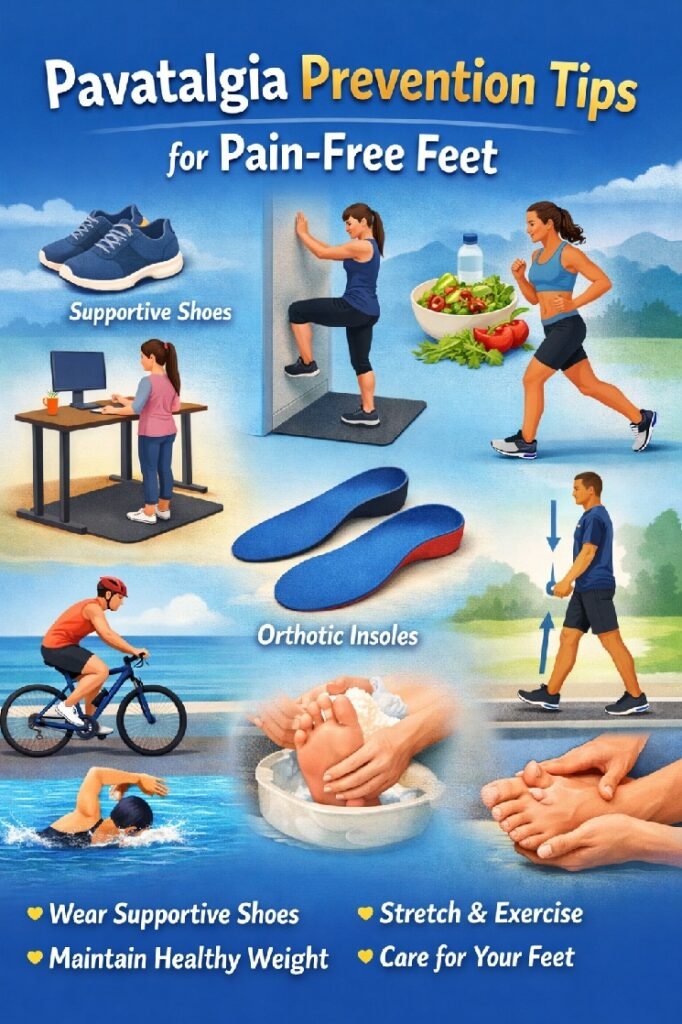
7. Use Orthotic Support When Needed
Sometimes your feet need extra help.
Orthotic insoles can provide support and reduce pressure on sensitive areas.
They are especially helpful if you:
- Have flat feet or high arches
- Experience recurring heel pain
- Spend long hours standing
Custom or doctor-recommended insoles can significantly reduce discomfort.
8. Take Care of Underlying Health Conditions
Foot pain isn’t always just about your feet.
Conditions like diabetes, arthritis, or nerve issues can contribute to chronic discomfort .
What you should do:
- Monitor blood sugar levels
- Follow medical advice regularly
- Don’t ignore early symptoms
Managing your overall health is a crucial part of long-term prevention.
9. Practice Proper Foot Hygiene
It might sound simple, but hygiene plays a role in overall foot health.
Daily care routine:
- Wash and dry feet properly
- Moisturize to prevent cracks
- Trim nails carefully
Healthy skin and nails reduce the risk of infections and discomfort.
10. Listen to Your Body Early
Here’s the most important tip—don’t ignore pain.
Many people wait until the pain becomes unbearable before taking action.
Early warning signs include:
- Mild discomfort while walking
- Tingling or burning sensation
- Swelling or stiffness
Addressing these early can prevent long-term problems.
Daily Habits That Make a Big Difference
Sometimes, prevention isn’t about big changes—it’s about small daily habits.
Build these into your routine:
- Wear supportive footwear every day
- Stretch before and after activity
- Stay hydrated
- Avoid sudden physical strain
Consistency beats intensity every time.
Common Mistakes That Increase Foot Pain
Even with the best intentions, certain habits can worsen your condition.
Watch out for:
- Ignoring early symptoms
- Using cheap, unsupportive footwear
- Skipping warm-ups before exercise
- Overtraining without rest
Avoiding these mistakes is just as important as following prevention strategies.
The Role of Lifestyle in Foot Health
Your lifestyle choices directly impact your feet.
From how you sit to how you walk, everything matters.
Key lifestyle factors:
- Sedentary habits can weaken muscles
- Excessive activity can cause strain
- Poor diet affects tissue health
Balance is the secret ingredient here.
When Should You See a Doctor?
Prevention is powerful—but sometimes, you need professional help.
Consult a doctor if:
- Pain lasts more than a few weeks
- You notice swelling or numbness
- Walking becomes difficult
Early diagnosis can prevent complications and speed up recovery.
Long-Term Benefits of Prevention
Following these strategies isn’t just about avoiding pain today.
It’s about building a healthier future.
Benefits include:
- Better mobility and flexibility
- Reduced risk of chronic conditions
- Improved overall well-being
- More active lifestyle
Your feet support your entire life—taking care of them pays off.
A Realistic Approach to Foot Health
Let’s be honest—no one follows every health tip perfectly.
And that’s okay.
The goal isn’t perfection. It’s consistency.
Start small:
- Upgrade your footwear
- Add 5 minutes of stretching
- Pay attention to discomfort
Over time, these small steps turn into lasting habits.
Conclusion
Foot pain doesn’t have to be part of your daily life. With the right habits and awareness, you can stay active, comfortable, and pain-free.
These pavatalgia prevention tips are not complicated—they’re practical, realistic, and effective when followed consistently.
So next time you take a step, remember—you’re not just walking, you’re investing in your long-term health.