
Introduction:
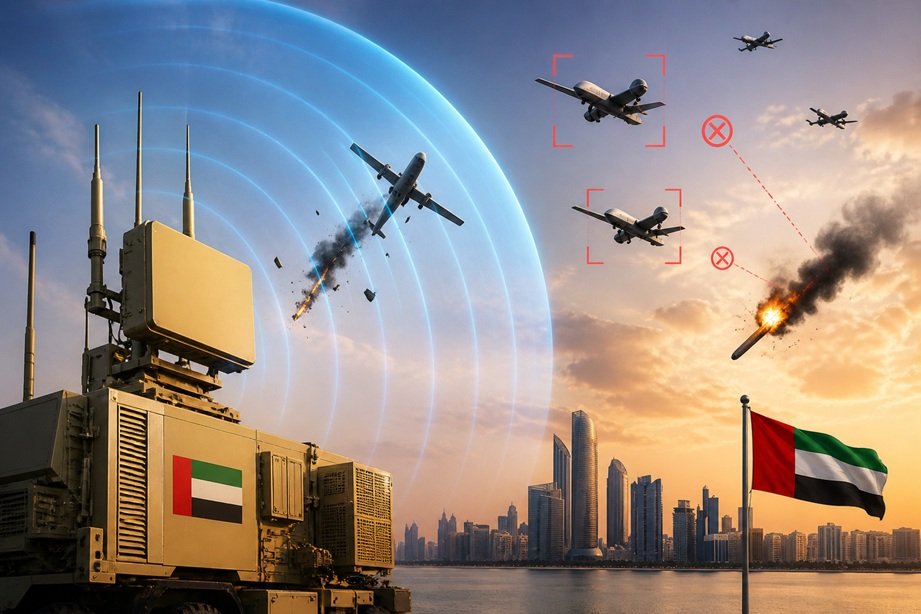
When reports emerged suggesting that the jammers from the UAE neutralised 85% of Iranian drones, it quickly garnered worldwide interest. And rightly so. This is not merely another military update; it offers insight into the rapid evolution of contemporary warfare.
The era of combat exclusively featuring tanks and fighter aircraft is long gone. Nowadays, the battlefield consists of drones versus counter-drones, signal interference versus jamming, and software competing against software. Recent events involving the United Arab Emirates and Iran underline a significant shift in military tactics.
Let’s clarify this in a manner that is clear and engaging—steering clear of the tone of a tedious military document.
The Major Assertion: What Does 85% Neutralisation Imply?
What does it mean when sources report that the UAE jammers neutralised 85% of Iranian drones?
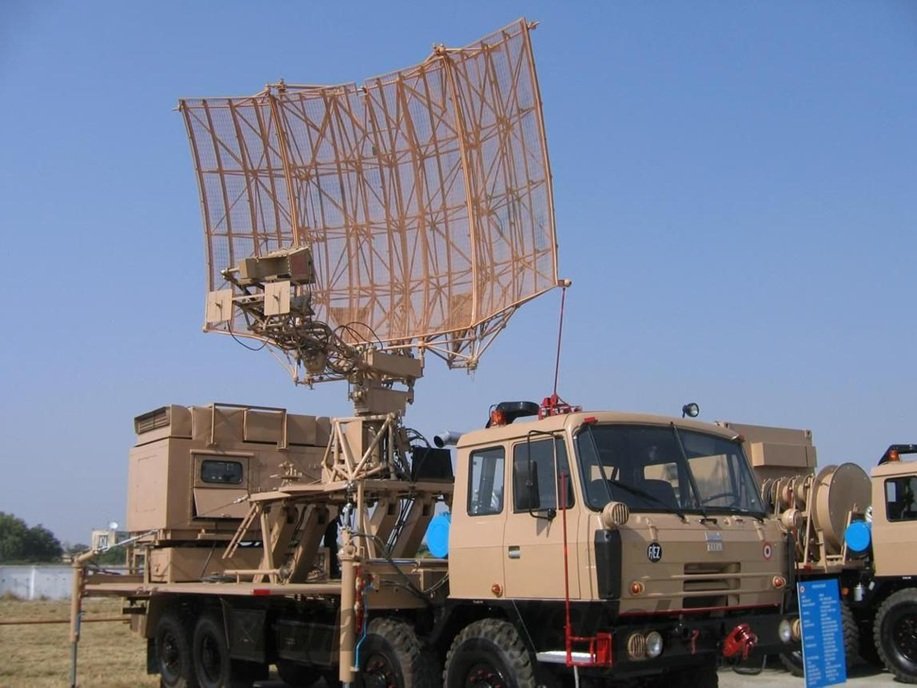
In straightforward terms, it indicates that a significant portion of incoming unmanned aerial threats was neutralised before they could reach their intended destinations. Not all of these were taken down with missiles; many were rendered inoperative electronically.
Recent defense reports state that the UAE confronted a substantial surge of aerial threats, which included thousands of drones and missiles during heightened tensions in 2026.
However, here’s the interesting part: instead of solely depending on conventional air defense measures, the UAE heavily utilised electronic warfare capabilities, particularly jamming systems.
How Drone Jamming Operates
The Fundamentals of Electronic Warfare
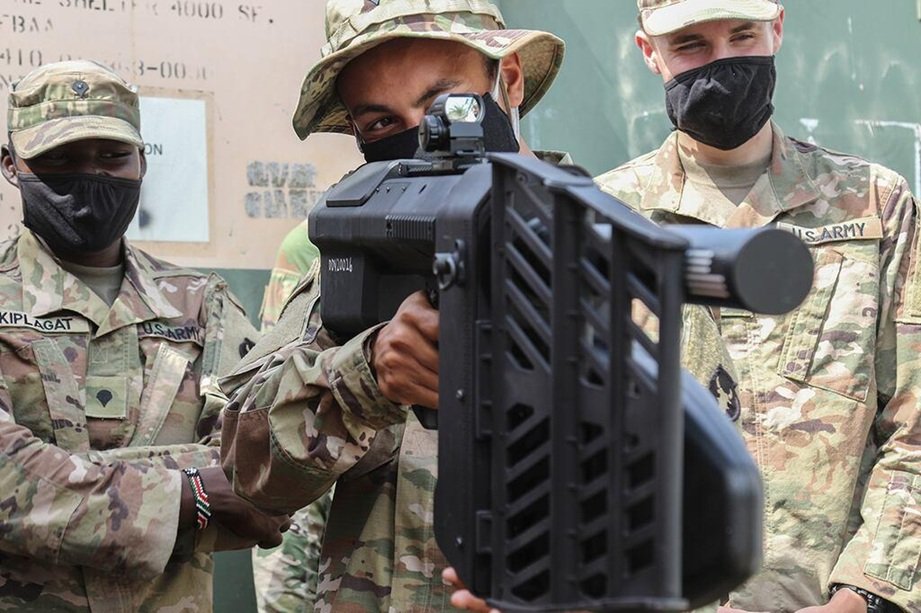
Let’s keep it simple. Drone jamming essentially disconnects a drone’s control unit from its physical device.
Most drones depend on:
GPS signals for navigation
Radio waves for operation
Data links for immediate communication
Jammers disrupt these signals. The result is:
The drone loses its way
It may end up crashing
Or it goes back to where it started
Pretty ingenious, wouldn’t you say?
Various Jamming Techniques Employed
The UAE didn’t use just a single system. Instead, it implemented a comprehensive defense strategy:
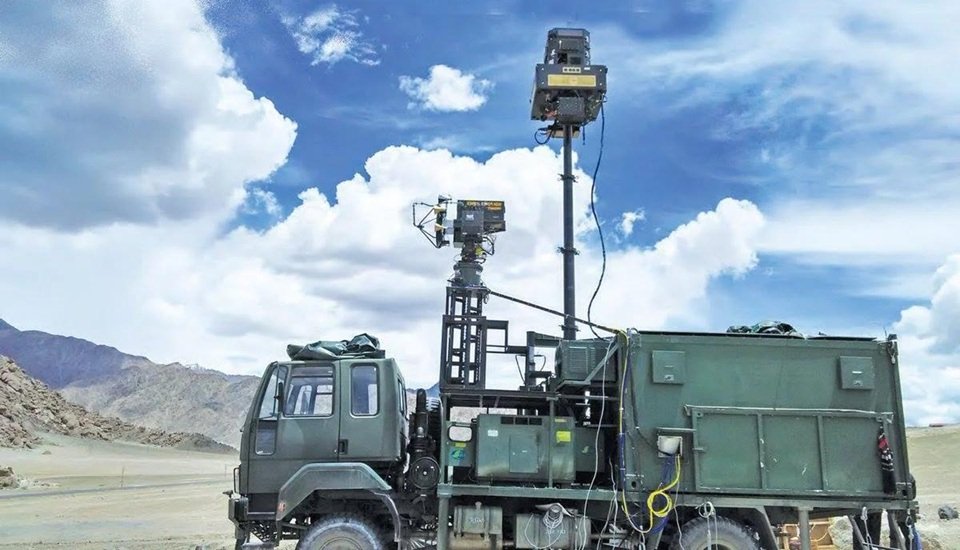
GPS jamming: Disrupts navigation mechanisms
RF jamming: Cuts off communication between the drone and its operator
Spoofing: Deceives the drone into redirecting to another location
This multifaceted approach is what makes the assertion that UAE jammers neutralised 85% of Iranian drones particularly noteworthy; it’s a matter of strategy rather than sheer luck.
The Contribution of EDGE Group in UAE Defense
A major contributor to this capability is EDGE Group.
This defense giant based in Abu Dhabi has been making significant investments in:
Counter-drone technologies
AI-driven defense mechanisms
Electronic warfare innovations
Their leadership has openly highlighted the rising importance of jamming technologies as a primary defensive tactic, particularly against drone swarm assaults.
And that is precisely what we are observing unfold.
Reasons Behind Iran’s Use of Drone Swarms
You might be asking—why deploy so many drones?
The explanation is straightforward: cost-effectiveness.
Iran’s aerial strategy heavily incorporates platforms such as the Shahed-136.
These drones are:
Inexpensive to manufacture
Simple to launch in considerable quantities
Challenging to intercept on an individual basis
The goal is to saturate and overwhelm air defense systems.
To be fair, this approach generally succeeds—unless the adversary possesses robust electronic warfare capabilities. This circles us back to the fact that UAE jammers neutralised 85% of Iranian drones.
Understanding the UAE’s Multifaceted Defense Framework
The UAE didn’t solely depend on jammers. It established a multi-tiered defense infrastructure.
H3: Essential Elements
Fighter aircraft such as the F-16 Block 60
Land-based missile defense systems
Radar surveillance networks
Units specializing in electronic warfare
In recent assaults, the UAE military successfully intercepted a number of drones and missiles through a combination of kinetic and non-kinetic strategies.
This layered approach guarantees that if one method fails, another can take its place.
Why Jamming Transforms the Game
This is where things become particularly fascinating.
Conventional interception techniques—such as launching missiles—are quite costly. Shooting down a $20,000 drone using a $1 million missile? Not exactly a viable long-term strategy.
In contrast, jamming:
Is much more economical
Can disable several drones simultaneously
Lessens dependence on munitions
For this reason, the assertion that UAE jammers neutralized 85% of Iranian drones is more than a mere statistic—it indicates a fundamental change in military financial dynamics.
The Obstacles of Drone Defense
Before delving into the perception that jammers are a miraculous fix, let’s be practical—they come with limitations.
Restrictions of Jamming
Certain drones function autonomously
Disrupting encrypted signals is more challenging
Geographical features can affect efficiency
Additionally, there is always a danger of unintended signal interference, which could influence civilian systems.
Nevertheless, despite these obstacles, the UAE’s rate of success demonstrates the effectiveness of contemporary systems.
The Worldwide Impact
This issue extends beyond just the UAE and Iran. The entire globe is observing.
Nations are beginning to understand that:
Drone warfare is a persistent reality
Electronic warfare is a crucial element
Conventional defenses are insufficient
Even global powers are pouring substantial investments into counter-drone technologies.
A New Chapter in Warfare
Now, let’s take a broader perspective.
The statement that UAE jammers neutralized 85% of Iranian drones represents a larger phenomenon:
The emergence of asymmetric conflict
The supremacy of technology over conventional weaponry
The necessity of real-time intelligence systems
Conflicts are now conducted not only on land, in the sea, or through air but also within the electromagnetic landscape.
What This Indicates for the Middle East
The Middle East has consistently been a center for military advancements, and this serves as a recent example.
The UAE’s achievements:
Bolster its defensive stance
Communicate a strong deterrent to rivals
Stimulate further technological investments
Simultaneously, it compels nations like Iran to update and refine their tactics.
The Prospects of Counter-Drone Technology
What lies ahead?
Anticipate:
Artificial intelligence-powered jamming systems
Self-operating defense drones
Directed energy armaments (like lasers)
The objective? To achieve interception rates of 100%—or at least strive for that target.
Insights Gained From Current Attacks
Recent defense efforts have illustrated that extensive drone assaults are not mere hypotheticals—they are ongoing realities.
The UAE has reportedly intercepted thousands of potential threats in recent months, showcasing both the magnitude of the assaults and the capability of its defensive measures.
Once more, the fact that UAE jammers neutralized 85% of Iranian drones emerges as a significant takeaway from these incidents.
Why This Is Important to Regular Individuals
You may wonder—why is this relevant to me?
Here’s the reasoning:
These technologies safeguard urban areas and people
They avert damage to critical infrastructure
They diminish the likelihood of escalating conflicts
In summary, they assist in preventing larger confrontations.
Conclusion
The assertion that UAE jammers neutralized 85% of Iranian drones is more than just an attention-grabbing statement—it reflects a pivotal moment in the evolution of modern warfare.
We are progressing toward a reality in which:
Software surpasses hardware
Signals outshine missiles
Intelligence prevails over physical strength
And frankly, this could be a positive development.
If conflicts can be resolved—and avoided—using more advanced technology rather than mere devastation, it benefits all.