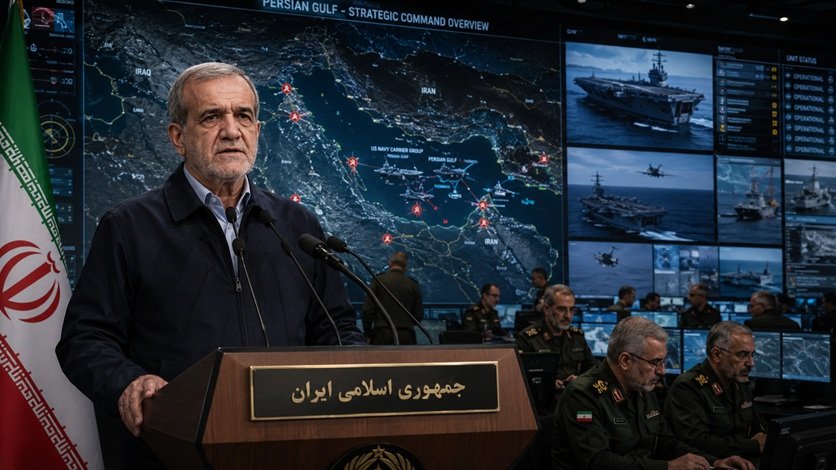

The Middle East is experiencing a renewed phase of significant uncertainty due to an alarming intensification involving Iran and the United States. Iranian President Masoud Pezeshkian proclaimed that the nation is currently in a “full-scale war” against the United States, while Yemen’s Houthi movement declared a maritime blockade aimed at Saudi shipping interests. Collectively, these occurrences have heightened worries concerning regional stability, the global energy market, and international commerce.
While diplomatic efforts continue, military activities are intensifying on multiple fronts. Nations throughout the Gulf area are enhancing security protocols as commercial ships, energy infrastructure, and strategic waterways become pivotal to the escalating confrontation.
The recent events signify one of the most critical instances of volatility in the area in recent times, prompting governments and enterprises to monitor every newly released statement closely.
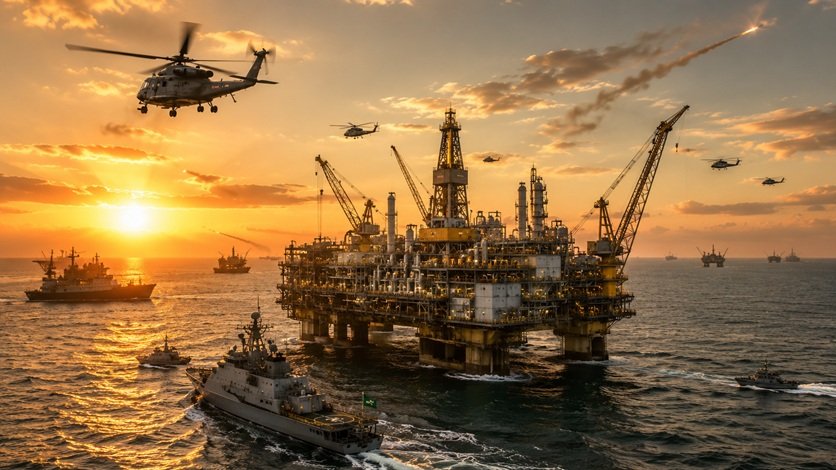
A Rapid Escalation Across Various Fronts
This current stage of the conflict follows weeks of escalating military actions involving American troops, Iranian military resources, and Tehran’s allies in the region. Washington has persistently targeted military sites alleged to support Iranian operations, whereas Tehran has retaliated with threats and military actions aimed at regional locations.
In this context, the term Iran US full-scale war has become a prominent phrase employed by Iranian officials to portray the gravity of the existing conflict. Although both nations are communicating through intermediaries, events on the battlefield are escalating at a speed that surpasses that of diplomatic discussions.
Numerous Gulf countries have also reported heightened military readiness as regional air defense systems remain on alert.
President Pezeshkian’s Statement
President Masoud Pezeshkian’s assertion represents one of the most forceful public statements from Iran since the onset of the latest wave of hostilities.
As per official Iranian accounts, the president contended that the recent American military actions have transcended limited goals and currently symbolize a broader conflict impacting Iranian sovereignty.
While Washington continues to characterize its military endeavors as aimed at security, Tehran sees these operations as overt acts of war.
This stark contrast in perspectives complicates diplomatic advancements significantly.
Houthis Expand Pressure Through Maritime Strategy
A notable shift came from Yemen’s Iran-supported Houthi movement.
The group revealed a maritime blockade affecting Saudi shipping, introducing another level of unpredictability into an already unstable regional security landscape. This announcement quickly drew global attention due to the fact that maritime trade routes in the area carry a considerable portion of international energy exports.
Security experts point out that maritime pressure has emerged as one of the Houthis’ most effective strategic assets in recent times.
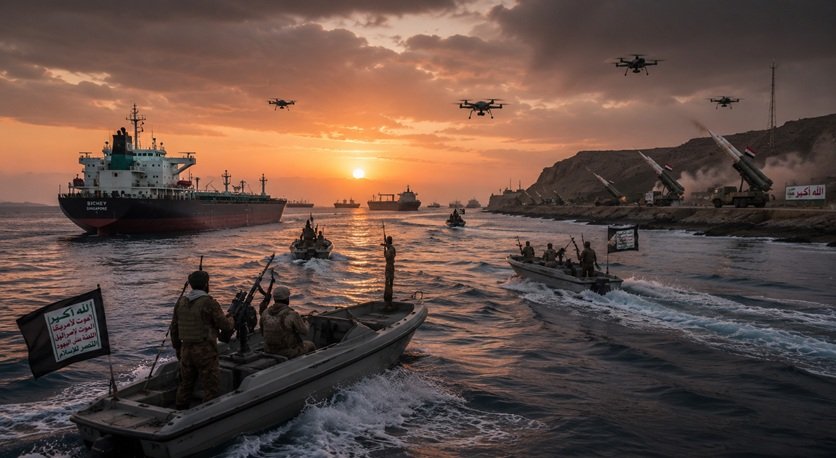
Instead of concentrating primarily on land engagements, the movement has increasingly attacked commercial shipping routes with missiles, drones, and public alerts aimed at shipping companies.
Thus, the latest announcement signifies more than mere political posturing—it indicates the potential for widespread disruption should tensions continue to escalate.
Why Saudi Maritime Routes Matter
Saudi Arabia is among the top energy exporters globally.
Any disturbances affecting its shipping lanes could impact international oil markets within a matter of hours.
Key issues consist of:
- Holds in trade shipping.
- Rising insurance premiums for ships.
- Increased shipping costs.
- Possible effects on global oil markets.
- Heightened naval activities by global forces.
While not all threats lead to real disruptions in shipping, markets frequently respond swiftly due to the uncertainty impacting trading choices.
This highlights why investors pay close attention to every military announcement made by governments and armed factions in the Gulf and Red Sea regions.
Strategic Significance of Local Waterways
In addition to military factors, geographic elements significantly influence the ongoing crisis.
The Strait of Hormuz is crucially significant as one of the most vital waterways in the world, linking oil producers in the Gulf to global markets. Concurrently, the Bab el-Mandeb Strait is another key shipping lane that connects the Red Sea with international trade networks.
Military threats impacting either route can quickly alter global energy supplies and trade logistics. Recently, Reuters reported that Iranian officials have been in talks about preparing Houthi forces in response to potential further American assaults on key Iranian infrastructure.
Consequently, international shipping companies are meticulously assessing their navigation paths while governments collaborate on naval missions to mitigate threats.
International Reactions and Diplomatic Pressure
The swift decline in security conditions has led to urgent diplomatic engagements throughout the Middle East and beyond. Nations with vested interests in the Gulf are advocating for calm while simultaneously bolstering security measures around embassies, military sites, and energy facilities.
The United Nations has reiterated its calls for reducing tensions, cautioning that a prolonged conflict could result in serious humanitarian and economic repercussions. Multiple governments are also urging both Washington and Tehran to engage in indirect discussions before the crisis escalates further.
Despite the intense military confrontations, analysts are of the opinion that diplomatic channels remain partially open. Regional mediators continue to operate discreetly to avert an increase in hostilities.
Gulf Nations Increase Security
Nations in the Gulf region have reacted by enhancing military readiness and augmenting surveillance over vital infrastructure.
Authorities are particularly concentrating on safeguarding:
- Oil extraction sites
- Significant ports and commercial terminals
- Airports and military installations
- Offshore energy facilities
- International trade routes
These measures reflect fears that further assaults could extend beyond the immediate area of conflict if diplomatic attempts fall short.
Economic Impact Reaches Global Markets
Military confrontations in a critical energy-producing area seldom stay localized. Financial markets responded swiftly to reports of escalating military activities and threats to maritime channels.
Energy market participants are attentively observing developments since both the Strait of Hormuz and the Bab el-Mandeb Strait are crucial passages for global trade. The mere threat of disruption typically leads to rising oil prices and increased shipping expenses.
The narrative surrounding a potential all-out war between Iran and the US has thus evolved beyond just a political concern. It now holds significant consequences for sectors ranging from aviation and shipping to manufacturing and consumer products.
Shipping Companies Face Difficult Choices
Global shipping companies are consistently evaluating whether routes remain sufficiently safe for commercial activities.
Should security threats continue to rise, firms might opt to divert their vessels around southern Africa instead of passing through the Red Sea. While this alternative is safer, it involves significantly more distance, increased fuel usage, longer transit times, and elevated operational costs.
Insurance companies are also revising their premium rates for ships navigating through high-risk areas. In past regional tensions, insurance rates spiked, and specialists anticipate that a similar trend could occur if attacks become more frequent.
The Houthi Maritime Strategy Explained
The Houthis have increasingly turned to maritime operations as a key element of their broader military agenda.
Instead of pursuing traditional naval battles, the group has shown its capability to challenge commercial shipping using missiles, drones, and fast attack vessels. Their tactics aim to instill uncertainty while compelling foreign naval forces to allocate more resources to securing shipping routes.
Recent intel suggests that preparations are underway with missile systems and drones positioned near the Bab el-Mandeb Strait in anticipation of further conflict.
Military experts assert that such strategies offer substantial strategic advantages since they impact international commerce without necessitating large conventional naval fleets.
Why the Strait of Hormuz Remains Central
While much focus has shifted to shipping in the Red Sea, the Strait of Hormuz continues to be the most strategically vital waterway in the region.
Historically, about twenty percent of the global oil trade transported by sea has gone through this narrow waterway. A long-term interruption in this passage would probably impact countries in Asia, Europe, and other areas that rely on energy imports.
Because of this, the United States has focused its naval forces in the Gulf, while allied countries work together on patrols to guarantee that commercial shipping can proceed without interruption.
Consequently, the situation involving a full-scale conflict between the US and Iran is now closely associated with maritime safety, rendering naval actions as crucial as land-based developments.
Military Assessments from Both Sides
Strategic experts warn that neither the United States nor Iran may be aiming for an unrestricted war in the region, but both are still undertaking actions to bolster their bargaining stances.
According to the United States, its military endeavors aim to lessen the risks faced by American individuals and commercial vessels. On the other hand, Iran maintains that its actions are essential for safeguarding national integrity and discouraging further assaults.
This situation fosters a perilous atmosphere where each new attack could provoke further retaliation, despite the fact that neither party aspires to a larger-scale conflict.
Consequently, analysts caution that misjudgment is one of the most significant threats currently confronting the region.
Humanitarian Issues Keep Intensifying
As military developments capture headlines, humanitarian groups are expressing growing concern for the effects on civilians throughout the area. Heightened violence has interrupted transportation, hindered access to vital supplies, and put extra strain on health services in regions already experiencing turmoil.
International relief organizations are calling on all involved parties to adhere to global humanitarian laws, safeguard civilian facilities, and guarantee safe passage for humanitarian aid. Diplomatic initiatives are still aimed at averting further civilian harm while promoting dialogue to ease tensions.
The narrative of an outright war between Iran and the US also raises flags regarding long-term recovery in the region, as extended conflict could stall rebuilding efforts, diminish investor trust, and exacerbate existing humanitarian crises.
Energy Markets Feel The Pressure
Oil market traders and financial experts are persistently tracking developments closely.
Conflicts in the Gulf have historically prompted swift reactions in commodity markets due to the area’s crucial role in energy production worldwide. Concerns about possible disruptions in the Strait of Hormuz or the Bab el-Mandeb Strait have already led to increased volatility in the markets.
While supply chains remain somewhat intact, shipping firms, insurers, and energy companies are formulating backup plans in case military actions escalate.
Can Diplomacy Still Avert a Broader Conflict?
Even with a rise in aggressive language, diplomatic channels have not been completely shut down.
Officials indicate that indirect discussions between Washington and Tehran persist via regional mediators, with nations such as Qatar working to lower tensions and investigate confidence-building options. These interactions reveal that political discourse is still attainable even amid ongoing military actions.
Experts propose that future talks may concentrate on several key areas:
Key areas include:
- Reestablishing maritime security.
- Avoiding attacks on commercial vessels.
- Mitigating military presence around vital waterways.
- Safeguarding regional energy facilities.
- Restarting wider diplomatic conversations.
The success of these endeavors will largely hinge on developments in the coming days.
What the Conflict Indicates for the Global Community
The effects of the ongoing crisis reach far beyond the Middle East.
Global businesses, governments, and consumers are currently evaluating the potential impacts of prolonged instability. Increased shipping expenses, variable fuel costs, and rising insurance premiums could potentially influence various industries worldwide, such as aviation, manufacturing, logistics, and international commerce.
For many nations that significantly rely on imported oil and natural gas, maintaining stability in Gulf shipping routes is an economic imperative. Any extended interruption could lead to inflationary pressures and a downturn in global economic growth.
Therefore, the Iran-US full-scale war scenario signifies not only a military engagement but also a geopolitical dilemma with worldwide ramifications.
Investors Monitor Every Change
Financial markets are increasingly reactive to statements from Washington, Tehran, and their regional partners.
Every new military action, diplomatic remark, or shipping alert has the capacity to affect:
Key areas affected include:
- Global oil prices.
- Stock market feelings.
- Shipping insurance costs.
- Expenses for airlines.
- Currency fluctuations in nations that import energy.
Given that uncertainty can impact markets just as much as actual disruptions, investors are likely to proceed with caution until there are clearer indications of de-escalation.
Conclusion
The next few weeks will likely be pivotal in deciding if the region heads towards increased hostilities or a revival of diplomatic efforts.
Military actions are ongoing in various locations, yet representatives from different factions have acknowledged that communication via intermediaries is still happening. This mix of persistent conflict and ongoing conversations shows how dynamic the circumstances are.
President Masoud Pezeshkian’s announcement of an all-out war against the US by Iran demonstrates Tehran’s view on the current military offensive. Meanwhile, the Houthis have declared a Saudi maritime blockade, which has introduced another critical aspect to an already intricate regional dilemma. These incidents have heightened worries regarding maritime safety, energy resources, and the risk of further escalation.
Concurrently, nations throughout the Middle East and elsewhere continue to advocate for restraint, understanding that an extended conflict would have dire humanitarian, economic, and geopolitical implications.
At this moment, the international community is intently observing whether diplomatic efforts can diminish the pace of military actions or if new assaults will involve additional regional players in the strife. The result will not only determine the trajectory of the Middle East but may also affect global energy prices, international commerce, and geopolitical stability for the foreseeable future.