
When headlines first surfaced about UAE economic strength currency swap talks, many people jumped to conclusions. “Is the UAE in trouble?” “Does it need financial help?” Those reactions are understandable—but also misleading.
Here’s the truth: currency swap discussions are not always a distress signal. In fact, in this case, they reveal something quite the opposite—confidence, strategic planning, and global financial influence.
Let’s unpack what’s really going on, why it matters, and how it reflects the UAE’s evolving role in the global economy.
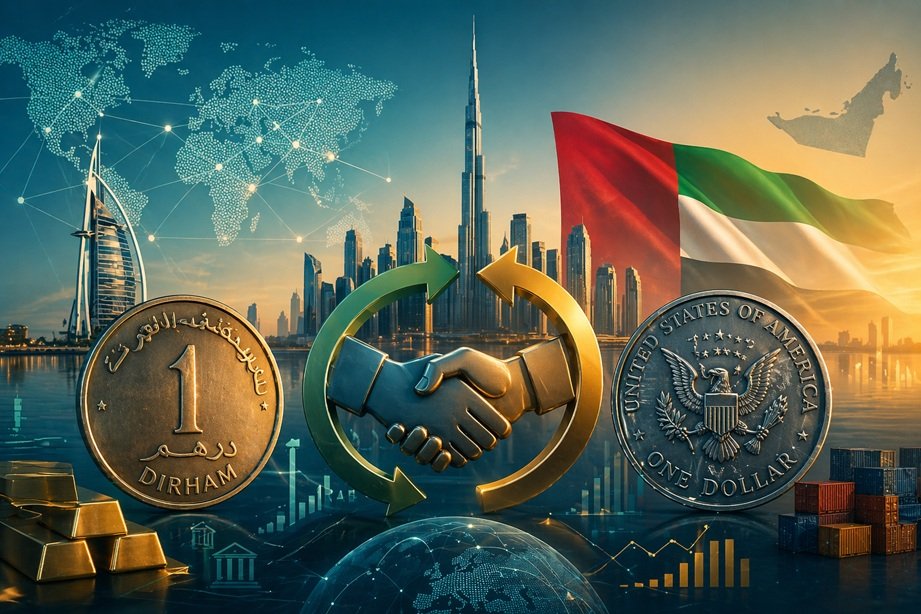
Table of Contents
- Introduction to UAE Economic Strategy
- Understanding Currency Swap Talks
- Why UAE Is Engaging in Currency Swap Discussions
- UAE Economic Strength Currency Swap Talks Explained
- Not a Crisis Signal—But a Confidence Indicator
- Strategic Importance of Currency Swap Agreements
- How Currency Swaps Protect Economies
- UAE’s Financial Strength and Global Position
- Historical Context of UAE Financial Partnerships
- Global Impact of UAE Economic Moves
- Role of the US Dollar in UAE Economy
- Crisis Preparedness and Economic Stability
- Misconceptions vs Reality
- Future Outlook of UAE Currency Strategy
- Final Conclusion
Understanding Currency Swap Talks (Without the Jargon)
Before diving deeper into UAE economic strength currency swap talks, it’s important to understand what a currency swap actually is.
A currency swap is a financial arrangement between two central banks. They exchange currencies temporarily, with an agreement to reverse the transaction later. Think of it like a financial safety net rather than a loan.
Why do countries use it?
- To ensure liquidity during uncertain times
- To stabilize financial markets
- To support banks needing foreign currency
- To prevent panic-driven asset sell-offs
Unlike loans, these swaps don’t create long-term debt. They are more about access than dependence.
According to financial experts, such tools became especially important during the 2008 global financial crisis when markets froze and liquidity dried up.
Why UAE Is Talking About Currency Swaps
Now let’s address the big question: why is the UAE even considering this?
Recent geopolitical tensions—especially disruptions in the Middle East—have impacted oil flows, global trade, and financial markets.
But here’s the key point: the UAE is not reacting out of weakness.
Instead, these talks are part of forward-thinking risk management.
What triggered the discussion?
- Rising geopolitical tensions in the region
- Potential disruptions in oil exports
- Volatility in global financial markets
- Need for precautionary liquidity buffers
Officials have clearly stated that the move is a “safety net,” not an emergency measure.
Not a Crisis Signal—But a Confidence Indicator
This is where the narrative shifts.
The phrase UAE economic strength currency swap talks might sound technical, but the underlying message is simple: strong economies plan ahead.
Experts emphasize that requesting or discussing swap lines does not indicate financial distress.
Why it signals strength:
- The UAE has massive foreign exchange reserves
- Its currency (dirham) is stable and pegged to the US dollar
- It maintains strong global financial ties
- It has diversified income sources beyond oil
Even US officials expressed surprise at the idea that the UAE would need support, highlighting its wealth and resilience.
So rather than panic, think preparation.
The Strategic Angle: More Than Just Finance
There’s another layer to UAE economic strength currency swap talks—geopolitics.
Some analysts believe these discussions are also a strategic signal.
What could the UAE be signaling?
- Strengthening ties with the United States
- Maintaining leverage in global financial systems
- Exploring alternative economic alignments (like Asia/China)
- Reinforcing its position as a global financial hub
In simple terms, the UAE is playing smart diplomacy through financial tools.
One analysis even suggested the move could be more about signaling partnerships than actual need.
How Currency Swaps Protect Economies
Let’s break it down further.
Why would a strong economy still want a swap line?
Because uncertainty doesn’t discriminate—even strong economies prepare for shocks.
Key benefits of swap arrangements:
- Instant access to foreign currency (especially US dollars)
- Protection against sudden capital outflows
- Stabilization of domestic banking systems
- Boost to investor confidence
During crises, the biggest risk is not lack of wealth—but lack of liquidity at the right moment.
Currency swaps solve that problem.
UAE’s Financial Firepower: The Real Backbone
To understand UAE economic strength currency swap talks, you need to look at the country’s financial fundamentals.
The UAE isn’t just “rich”—it’s structurally strong.
Core strengths include:
- Hundreds of billions in foreign reserves
- Sovereign wealth funds worth trillions
- A globally connected banking system
- A stable, dollar-pegged currency
Reports indicate the country entered current geopolitical tensions with significant financial buffers.
This means the UAE is not reacting—it’s reinforcing.
A History of Smart Financial Partnerships
The UAE has a track record of using currency swaps strategically.
For example:
- Agreements with regional partners to boost trade
- Bilateral deals to strengthen financial cooperation
- Use of swaps to enhance liquidity in local markets
Such agreements are designed to:
- Promote cross-border trade
- Reduce reliance on single currencies
- Improve financial integration
These are long-term strategies—not emergency moves.
Global Impact: Why the World Is Watching
The implications of UAE economic strength currency swap talks go beyond the UAE itself.
This is about global finance.
Why it matters internationally:
- The UAE is a key oil exporter
- It plays a major role in global capital flows
- It connects East and West financially
- It influences regional economic stability
If a country like the UAE takes precautionary steps, global markets pay attention.
And often, they interpret it as a sign of stability—not weakness.
The Dollar Connection: A Crucial Factor
One of the biggest reasons behind these discussions is the US dollar.
The UAE dirham is pegged to the dollar, meaning its stability depends on dollar availability.
Why dollar access matters:
- Oil is traded globally in dollars
- International trade relies on dollar liquidity
- Financial markets operate heavily in USD
Currency swaps ensure that the UAE can always access dollars—even during disruptions.
This strengthens—not weakens—the financial system.
Crisis Lessons: Why Preparedness Wins
History has shown that countries that prepare early handle crises better.
During past global shocks:
- Countries with swap lines avoided currency crashes
- Financial markets stabilized faster
- Investor confidence remained intact
That’s exactly what the UAE is aiming for.
Not reacting late—but preparing early.
The Bigger Picture: Economic Strategy in Action
At its core, UAE economic strength currency swap talks reflect a modern approach to economic management.
This isn’t about survival.
It’s about control, influence, and resilience.
What makes the UAE different?
- It blends traditional oil wealth with modern finance
- It actively shapes global financial relationships
- It invests in long-term economic diversification
From tourism to technology, the UAE is no longer just an oil economy.
It’s a global financial powerhouse.
Misconceptions vs Reality
Let’s clear up some common misunderstandings.
Myth: Currency swap talks mean crisis
Reality: They are often precautionary tools
Myth: UAE needs financial help
Reality: It has massive reserves and strong fundamentals
Myth: This signals weakness
Reality: It signals strategic planning
Understanding these differences is key to interpreting global economic news correctly.

What Happens Next?
So, where do these discussions go from here?
Possibilities include:
- A formal swap agreement with the US
- Expanded financial cooperation
- Increased global confidence in UAE markets
Even if no deal is finalized, the message is already clear: the UAE is proactive, not reactive.
Final Conclusion
In the end, the story around UAE economic strength currency swap talks is not about urgency—it’s about strategy. Rather than reacting to pressure, the UAE is demonstrating how strong economies think ahead, build safeguards, and maintain stability even in uncertain times.
These discussions highlight the country’s deep financial reserves, global partnerships, and its ability to navigate complex geopolitical and economic landscapes with confidence. Instead of signaling weakness, they reinforce the UAE’s position as a resilient and forward-looking economic powerhouse.
As global markets continue to evolve, such proactive measures send a clear message: the UAE is not just participating in the global financial system—it is shaping it.