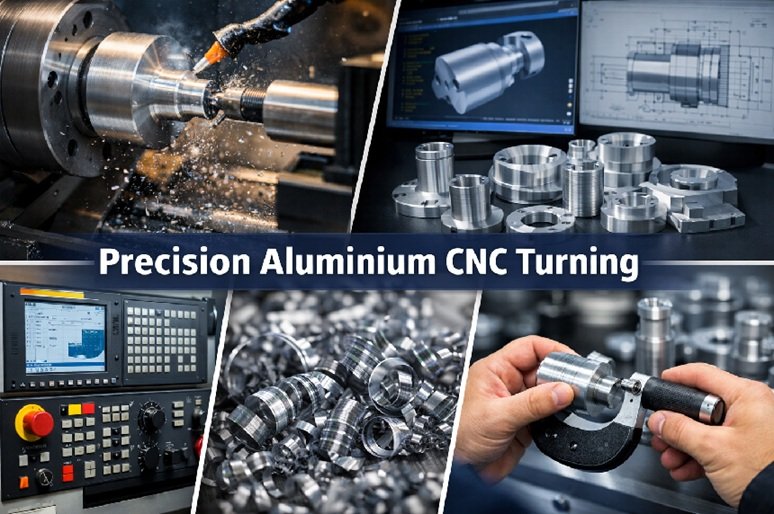

If you’ve ever wondered how perfectly shaped metal parts come to life—those smooth, symmetrical, high-performance components used in cars, aircraft, or electronics—you’re already thinking about precision aluminium CNC turning.
This isn’t just another machining process. It’s one of the most reliable, scalable, and cost-effective methods manufacturers use today. And the best part? It combines speed, accuracy, and consistency in a way traditional machining simply can’t match.
Let’s break it down in a practical, real-world way—no boring textbook explanations, just insights that actually help you understand why this process matters.
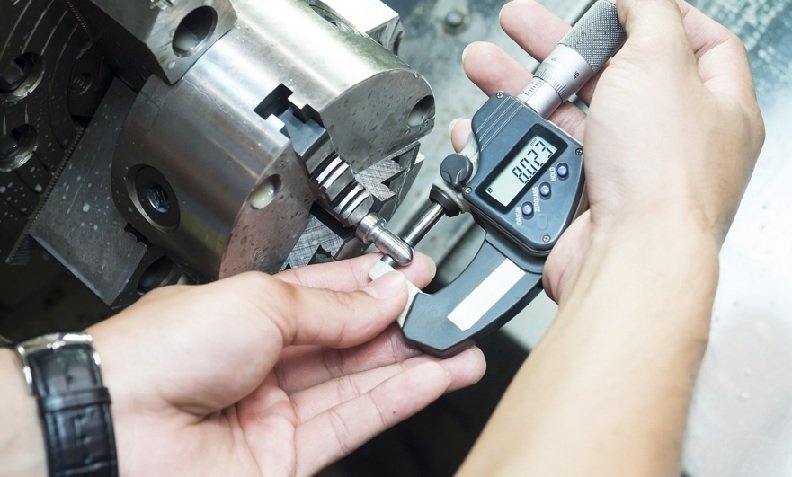
What Is Precision Aluminium CNC Turning?
At its core, precision aluminium CNC turning is a subtractive manufacturing process where a cutting tool removes material from a rotating aluminium workpiece to achieve a desired shape.
Here’s how it works in simple terms:
- The aluminium rod or billet is clamped into a rotating chuck
- The cutting tool moves along programmed paths
- Material is gradually removed until the final geometry is achieved
This process is controlled by computer numerical control (CNC), which ensures extremely high accuracy and repeatability.
Unlike manual machining, CNC turning eliminates guesswork. Once programmed, it can produce identical parts thousands of times without losing precision.
Why Aluminium Is the Preferred Material
Not all metals behave the same way during machining. Aluminium stands out—and for good reason.
Key Properties That Make Aluminium Ideal
- Lightweight but strong
- Excellent thermal conductivity
- High corrosion resistance
- Easy machinability (faster cutting speeds)
- Cost-effective compared to many alloys
Manufacturers often choose aluminium because it can be machined 3–4 times faster than harder metals like steel, significantly reducing production time.
That means faster delivery, lower costs, and better scalability.
How the CNC Turning Process Actually Works
Understanding the process helps you appreciate why precision aluminium CNC turning is so widely used.
Step-by-Step Breakdown
1. CAD Design
Everything starts with a digital design. Engineers create a 2D or 3D model of the part using CAD software.
2. CAM Programming
The design is converted into machine instructions (G-code), which control tool movements and speeds.
3. Machine Setup
The aluminium workpiece is mounted, and tools are configured.
4. Machining Begins
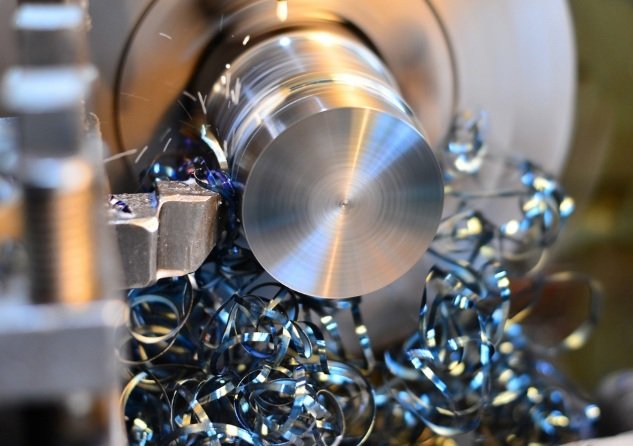
The workpiece rotates at high speed while the tool removes material layer by layer.
5. Finishing & Inspection
Final touches like polishing, coating, or anodizing are applied, followed by quality checks.
This automated workflow ensures consistent, repeatable results—a key advantage in industrial production.
Table of Contents
- Introduction to Precision Aluminium CNC Turning
- What Is Precision Aluminium CNC Turning?
- Why Aluminium Is the Preferred Material
- How the CNC Turning Process Works
- CAD Design
- CAM Programming
- Machine Setup
- Machining Process
- Finishing & Inspection
- Types of CNC Turning Operations
- 7 Key Benefits of Precision Aluminium CNC Turning
- Industries That Use CNC Turning
- Surface Finishing Techniques
- Precision vs Traditional Turning
- Factors Affecting Machining Quality
- Cost Considerations in CNC Turning
- Common Challenges in CNC Turning
- Future Trends in CNC Turning
- Tips for Choosing the Right CNC Partner
- Conclusion
Types of Operations in CNC Turning
The process isn’t limited to simple shapes. It can handle complex geometries through different operations.
Common CNC Turning Operations
- Facing – creating flat surfaces
- Grooving – cutting narrow channels
- Threading – forming screw threads
- Boring – enlarging internal holes
- Taper turning – creating conical shapes
These operations allow manufacturers to produce highly customized components with tight tolerances.
7 Key Benefits of Precision Aluminium CNC Turning
Let’s get to the real reason businesses invest in this technology.
1. Exceptional Accuracy
CNC systems follow programmed instructions with micron-level precision, ensuring consistent results every time.
2. Faster Production Cycles
Because aluminium is easy to machine, production times are significantly reduced.
3. Cost Efficiency
Less material waste + faster machining = lower overall production costs.
4. High Repeatability
Once programmed, the same part can be produced thousands of times with identical quality.
5. Superior Surface Finish
The process delivers smooth finishes, often requiring minimal post-processing.
6. Design Flexibility
Complex shapes, internal features, and tight tolerances are easily achievable.
7. Scalability
Whether you need 10 parts or 10,000, the process scales effortlessly.
Industries That Rely on This Technology
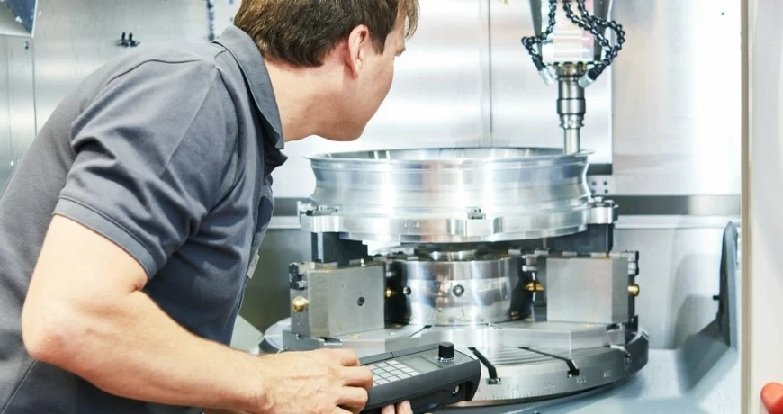
Precision aluminium CNC turning isn’t limited to one sector—it’s everywhere.
Major Industries Using It
- Automotive (engine components, shafts)
- Aerospace (lightweight structural parts)
- Electronics (heat sinks, enclosures)
- Medical devices (precision instruments)
- Industrial machinery (bushings, fittings)
The ability to produce lightweight yet strong components makes aluminium especially valuable in performance-driven industries.
Surface Finishing: Adding Value Beyond Machining
Machining is just one part of the story. Surface finishing plays a huge role in performance and aesthetics.
Popular Finishing Techniques
- Anodizing – improves corrosion resistance
- Polishing – enhances appearance
- Powder coating – adds durability
- Sandblasting – creates uniform texture
Advanced finishing can significantly increase both the lifespan and functionality of aluminium components.
Precision vs Traditional Turning: What’s the Difference?
You might wonder—why not just use a manual lathe?
Here’s the reality.
CNC Turning vs Manual Turning
- CNC is automated; manual relies on operator skill
- CNC offers higher precision and consistency
- CNC reduces human error
- CNC supports complex geometries
Manual turning still has its place, but for modern manufacturing demands, CNC is the clear winner.
Factors That Influence Machining Quality
Even with advanced machines, several variables affect the final result.
Critical Parameters
- Cutting speed
- Feed rate
- Tool material
- Coolant usage
- Machine stability
Optimizing these parameters ensures better surface finish, longer tool life, and improved efficiency.
Cost Considerations: What Impacts Pricing?
Not all CNC turning jobs cost the same. Pricing depends on multiple factors.
Key Cost Drivers
- Material grade of aluminium
- Complexity of the design
- Required tolerances
- Production volume
- Surface finishing requirements
Interestingly, using unnecessarily tight tolerances can increase costs without adding functional value—something experienced manufacturers always consider.
Common Challenges in CNC Turning
No process is perfect. Even precision aluminium CNC turning comes with challenges.
Typical Issues
- Tool wear over time
- Chip control during machining
- Thermal expansion affecting accuracy
- Surface defects if parameters are wrong
The good news? Most of these can be minimized with proper planning and optimization.
Future Trends in CNC Turning
Manufacturing is evolving fast, and CNC turning is no exception.
Emerging Trends
- AI-driven machining optimization
- Smart CNC machines with IoT integration
- Automation with robotic loading systems
- Sustainable machining with reduced waste
These innovations are pushing the limits of what precision manufacturing can achieve.
Tips for Choosing the Right CNC Turning Partner
If you’re outsourcing, choosing the right manufacturer is critical.
What to Look For
- Experience with aluminium machining
- Advanced CNC equipment
- Strong quality control processes
- Ability to handle custom designs
- Transparent pricing
A good partner doesn’t just manufacture parts—they help optimize your entire production process.
Conclusion
Precision aluminium CNC turning has become a game-changer in modern manufacturing, offering unmatched accuracy, efficiency, and scalability. From lightweight automotive parts to high-performance aerospace components, this process ensures consistent quality while keeping production costs under control.
What truly sets it apart is its ability to combine speed with precision—something traditional machining methods struggle to achieve. With advanced CNC technology, manufacturers can produce complex designs with minimal waste and maximum repeatability.
As industries continue to demand tighter tolerances and faster production cycles, this method will only grow in importance. Whether you’re a manufacturer, engineer, or business owner, investing in this technology—or partnering with the right CNC service provider—can significantly improve your product quality and competitiveness.
In simple terms, precision aluminium CNC turning isn’t just a process—it’s a smart manufacturing strategy for the future.