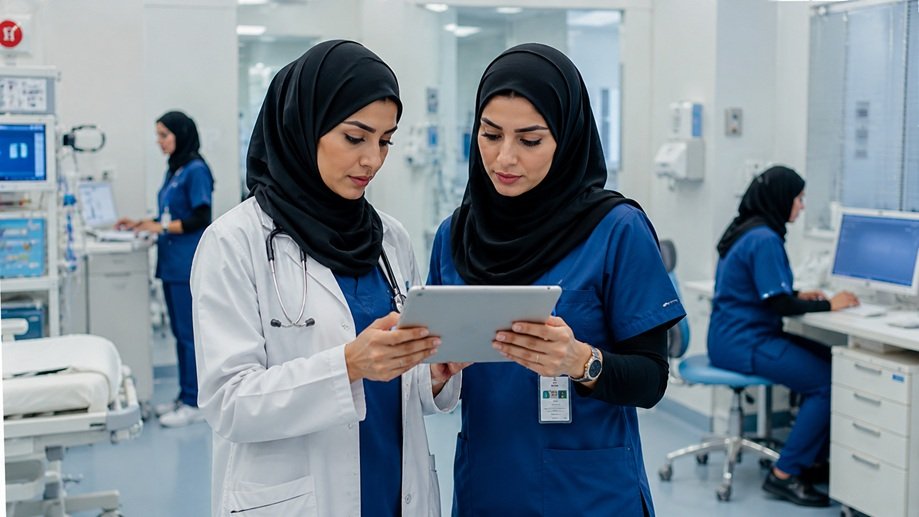

The labor landscape in the UAE’s private sector is evolving rapidly, with a clear indication being the increasing involvement of Emirati women in various professional, technical, and business positions. Emirati women holding skilled positions are no longer a minor story confined to traditional fields. Their presence is becoming more prominent in finance, technology, healthcare, education, digital business, and other sectors of the contemporary economy.
This transformation is significant as the private sector presents a different working environment compared to government jobs. It offers opportunities for quicker career advancement, exposure to international firms, roles driven by performance, and the chance to engage in emerging industries. However, it also requires individuals to possess adaptable skills, solid qualifications, and the self-assurance needed to thrive in an ever-changing work environment.
Recent statements from the Dubai Women Establishment emphasize this transformation. During the 2025 Emirati Women’s Forum, Shaima Al Awadi from MoHRE indicated that women made up over 70% of Emirati citizens employed in the private sector under the age of 35. She also pointed out the increasing engagement of women in fields such as the digital economy, artificial intelligence, renewable energy, and creative sectors.
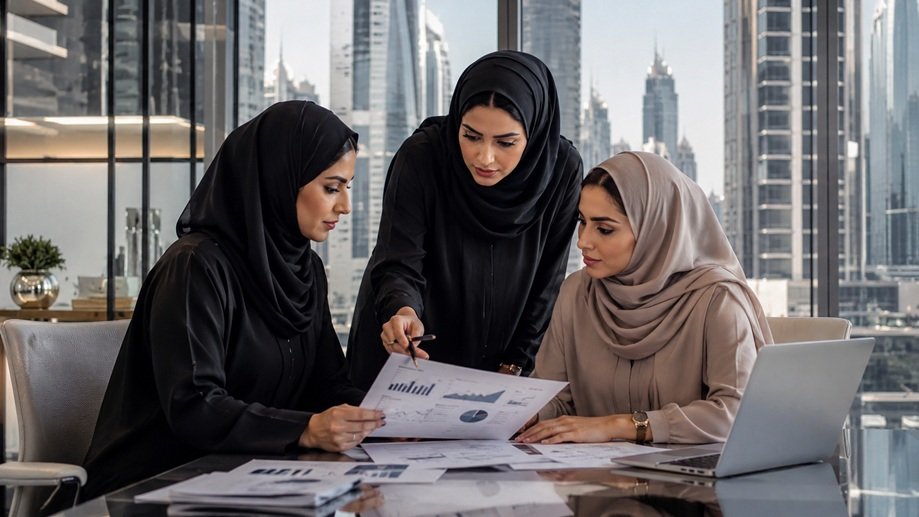
The Growing Importance of Skilled Employment
In the UAE, the term “skilled job” carries a specific connotation. The official UAE government defines skilled occupations through nine professional tiers, as noted by MoHRE. A job is deemed skilled when an employee belongs to levels one to five, possesses educational credentials beyond secondary school or an equivalent qualification, has those credentials validated, and earns a minimum salary of AED 4,000 per month, excluding commissions.
This classification includes a wide array of professions. Depending on their qualifications and professional levels, individuals can find themselves categorized as skilled in areas such as management, science, engineering, medicine, education, analysis, technical professions, sales, and various other fields.
For Emirati women in skilled professions, this opens up a far broader range of career possibilities than the historic notion of limited employment sectors. A computer science graduate can forge a path in artificial intelligence. A finance graduate is capable of advancing into banking, investments, or financial analysis. A healthcare worker may find opportunities in hospitals, specialized clinics, or health technology. Meanwhile, a business graduate could embark on a career in consulting, marketing, operations, or corporate strategy.
What matters most is that skills are becoming the primary determinants of long-term career potential, rather than nationality or gender. As the UAE continues to diversify its economy, there is a growing need for individuals who can tackle challenges, manage technological advancements, understand consumer needs, and make informed decisions.
Sectors Creating New Opportunities
Technology and the Digital Landscape
Technology emerges as one of the most captivating domains for Emirati women in skilled positions. The UAE is making substantial investments in digital transformation, artificial intelligence, and advanced technologies, leading to an increased demand for skills related to software, data management, cybersecurity, product design, and digital business.
The Dubai Women Establishment specifically noted the digital economy and artificial intelligence as sectors where Emirati women are becoming more involved.
This trend is noteworthy because careers in technology extend well beyond programming alone. Women can take on roles such as product managers, data analysts, UX specialists, cybersecurity experts, AI professionals, project managers, and digital strategists.
Finance and Business
Finance remains a significant career avenue. Previous data from MoHRE indicated that Emirati women employed in the private sector were engaged in various roles, including finance and banking, tourism, retail, education, business services, and healthcare.
Currently, the scope of finance extends beyond conventional banking roles. Areas like financial technology, wealth management, accounting, risk assessment, compliance, insurance, and corporate finance all demand specialized expertise.
Healthcare and Education
The fields of healthcare and education persist in offering substantial professional prospects. These industries prioritize formal education and hands-on experience, making them ideal for graduates seeking to establish careers grounded in acknowledged professional competencies.
The evolving healthcare industry in the UAE also fosters opportunities in health administration, medical technology, research assistance, digital health, and specialized services. Similarly, the education sector is broadening beyond traditional teaching roles to include curriculum design, educational technology, administration, and training.
Renewable Energy and Creative Industries
The forthcoming opportunities extend beyond conventional sectors. The Dubai Women Establishment has highlighted renewable energy and creative sectors as growing areas where Emirati women can play a vital role in the nation’s economic progress.
This is crucial as career planning should not only emphasize currently trending jobs. Individuals in academic and early career stages can enhance their prospects by acquiring skills relevant to industries poised for growth.
Nafis Is Transforming the Private-Sector Pathway
A major policy shift contributing to this change is Nafis, the UAE initiative aimed at motivating Emirati citizens to pursue and develop careers within the private sector.
According to Dubai Women Establishment, Nafis represents a significant milestone in broadening employment options for Emirati women, emphasizing financial aid, educational training, and ongoing professional development.
For Emirati women in professional roles, support initiatives can play a critical role at various career phases. A recent graduate might seek assistance transitioning from education to their initial role in the private sector. An experienced workforce member could benefit from specialized training to advance to a higher position. Another individual may look for career growth support while moving into a managerial role.
The wider Emiratisation strategy also provides private businesses with a compelling incentive to cultivate dependable streams of Emirati talent. This does not diminish the importance of skills; rather, it enhances the significance of real capability, as companies require workers who can perform effectively, develop further, and add lasting value.

What Employers Are Seeking
The most promising opportunities typically favor candidates who integrate qualifications with practical skills. For Emirati women in professional roles, holding just a university degree may not suffice.
Employers are increasingly prioritizing:
- Competency in digital technology and familiarity with contemporary workplace tools
- Effective communication, presentation skills, and teamwork abilities
- Analytical reasoning and problem-solving capabilities
- Certifications specific to the industry
- Proficiency in both English and Arabic communication when applicable
- Internships, projects, or hands-on experience
- Leadership skills and project management expertise
- A proactive attitude toward learning new technological advancements
The most effective strategy is to align education with tangible evidence. Rather than merely listing a qualification in a resume, a candidate can illustrate contributions made, analyses undertaken, projects managed, improvements implemented, or results delivered.
This method also enhances a candidate’s visibility in competitive fields where numerous applicants possess similar academic qualifications.
Workplace Protections and Equal Opportunity
Career advancement relies not merely on job availability but also on the overall quality of the work environment. According to the UAE Government, women have the right to receive equal pay as men when they undertake the same role or equivalent positions within the private sector employment regulations. Moreover, the authorities emphasize the significance of maternity protections and initiatives that support women in the workforce.
These safeguards are vital because sustained involvement necessitates more than just hiring individuals. Women require work settings that allow for the integration of job performance, career development, and family obligations.
The Dubai Women Establishment has also pointed out that options like flexible hours, maternity leave, and on-site childcare can greatly assist working mothers in juggling their job and family duties.
For Emirati women in professional roles, such an atmosphere can distinguish between merely entering the private sector and establishing a durable career within it.
The Leadership Chance Ahead
The forthcoming phase of advancement is not solely focused on boosting the number of women joining private enterprises. It also concerns the proportion of those who ascend into leadership positions.
A talented individual who takes on roles such as manager, department leader, founder, technical expert, or executive at the board level generates a broader influence than what a single job title may imply. She serves as a mentor for less experienced colleagues and plays a significant role in shaping both workplace culture and strategic business choices.
For Emirati women holding skilled positions, the development of leadership abilities is equally vital as the initial hiring process. Nafis recognizes various segments of private sector talent, encompassing fields like programming, supervision, leadership, nursing, medical, and finance roles. Its awards guide illustrates the expanding interpretation of what constitutes valuable Emirati talent.
This extensive range is promising. It indicates that the future workforce will not adhere to a restricted notion of success. Proficiency in technology, knowledge of healthcare, financial acumen, management skills, and digital literacy all pave the way for meaningful career opportunities.
What This Development Signifies for the UAE Economy
The rise of Emirati women in skilled positions goes beyond merely a statistic related to the workforce. It intertwines education, job opportunities, productivity, and economic diversification.
As more skilled women join private firms, businesses can tap into a richer national talent pool. When these individuals advance to higher positions, the nation benefits from seasoned leadership. Additionally, when young women can envision attainable career paths in areas such as technology, finance, healthcare, energy, and creative sectors, the expectations for the next generation can shift.
There are tangible business advantages as well. A varied workforce can introduce diverse experiences and viewpoints into customer insights, product innovation, management, and resolving issues. For an economy aiming to thrive on a global scale, nurturing national talent stands as a strategic investment.
The recent policy trends bolster this wider transition. The UAE persistently employs Emiratisation strategies and initiatives like Nafis to enhance national involvement in private sector jobs, while companies are increasingly tasked with fostering sustainable Emirati talent pipelines.
A Career Environment With Increased Options
The narrative surrounding Emirati women in skilled professions is increasingly focused on options. The private sector has evolved beyond merely being an alternative to governmental roles; for many professionals, it represents a venue for honing specialized skills, acquiring global experience, and attaining leadership roles.
The most promising candidates for the future will be those who view employability as an ongoing endeavor. While degrees lay the groundwork, digital competence, professional qualifications, effective communication, networking, and hands-on experience are essential to maintaining that foundation’s relevance.
The policy direction in the UAE is also unmistakably clear: national talent is anticipated to assume a more significant role in the private economy. Government initiatives like Nafis, worker protections, and Emiratisation efforts are working to establish favorable conditions, while both employers and employees must still transform those prospects into fruitful careers.
For Emirati women in professional roles, this presents an encouraging future. The scope is broadening from traditional occupations into fields such as artificial intelligence, digital commerce, sustainable energy, creative sectors, and leadership roles. The larger narrative is not solely focused on the number of women who join private enterprises, but rather on the depth of impact, knowledge, and creativity they can contribute once they are part of it.
Conclusion
The increase of Emirati women in professional roles within the private sector signifies a significant change in the workforce and economic goals of the UAE. Women are progressively establishing careers in areas like technology, finance, healthcare, education, sustainable energy, creative fields, and leadership, indicating a growing variety of professional prospects.
Initiatives launched by the government, such as Nafis and Emiratisation, are facilitating entry into careers in the private sector, while measures for workplace safety and opportunities for professional growth can aid in sustainable advancement. Nevertheless, the true indicator of achievement will be the ongoing development—from securing skilled positions to attaining promotions, leading teams, and occupying high-level decision-making roles.
For young Emirati women, the message is becoming progressively evident: the private sector offers more than just job opportunities; it can serve as a foundation for expertise, creativity, and leadership. As the UAE continues to diversify its economy, skilled female professionals are expected to assume an increasingly vital role in influencing the country’s forthcoming phase of development.