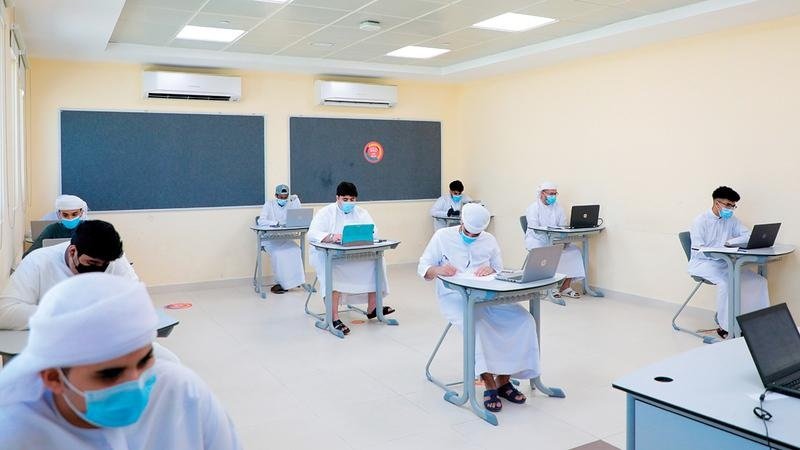

The abrupt shift to virtual learning throughout the United Arab Emirates has placed students, teachers, and parents back in a familiar challenge. Recently, schools and universities nationwide adapted to online instruction due to heightened security concerns that prompted authorities to implement precautionary actions. The topic of the UAE distance learning extension has now emerged as one of the most frequently searched education subjects in the Gulf area.
Education authorities initially indicated that online classes would persist from May 5 to May 8, 2026, while officials assessed the overall circumstances. Regional news sources suggest that a conclusive evaluation regarding a return to in-person classes is anticipated following government assessment.
For numerous families, the main question is straightforward: will students go back to physical classrooms next week, or should they prepare for another stretch of online schooling?

Table of Contents
- Introduction
- Why Schools Shifted to Remote Learning
- What the Government Has Said So Far
- How Schools Adapted So Quickly
- Parents Encounter Familiar Difficulties Again
- Universities and Institutions of Higher Learning
- Will Examinations and Assessments Change?
- Student Mental Wellbeing and Screen Fatigue
- Technology Has Become the Foundation of Education
- How Teachers Are Adapting to the Change
- What Parents Should Do Right Now
- Create a Fixed Daily Routine
- Prepare a Quiet Learning Space
- Monitor Screen Time Carefully
- Stay Connected With Schools
- Could Hybrid Learning Become Permanent?
- What Happens Next?
- Conclusion
Why Schools Shifted to Remote Learning
The sudden shift was not without justification. Officials across the UAE took quick action following increased regional tensions, emphasizing the importance of student safety and continuity in education. The Ministry of Education, along with higher education authorities, directed schools, nurseries, and universities to continue education online for several days while they kept an eye on the situation.
In contrast to the emergency closures witnessed during the pandemic, schools this time were better equipped. Most institutions already had:
- Active online systems
- Digital attendance mechanisms
- Cloud-based assignment tools
- Trained personnel ready to transition from face-to-face teaching to online instruction almost instantly
Many parents found it remarkable how seamlessly classes carried on. Teachers promptly posted assignments, live video lectures began as scheduled, and students accessed platforms they had become accustomed to over the last few years.
As a result, the potential for a UAE distance learning extension seems less disruptive compared to similar proclamations made previously. While families are anxious, schools appear technologically ready.
What the Government Has Said So Far
Officials have stated that the online learning setup will stay in effect until Friday while the situation is reviewed. Various local reports have also mentioned that authorities might choose either to restart in-person classes or to extend online education based on security assessments and logistical preparedness.
At this moment, there has not been a nationwide confirmation ensuring another complete week of virtual classes. Nonetheless, education analysts and observers believe that officials might contemplate short-term adaptability if further precautions are deemed necessary.
This uncertainty is precisely why the term UAE distance learning extension has become a prevalent topic among parents in Dubai, Abu Dhabi, Sharjah, and other emirates.
Schools have also urged families to stay equipped for either possibility. Students are encouraged to:
- Ensure their devices are charged
- Maintain internet connectivity
- Remain informed through official school communication avenues
How Schools Adapted So Quickly
A notable aspect of this situation has been the promptness demonstrated by UAE schools during the transition. As reported by educators and school leaders, many institutions were able to implement remote teaching systems within hours following the official announcement.
Several educational institutions depended on systems that were initially established during the COVID-19 pandemic. These years compelled schools to make substantial investments in:
- Technology
- Online teaching approaches
- Management of virtual classrooms
Reports indicate that schools concentrated on three primary objectives:
- Ensuring academic continuity
- Providing emotional support for students
- Organizing assessments effectively
Rather than merely sending out recorded lessons, educators conducted live teaching sessions. Certain schools also incorporated:
- Interactive group activities
- Quizzes
- Breakout discussions
- Collaborative projects
These methods helped enhance student engagement.
Consequently, the conversation regarding the extension of distance learning in the UAE contrasts with prior remote learning experiences. Currently, numerous students are maintaining their routines nearly as normally as possible, even while learning from home.
Parents Encounter Familiar Difficulties Again
In spite of the improved systems, working parents are once more juggling work commitments alongside supervising their children at home. Families with younger children, in particular, have had to restructure their daily schedules.
Parents are presently facing:
- Sharing devices among siblings
- Controlling screen time
- Overseeing homework completion
- Encouraging focus at home
- Juggling work responsibilities with childcare
Some parents express that the primary challenge is not technology itself but upholding discipline and structure. In a classroom, students tend to adhere to routines naturally. However, at home, the number of distractions can significantly rise.
Nevertheless, compared to the disorder witnessed during the initial pandemic period, many families feel that the current situation appears to be more organized and temporary.
The potential for an extension of distance learning in the UAE has motivated parents to prepare:
- Alternative schedules
- Quiet study areas
- Reliable internet connections
This preparation is essential in case remote education persists longer than anticipated.
Universities and Institutions of Higher Learning
Universities nationwide also participated in the temporary shift. Authorities confirmed that higher education institutions would maintain online operations, although some programs necessitating laboratories, clinical experiences, or hands-on training received limited exemptions.
Students in medical, engineering, and laboratory-intensive fields encountered slightly modified arrangements since hands-on work cannot always be replicated in a virtual format.
For the majority of university students, however, online education continued without significant disruptions. The following have become standard components of the university framework in the UAE:
- Lecture recordings
- Digital attendance tracking
- Online assignment submissions
The broader discussion concerning the UAE distance learning extension has also ignited discussions about the future of hybrid education in Gulf universities. Some experts contend that flexible learning models may persist even after in-person classroom activities completely resume.
Will Examinations and Assessments Change?
Assessments remain a primary concern for students. Schools are assessing how to ensure fair evaluations if remote classes extend for longer durations.
Numerous institutions have already established contingency measures that encompass:
- Online quizzes and timed evaluations
- Secure platforms for digital examinations
- Rescheduled in-person testing
- Alternatives for project-based grading
Some schools might still hold specific examinations physically if authorities allow limited attendance for essential assessments.
Students preparing for significant board exams are particularly anxious, as any abrupt changes in formats could influence their study plans and preparation timelines.
Thus, the potential for an extension of distance learning in the UAE has prompted many schools to enhance communication with parents to alleviate confusion and anxiety.
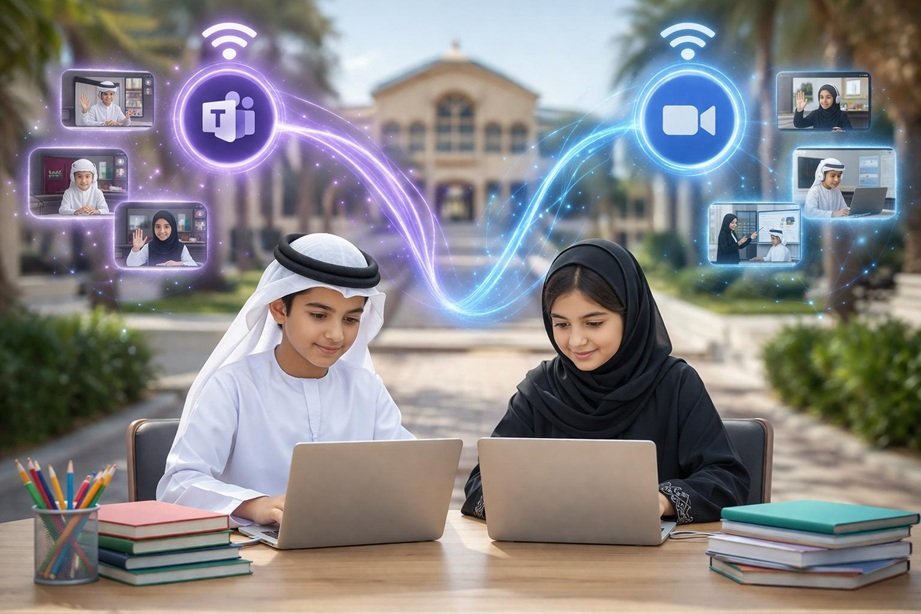
Student Mental Wellbeing and Screen Fatigue
Another significant concern garnering attention is the wellness of students. Extended periods of online instruction can result in:
- Exhaustion
- Diminished focus
- A sense of isolation
Educators indicate that numerous schools are adapting their approach to remote learning compared to prior methods. Rather than conducting long lectures that last for hours, teachers are striving to develop shorter, more engaging sessions.
Schools are also promoting:
- Regular physical activity breaks
- Online social events
- Support sessions with counselors
- Less homework assignments
- Flexible ways for participation
Psychologists frequently point out that uncertainty itself can induce stress in children. When students are unsure if schools will reopen next week or continue with online formats, their anxiety can escalate.
This is why communication from educational institutions has become essential amid the ongoing discussions regarding the UAE distance learning extension.
Technology Has Become the Foundation of Education
The education system in the UAE has significantly invested in digital infrastructure in recent years, and those investments are now yielding evident benefits.
Schools depend on platforms for:
- Real-time classroom instruction
- Uploading assignments
- Tracking attendance
- Communication with parents
- Digital grading mechanisms
Authorities in Abu Dhabi have even reinforced requirements for attendance and participation in live classes for schools utilizing virtual learning environments.
Technology specialists assert that the current scenario indicates that digital education is no longer viewed as a temporary emergency measure. Rather, it has evolved into a permanent resource that ensures educational continuity amid unforeseen interruptions.
This level of technological preparedness has alleviated anxiety regarding the UAE distance learning extension, particularly among older students who are already adept with online learning tools.
How Teachers Are Adapting to the Change
Teachers are at the heart of this entire transition. Reports indicate that many educators worked late into the evening preparing online lessons immediately after officials announced the shift to remote education.
Educators needed to quickly modify:
- Presentation styles
- Delivery of assignments
- Methods of classroom engagement
- Procedures for attendance
- Strategies to engage students
Teachers are also endeavoring to sustain emotional connections with students, particularly young learners who may find it challenging to stay motivated while learning from home.
Several schools have initiated:
- Wellbeing check-ins
- Virtual mentoring sessions
These initiatives assist children in maintaining social connections while they learn remotely.
Thus, the current discussions around the UAE distance learning extension underscore not only technology but also the flexibility of educators throughout the nation.
What Parents Should Do Right Now
While authorities continue evaluating the situation, parents can take several practical steps to reduce stress at home.
Create a Fixed Daily Routine
Children perform better when they follow structured schedules. Wake-up times, study periods, meal breaks, and sleep routines should remain consistent.
Prepare a Quiet Learning Space
Students need a distraction-free environment with stable internet access and proper lighting. Even a small dedicated study corner can improve concentration significantly.
Monitor Screen Time Carefully
Online learning naturally increases digital exposure. Parents should encourage short physical breaks between lessons whenever possible.
Stay Connected With Schools
Official updates should always come from verified school communication channels or government announcements rather than social media rumors.
Families following these strategies generally report smoother experiences during the ongoing UAE distance learning extension period.
Could Hybrid Learning Become Permanent?
One of the biggest long-term questions emerging from recent events is whether hybrid education could eventually become a standard model in the UAE.
Many schools have already discovered advantages in combining digital and physical learning methods. Online systems allow:
- Faster assignment sharing
- Easier parent communication
- Flexible revision sessions
- Recorded lessons for absentees
- More personalized digital resources
Some education experts believe the future may involve a blended approach where schools maintain digital learning capabilities even during normal classroom operations.
The recent UAE distance learning extension debate has therefore evolved into a larger conversation about how education itself is changing across the Gulf region.

What Happens Next?
As of now, authorities are expected to review the situation before confirming whether schools fully reopen for physical attendance next week.
Parents should understand that decisions will likely depend on several factors, including:
- Regional security assessments
- Transportation safety
- Institutional readiness
- Public confidence
- Government recommendations
Schools across the UAE have already demonstrated that they can continue operating effectively online if necessary. However, many families and educators still prefer physical classrooms because of:
- Social interaction
- Structured learning environments
- Reduced digital fatigue
The current UAE distance learning extension situation shows how education systems worldwide are evolving toward flexibility rather than rigid dependence on one format alone.
Conclusion
The UAE’s rapid transition to online education has once again demonstrated how prepared schools and universities have become in handling unexpected disruptions. While uncertainty remains about whether students will return to classrooms immediately, the country’s education system appears far more organized, technologically equipped, and adaptable than in previous years.
Parents, students, and teachers are understandably eager for clarity, but schools have already shown they can maintain academic continuity with minimal interruption. Digital platforms, hybrid teaching experience, and stronger communication systems have all contributed to a smoother experience this time around.
For now, families should stay alert for official announcements while maintaining flexible routines at home. Whether physical classes resume quickly or authorities choose a short continuation of remote learning, the UAE’s education sector has demonstrated resilience and preparedness under pressure.
The ongoing discussion around the UAE distance learning extension may ultimately shape how schools across the region approach education for years to come.