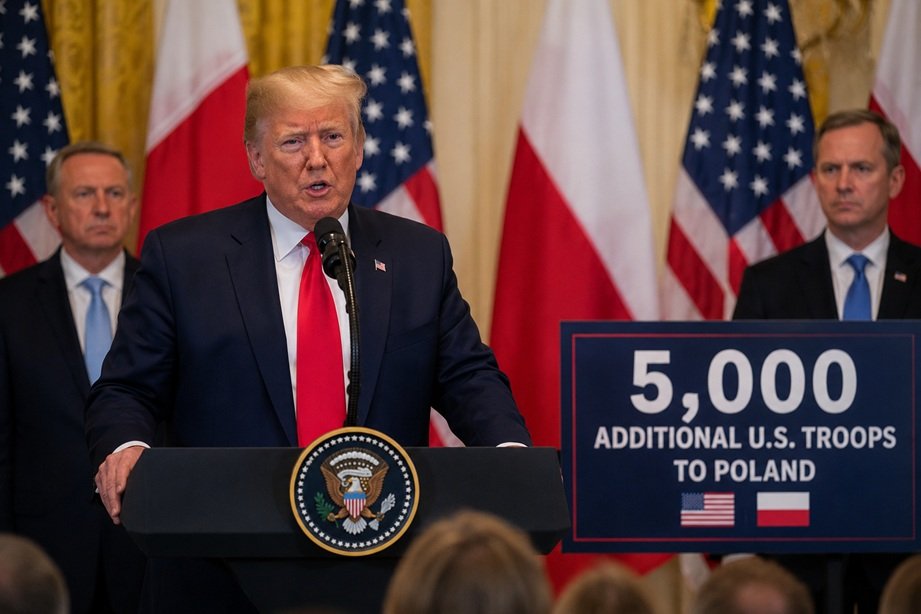

The White House has once again directed attention to Eastern Europe following President Donald Trump’s confirmation of a significant military troop increase in Poland. This announcement comes at a time of increasing geopolitical uncertainty, heightened discussions within NATO, and renewed worries regarding Russian military actions near the eastern border of Europe.
The recent declaration includes sending an extra 5,000 American soldiers to Poland, a decision that instantly elicited responses from Washington, Brussels, Moscow, and various NATO capitals. Proponents argue that this deployment enhances deterrence in the area, while detractors contend that the abrupt policy shift raises concerns regarding the long-term American military approach in Europe.
This situation develops after several weeks of ambiguity concerning troop movements by the Pentagon. Earlier indications pointed toward a decrease in American forces in parts of Europe, particularly in Germany and Poland. Trump’s latest statement now seems to contradict that trend, indicating a more assertive security strategy on NATO’s eastern border.
For Poland, this announcement signifies much more than mere political chatter. Polish authorities have long advocated for a more substantial and permanent American military presence. Warsaw considers the United States its most dependable defense ally against possible regional threats.
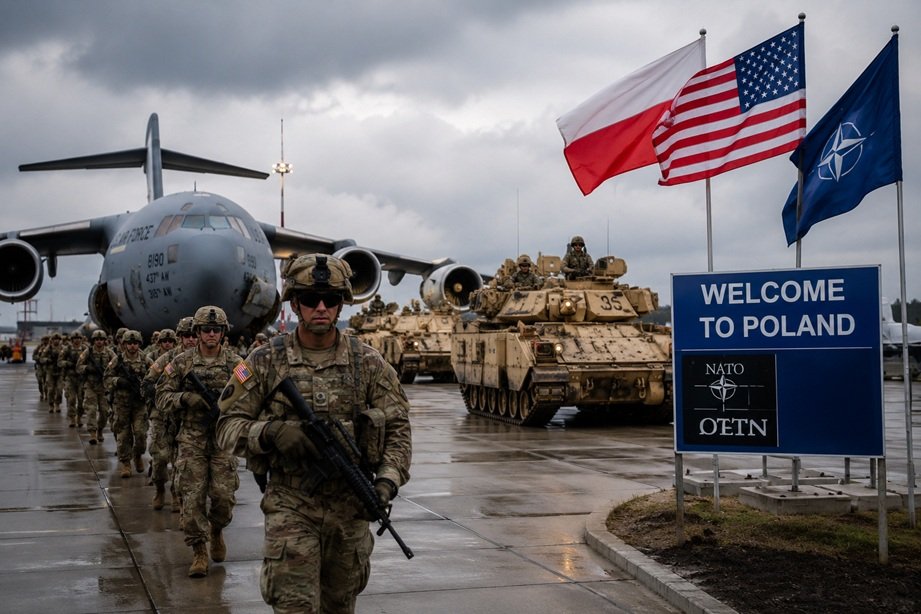
Importance of the Deployment
The choice to deploy additional troops involves more than just increasing military headcount. It represents a broader strategic transition concerning NATO defense strategy, Russian pressures in Eastern Europe, and the changing dynamics of America’s relationships with its allies.
Recent international assessments reveal that the United States currently has tens of thousands of troops stationed throughout Europe. Poland already accommodates a significant number of American soldiers, missile defense installations, logistics centers, and NATO infrastructures. Adding 5,000 additional troops would greatly enhance operational effectiveness in the area.
The term Trump troops to Poland has rapidly become a hot topic in global media, especially as it follows earlier reports of troop reductions. The abrupt turnaround caught many NATO officials and legislators off guard.
Security Experts Say the Move Serves Multiple Purposes
- Bolstering NATO’s defenses on the eastern front
- Providing reassurance to Poland and neighboring allies
- Delivering a cautionary message to Russia
- Exhibiting sustained US military presence in Europe
- Strengthening the bilateral relationship between Washington and Warsaw
Military analysts emphasize that troop deployments are often intended not just for combat preparedness but also for political signaling. In this circumstance, the message appears directed at both partners and opponents.
Trump’s Connection with Poland
Donald Trump has consistently fostered a favorable partnership with Poland’s conservative political leadership. Throughout his previous term, he lauded Poland for its increased defense expenditures and adherence to NATO commitments while criticizing various Western European nations for their insufficient contributions.
The latest troop deployment announcement occurred shortly after the election of Polish President Karol Nawrocki, who received Trump’s open endorsement. Reports suggest that Trump personally emphasized this relationship while addressing the troop increase.
This link holds significant political importance as Poland has steadily established itself as one of America’s key allies within Europe. The nation has poured substantial resources into upgrading its defense capabilities, acquired sophisticated military hardware from the U.S., and pushed for enhanced military readiness among NATO allies.
The concept of broadening the American military footprint in Poland is not a novel idea. There have been ongoing talks regarding the establishment of permanent U.S. bases in Poland for many years, including earlier suggestions informally labeled as “Fort Trump.”
Many residents of Poland view the American military presence as an essential safeguard, particularly following Russia’s incursion into Ukraine, which significantly altered the continent’s defense strategies.
NATO’s Eastern Flank Faces New Pressure
Eastern Europe is among the world’s most precarious military zones. Since the commencement of the conflict in Ukraine, NATO nations adjacent to Russia and Belarus have consistently sought enhanced defensive assistance.
Countries like Poland, Lithuania, Latvia, and Estonia maintain that a visible presence of American troops is vital in diminishing the chances of aggression from Moscow. Over recent years, NATO has progressively expanded its exercises, rotation of soldiers, and defense funding within the area.
The recent decision to send Trump troops to Poland can therefore be interpreted as part of a larger effort to strengthen deterrence along NATO’s eastern front.
Several Factors Have Increased Tensions
Increased Russian Military Activity
NATO representatives have frequently issued alerts concerning Russian military drills, incidents involving drones, cyber warfare, and hostile rhetoric aimed at alliance members. Reports of drones entering or approaching Polish airspace have raised alarms among European authorities.
Growing Defense Spending Across Europe
Germany, Poland, and a number of Baltic countries have significantly boosted their military expenditures since 2022. NATO allies are facing pressure to enhance military infrastructure and increase preparedness.
Debate Over America’s Role in Europe
Trump’s stance on NATO has historically sparked robust discussions. He has often called for European countries to take greater responsibility for their own defense.
While some partner nations express concerns about unpredictability in the U.S. approach, others are pleased with more substantial American military involvement near Russia.
Confusion Over Earlier Pentagon Plans
A significant factor that led to widespread media coverage of the announcement was its apparent contradiction to prior Pentagon strategies.
Before this recent announcement, reports suggested that the U.S. military had either delayed or canceled the deployment of thousands of troops that had been planned for Poland and Germany. Some legislators criticized this decision, arguing it undermined NATO cohesion and conveyed an inappropriate signal to allies.
Subsequently, Trump declared his intention to add more troops.
This sudden shift instilled uncertainty among NATO diplomats and military leaders. Certain analysts raised questions about whether the forthcoming troop deployment consisted of entirely new forces or was merely a redirection of previously scheduled troop movements.
The term Trump troops to Poland continued to trend globally as various watchers interpreted the decision as a major policy shift.
In spite of the confusion, Polish officials reacted with enthusiasm to the announcement. President Nawrocki expressed his gratitude toward Trump and highlighted the significance of the relationship between the U.S. and Poland.
What Kind of Troops Could Be Sent?
While comprehensive operational specifics are yet to be publicly disclosed, defense experts anticipate that the deployment might encompass a combination of:
- Elements of armored brigades
- Engineering and logistics units
- Specialists in air defense
- Intelligence assistance groups
- Communication and command personnel
The US armed forces has established extensive facilities within Poland, making swift deployment more feasible than in earlier years.
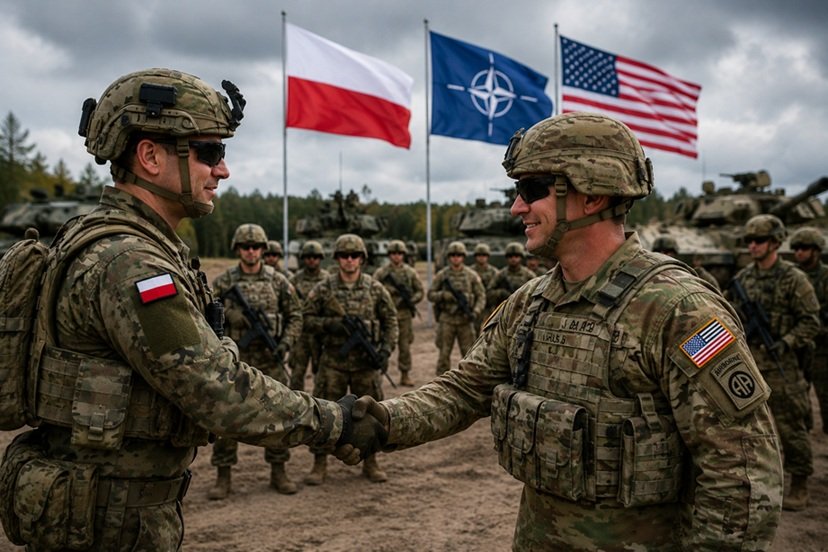
Defense collaboration between Poland and the US has progressively increased since 2016. Poland accommodates rotating combat forces, training exercises, and sophisticated missile defense systems.
Experts believe that the latest troop placement might enhance NATO’s capacity to react swiftly in crises affecting Eastern Europe.
Poland’s Strategic Significance
Poland holds one of the most crucial locations within NATO.
Positioned between Germany, Belarus, Ukraine, and the Baltic area, this nation functions as a logistical entry point for military operations and humanitarian efforts throughout Eastern Europe.
Following Russia’s invasion of Ukraine, Poland has transformed into a key transit route for NATO support and military supplies.
The nation has also risen as one of the fastest expanding military forces in Europe. Warsaw has allocated billions of dollars toward tanks, aircraft, missile technologies, drones, and artillery units.
Consequently, many NATO strategists now view Poland as a frontline defender.
The deployment of troops under Trump to Poland further solidifies the country’s position as a vital military center for the alliance.
Responses from Europe
Reactions across Europe have varied.
Certain NATO nations are in strong favor of increased American troop deployments near Russia’s borders, holding the belief that deterrence is still crucial. The Baltic states particularly advocate for enhanced military preparedness.
On the other hand, some express concerns regarding the unpredictability of Washington’s military strategies. Abrupt changes in policy can hinder alliance coordination and strategic readiness.
Reports from NATO discussions in Sweden indicated that diplomats were seeking clarity about America’s long-term military objectives in Europe.
Germany’s stance has also received attention due to previous discussions on reducing troop levels, which reportedly included withdrawing forces from German installations.
Some critics are apprehensive that disagreements between Washington and European authorities could undermine the unity of the alliance during a critical time.
Russia’s Anticipated Reaction
Moscow has continually criticized the north Atlantic Treaty Organization’s military growth close to its frontiers.
Russian representatives often claim that augmented Western military positions jeopardize regional harmony. The Kremlin has condemned U.S. missile defense initiatives and NATO drills in Eastern Europe in the past.
While Russia has not completely specified its reaction to the most recent declaration, experts predict pointed denunciation from Moscow.
The Kremlin Might Respond By:
- Increasing military drills
- Boosting troop presence near Belarus
- More aggressive rhetoric towards NATO
- Engaging in cyber operations
- Deploying additional missiles
Some analysts caution that any significant military buildup in Eastern Europe heightens the chances of escalations, even if these deployments are meant for deterrent purposes rather than offensive strategies.
Nevertheless, NATO officials maintain that member states have the authority to bolster their collective defense capabilities.
Domestic Political Ramifications in the U.S.
This decision has ignited discussions within American political circles.
Proponents of the deployment assert that the United States must uphold a robust deterrent stance against Russia while safeguarding NATO partners.
Conversely, opponents question if enhancing troop commitments abroad fits with wider American strategic goals.
Several legislators have called for better communication from the Pentagon after conflicting reports regarding troop exits and redeployments.
The term Trump troops to Poland has gained political significance, merging aspects of national security, NATO interactions, and Trump’s foreign policy approach into a compelling topic.
Foreign policy experts point out that Trump’s strategy typically emphasizes direct relationships over conventional alliance frameworks. His close connection with Poland’s conservative administration exemplifies this trend.
Financial and Military Implications
Significant military deployments entail substantial logistical and financial demands.
Moving thousands of soldiers necessitates aircraft, armored vehicles, support gear, fuel supply systems, communication networks, and housing facilities.
However, Poland has continually shown readiness to invest considerably in accommodating American forces.
Past agreements between the U.S. and Poland involved conversations about shared defense expenditures and enhanced military infrastructure.
Defense analysts suggest that keeping forward-stationed troops in Europe may actually enhance swift response capabilities in times of crisis.
Others argue that the U.S. should concentrate more on challenges posed by China in the Indo-Pacific instead of expanding its commitments in Europe.
NATO Cohesion Under Strain
The alliance is presently dealing with one of the most intricate security landscapes in years.
Russia’s conflict in Ukraine, increasing defense budgets, instability in the Middle East, cyber threats, and evolving global alliances have put pressure on NATO’s coordination.
In this context, the announcement regarding Trump troops to Poland signifies more than just a troop relocation.
It Raises Larger Issues Regarding:
- The future of America in NATO
- Equity in responsibilities among allies
- Security concerns in Eastern Europe
- Strategic rivalry with Russia
- Military preparedness across Europe
NATO representatives will likely spend several months deliberating the operational and political implications of the troop deployment.
Is This the Start of a Long-Term Presence?
One of the most significant uncertainties is whether these additional troops will be temporary or evolve into a permanent military presence.
Historically, many U.S. deployments in Europe started as temporary missions before becoming semi-permanent setups.
Poland has consistently advocated for establishing more lasting American bases within its borders.
If regional conflicts keep escalating, NATO might decide to sustain elevated troop levels for several years instead of just months.
The potential establishment of a more enduring American presence would greatly alter the military dynamics in Eastern Europe.
Thus, the decision regarding the Trump troops sent to Poland could signify the commencement of a wider transformation in NATO’s force arrangement.
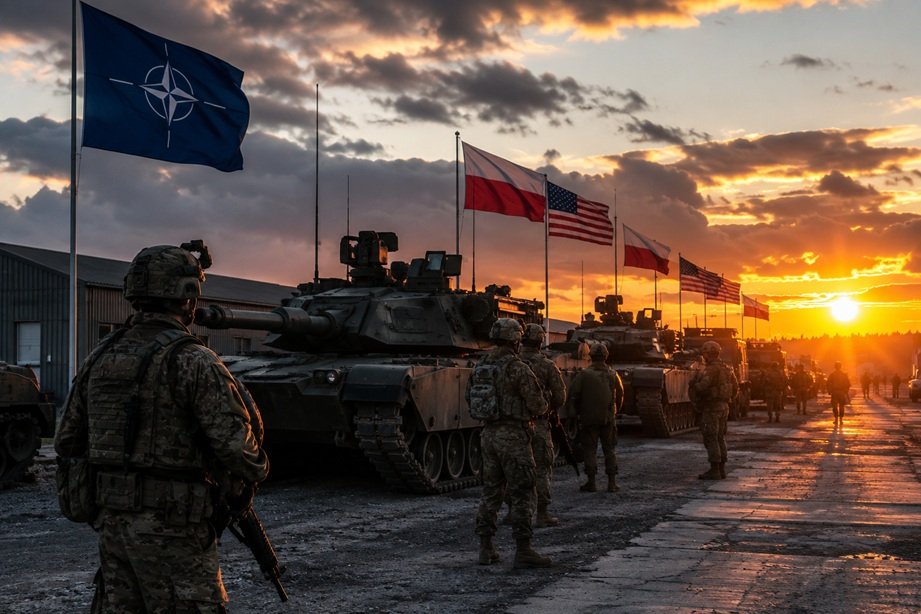
Global Implications Beyond Europe
Though the announcement is primarily related to Europe, its ramifications are felt worldwide.
Major powers like China and Iran are keenly observing American military movements, as these actions indicate strategic intentions.
Allies situated in Asia might see this maneuver as a signal that Washington is still dedicated to longstanding defense alliances, despite ongoing political discussions concerning foreign policy.
Conversely, opponents might interpret the deployment as evidence that the United States is prepared to sustain significant military involvement abroad, even amid domestic political strife.
Security analysts also emphasize that military credibility is often reliant on observable commitments. Increasing troop numbers can offer reassurance to allies more effectively than mere diplomatic words.
Conclusion
The addition of 5,000 American troops to Poland represents another significant development in NATO’s changing security framework.
What started as news about a troop withdrawal rapidly evolved into a wider geopolitical conversation touching on Russia, European defense strategies, alliance solidarity, and America’s military stance globally.
For Poland, this action bolsters a partnership deemed vital for its national defense. For NATO, it strengthens the eastern front during a precarious time. Yet, for detractors, the abrupt change raises questions about the reliability and strategic direction of the alliance.
The term Trump troops to Poland is likely to feature prominently in international political debates as defense officials finalize operational plans and NATO leaders evaluate the long-term effects.
Whether this troop deployment serves as a temporary reassurance or transforms into a permanent strategic alteration may ultimately hinge on the progression of tensions throughout Europe in the upcoming months.
Recent updates suggest that NATO officials are vigilant in watching regional security developments as European allies seek increased clarity on the future positioning of American forces.