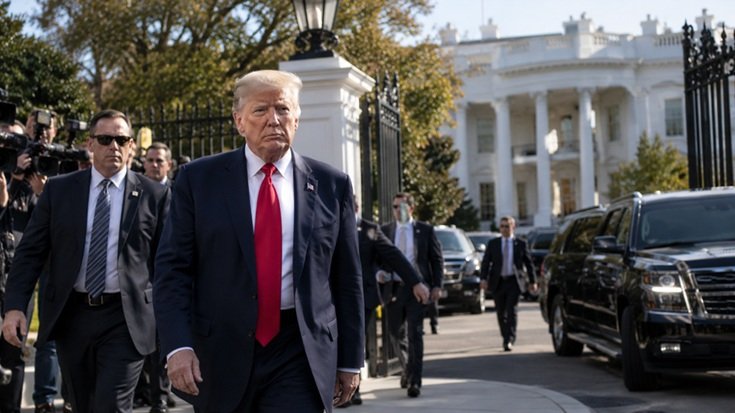

The recent conflict between the US and Iran has escalated into a more precarious stage, with Donald Trump abruptly concluding his weekend at Camp David and heading back to the White House as clashes and diplomatic tensions rise throughout the Middle East.
This decision quickly drew focus, especially since it coincided with Saudi Arabia’s report of a ballistic missile launched by Houthi forces supported by Iran towards Riyadh. Saudi officials claimed the missile was successfully intercepted, although there were reports of fires and smoke near the airport area of the Saudi capital.
Concurrently, the United States issued alerts for American citizens across various regions in the Middle East. The State Department cautioned about the potential for quick escalation and encouraged Americans located outside this region to reassess any plans to travel to or through the area.
The situation is further complicated by the existence of a diplomatic avenue that is not completely shut down. Iran asserted that it has conveyed seven conditions to Washington via mediators from Qatar concerning the resumption of talks. Among the identified stipulations are the cessation of hostilities on all fronts, the unfreezing of Iranian assets, and the removal of the US naval blockade.
This interplay of military pressure, regional assaults, security alerts, and an ongoing diplomatic channel highlights why this recent development is particularly important.

Why Trump Returned From Camp David
Trump’s abrupt end to his weekend at Camp David followed part of his stay at the Maryland presidential retreat. Media reports from September 20 indicated that the administration did not share a public rationale for the President’s early return.
The public itinerary for the president had included plans for travel to Camp David over the weekend, originally set for departure on Sunday. The itinerary later showed a change to travel back towards Washington.
The significance of the timing is apparent, yet it alone does not imply that the return was due to a specific military directive.
This detail is crucial.
A president’s schedule can adjust for numerous reasons, and reports have highlighted that alterations to travel on weekends are not uncommon. Simultaneously, the early return transpired against a backdrop of swiftly evolving events in Saudi Arabia, Yemen, Iran, and the US.
The immediate regional catalyst was the reported missile strike by the Houthi forces aimed at Riyadh.
Saudi Arabia reported that its air defense systems thwarted the ballistic missile. The Saudi-led coalition also noted attempts made against other targets and civilian facilities. In addition, Saudi officials mentioned a fire near King Khalid International Airport, accompanied by footage depicting smoke in the vicinity.
For Washington, this situation is significant because the Houthis are allied with Iran and the conflict is occurring amidst the wider standoff between the US and Tehran.
The White House Has Not Announced a New Military Order
A crucial takeaway for those keeping track of the events is that the sudden presidential return should not be hastily viewed as confirmation of a new military action by the US.
As of the most recent updates on September 20, there has yet to be any official declaration indicating that Trump’s return to Washington signified an immediate choice to initiate new actions against Iran or the Houthis.
The security landscape has undeniably become increasingly intricate.
American embassies within the area have issued alerts advising citizens about possible escalations. An advisory from the State Department mentioned engagements involving the Iranian-backed Houthis, indicating that the situation could intensify quickly.
This results in a scenario where Washington must keep track of multiple developments at once instead of only reacting to a single battlefield occurrence.
1. The Missile Attack on Riyadh Increases Regional Tensions
The Houthi strike as reported by Saudi Arabia stands out as a significant factor driving the recent rise in regional instability.
Saudi officials stated that a ballistic missile was aimed at Riyadh and successfully intercepted. Additionally, they mentioned that other attempted assaults were prevented. This incident occurred amid broader escalations in conflict between forces supported by Saudi Arabia and the Houthis in Yemen.
Riyadh is especially alert to these developments as Saudi Arabia is a crucial ally for the US and one of the key global energy producers.
Any strikes affecting Riyadh, its airports, oil installations, or critical transport infrastructure could have repercussions extending beyond the immediate combat zone.
The concern goes beyond whether a single missile strikes its intended target.
Markets, airlines, maritime firms, and governments monitor if specific attacks are part of a larger trend.
Why Saudi Arabia is Important to Washington
Saudi Arabia plays a vital role in the regional security framework involving the United States.
The nation is situated near several crucial waterways and energy transportation routes. The broader conflict has already raised alarms regarding shipping activities in the Red Sea and the Strait of Hormuz.
Earlier this month, Reuters revealed that Saudi Arabia temporarily halted operations on its East-West oil pipeline following a drone strike that likely came from Iraq. This pipeline is capable of transporting millions of barrels of oil daily and has gained significance as the Strait of Hormuz faces substantial disruptions.
This implies that a severe attack on Saudi facilities could impact energy markets, even if the United States does not directly engage in another military endeavor.
2. The Houthis Have Gained Greater Regional Influence
The Houthi movement’s influence has notably evolved during the latest cycle of conflict in the Middle East.
The group now controls regions in Yemen and has enhanced its capacity to pose threats to shipping, military resources, and regional infrastructure. Its increasing presence around the Red Sea and Bab al-Mandeb has heightened Yemen’s strategic relevance in the larger US-Iran conflict.
The Bab al-Mandeb Strait is crucial as it links the Red Sea to the Gulf of Aden.
Vessels utilizing this route can transit between the Indian Ocean and the Mediterranean via the Suez Canal system. Any disruption in this area may compel ships to take longer journeys around Africa, resulting in greater fuel consumption, increased insurance expenses, and longer travel durations.
Washington Faces a Complex Regional Situation
The United States has been managing the conflict involving Iran.
Opening an additional significant military front against the Houthis may heighten the strain on American forces and could potentially escalate the conflict.
This is a key reason why the response from the US has gained considerable scrutiny.
Earlier this month, Reuters reported that US officials engaged with representatives of the Iran-aligned Houthis in Oman. The purpose of these talks was reportedly to uphold a ceasefire and to discuss issues related to shipping in the Red Sea. Oman played a role in facilitating these negotiations.
The existence of such a communication channel highlights the complexity of the current situation.
Washington finds itself in a position where it can view the Houthis as a threat to security while still pursuing diplomatic efforts to ward off attacks on American or global shipping.
Iran Has Introduced Seven Conditions for Negotiations
A significant aspect of the recent developments is emerging from Tehran directly.
Mohsen Rezaei, the Secretary of the Iranian Supreme National Security Council, indicated that Iran has presented seven conditions to Washington via Qatari intermediaries for the initiation of negotiations. He mentioned that Tehran is now awaiting a response from the US.
Not all seven conditions were disclosed in the first reports made public.
Nevertheless, Iranian officials identified a number of key demands.
These demands include:
- A cessation of hostilities on all fronts.
- The release of Iranian assets that have been frozen.
- The removal of the US naval blockade surrounding Iranian ports.
Iran has also connected the future status of the Strait of Hormuz to the fulfillment of its stipulated demands.
On September 20, Iranian Parliament Speaker Mohammad Bagher Ghalibaf stated that Tehran will not reopen the Strait of Hormuz unless its conditions are met and US obligations are fulfilled.
Why the Importance of the Strait of Hormuz Is So Significant
The Strait of Hormuz ranks among the most crucial energy passageways globally.
A significant amount of crude oil and various energy commodities typically flow through this channel. Consequently, any extended interruption can lead to fluctuations in energy pricing, shipping expenses, and impact the global economy at large.
The ongoing crisis has heightened the strait’s significance since alternative pathways are facing challenges.
The circumstances in Yemen contribute an additional element of risk.
Although the Bab al-Mandeb and the Strait of Hormuz are distinct waterways, they are both strategically linked to global energy and shipping systems. Concurrent stress on both enhances the complexity of logistical issues for international commerce.
Thus, recent events are being closely monitored not only by governments but also by energy traders and shipping firms.
4. The Intersection of Diplomacy and Military Pressure
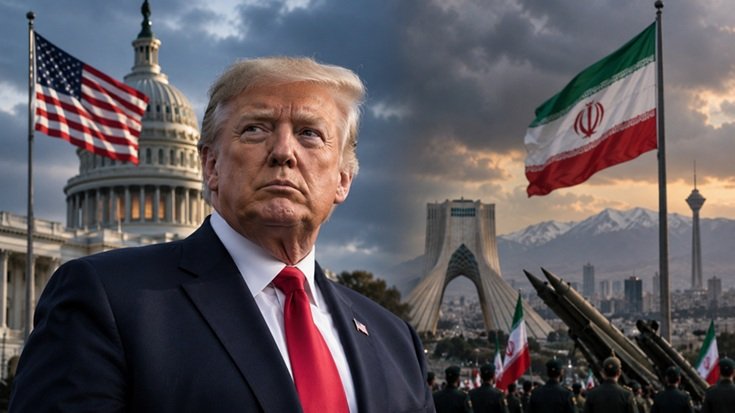
Trump Shortens Weekend Amidst Coexisting Diplomacy and Military Pressure.
This might be the most critical aspect of the current scenario.
On one hand, Iran claims to have communicated terms via Qatar and expresses a willingness to negotiate based on those conditions. Conversely, hostilities involving the Houthis and Saudi Arabia persist, with Washington evaluating the broader security landscape.
This opens multiple potential avenues for dialogue between the involved parties.
The United States has its own security priorities, which include safeguarding military personnel, shipping lanes, and regional allies.
Iran seeks amendments to the military and economic pressures imposed upon it.
Saudi Arabia demands security against Houthi attacks while grappling with the potential that increased US military engagement could expand the conflict.
Qatar and Oman have emerged as key diplomatic mediators due to their established relationships and previous engagements in regional dialogues.
Qatar’s Involvement
Qatar has served as a conduit between Iran and the United States.
The most recent communication from Iran was reportedly relayed through Qatari mediation. This positions Doha as a valuable player in maintaining open lines of dialogue, even amid heightened military tensions.
Mediation does not imply that a settlement is imminent.
It merely indicates that a system exists for transmitting messages among governments that are not engaged in direct negotiations in a stable context.
This distinction is vital when analyzing news reports.
5. US Security Alerts Introduce Additional Concerns
The security warnings from the US government contribute further to the interest in the latest developments.
The State Department, along with various American diplomatic missions, alerted citizens to the potential for unexpected escalations. These advisories also underscored the dangers associated with regional conflicts and possible disruptions to travel.
Security alerts do not automatically signify that an attack on US citizens is around the corner.
They are also intended to assist Americans in making travel choices in environments that may rapidly change.
However, when multiple diplomatic missions issue alerts around the same time as a significant regional attack, it indicates that American officials are seriously considering the likelihood of further decline.
Travel and Risks to Civilians
The repercussions of the conflict reach far beyond military sites.
- Airspace limitations can impact commercial aviation.
- Ports may experience hold-ups.
- The cost of insurance might increase.
- Shipping firms might change the paths of their vessels.
For the residents in the impacted regions, potential dangers encompass missile assaults, drone attacks, damage to infrastructure, and abrupt shifts in transport.
The warning issued by the US State Department advised Americans located outside the Middle East to carefully reconsider their travel plans to and through this area due to the risk of a swift escalation.
This is especially critical for those passing through significant regional air travel hubs.
6. Energy Markets Are Monitoring the Crisis Closely
The ongoing tensions between the US and Iran are also pertinent to the energy sector.
This area houses some of the most significant oil-producing nations and essential shipping lanes globally. Saudi Arabia’s facilities are already experiencing strains, while constraints around the Strait of Hormuz have complicated energy supply movements.
According to Reuters, Saudi Arabia’s East-West pipeline was disabled following an attack earlier in September, while the Houthis have fortified their presence around the Red Sea and Bab al-Mandeb.
Consequently, the energy transportation network has become more vulnerable.
If shipping lanes stay disrupted, businesses might be compelled to resort to lengthier routes. This could lead to heightened shipping expenses and a decline in the efficiency of worldwide supply chains.
What Might Happen to Oil Prices?
Oil pricing is swayed by both predictions and tangible supply levels.
If market participants believe the Strait of Hormuz or other vital pathways may remain obstructed, prices could react even before a significant shortage emerges.
Similarly, if diplomatic efforts yield a credible decrease in military threats, some of that risk premium might lessen.
Currently, the situation is still unclear.
Key elements will include the future status of the Strait of Hormuz, the severity of Houthi assaults, security of Saudi infrastructure, decisions made by US military officials, and if communication between Iran and the US evolves into meaningful discussions.
7. What Comes Next?
The subsequent phase of the crisis will hinge on decisions taken in multiple capitals.
Washington will focus on the security landscape surrounding Saudi Arabia, Yemen, Iran, and vital maritime routes.
Tehran will be attentive to whether Washington reacts to its outlined stipulations.
Riyadh will continuously evaluate its capacity to safeguard its land and energy systems.
Moreover, regional mediators are likely to remain significant if dialogue between the US and Iran persists.
Trump shortens his weekend at a time when each new military incident could influence diplomatic strategies.
His return to Washington does not inherently indicate what course of action the president might take.
What is more significant is the subsequent developments.
If Washington proclaims a new military initiative, the regional conflict could transition to a different stage. If diplomatic interactions become more dynamic, attention may shift to negotiations. If assaults persist without a substantial diplomatic resolution, the strain on regional authorities and global energy markets could intensify.
At this point, none of these scenarios can be confidently asserted as definite.
The Wider Context Behind the US-Iran Conflict
Trump shortens his weekend as the conflict becomes increasingly entwined.
The immediate news focuses on a change in the president’s travel plans, but the broader narrative is much more extensive.
There exists a clash between Washington and Tehran. There are conflicts involving the Houthis alongside Saudi Arabia. The shipping lanes of the Red Sea and Bab al-Mandeb are significant. The Strait of Hormuz holds importance. This pertains to oil resources, diplomatic discussions, and security alerts.
Each topic can impact the others.
A missile strike from the Houthis can heighten the strain on Saudi Arabia. The influence from Saudi Arabia can modify Washington’s assessments. Decisions made by the US military might affect Tehran’s stance in negotiations. Choices made by Iran regarding Hormuz could influence international energy markets.
Thus, the ongoing crisis cannot be grasped through a singular headline alone.
Recent reports indicate that the United States has kept lines of communication with representatives of the Houthis, even amidst its larger conflict with Iran. According to Reuters, US officials engaged with Houthi representatives in Oman concerning efforts related to maritime safety and the preservation of a ceasefire.
This suggests that Washington’s strategy includes more than just military pressure.
Why the Upcoming Days are Significant
The following days will be monitored for various concrete indicators.
To start, analysts will be looking for any formal statements from the White House about military actions.
Next, there will be an emphasis on Saudi Arabia and the possibility of additional missile or drone strikes.
Additionally, the conditions surrounding the Strait of Hormuz will remain vital.
Furthermore, diplomats will be attentive for ongoing communications via Qatar or Oman.
Lastly, markets will be alert to any events that might threaten oil production or shipping activities.
Trump Cuts Weekend Short reflects one observable point in an expansive sequence of occurrences.
What Readers Should Observe Now
For those keeping tabs on the crisis, specific developments warrant distinct focus:
- Statements from the White House: Any information about Iran, Yemen, or US military deployments could alter the narrative’s trajectory.
- Saudi security: More attacks in the vicinity of Riyadh, at airports, or against energy facilities would heighten regional tension.
- Strait of Hormuz: Limitations on shipping continue to be one of the major global economic issues.
- Iranian diplomacy: The seven conditions set by Tehran offer insights into what it asserts is necessary for re-engagement in talks.
- Houthi actions: Strikes or further territorial gains in Yemen could complicate responses from the US and Saudi Arabia.
- Oil and shipping: Fluctuations in energy prices, insurance rates, and ship rerouting can give early signs of market responses.
These indicators are more beneficial than speculating about the implications of a presidential travel alteration.

Conclusion
Trump Cuts Weekend Short comes at a time when the Middle East confronts yet another phase of increasing uncertainty, with the United States, Iran, Saudi Arabia, and the Houthis all playing crucial roles in the swiftly evolving scenario.
The quick return from Camp David coincided with a reported Houthi missile strike on Saudi Arabia, new security alerts from the US, and Iranian remarks regarding conditions for renewing negotiations.
At the same time, there is no validated evidence available publicly indicating that Trump’s return signifies a decision to initiate a new military endeavor.
The more pressing inquiry is regarding Washington’s subsequent actions.
Iran has conveyed seven stipulations via Qatar. Saudi Arabia is facing assaults associated with the broader regional tensions. The Houthis continue to play a significant role concerning Yemen and the Red Sea. At the same time, the Strait of Hormuz remains a focal point of worries regarding energy supplies and maritime activity.
This combination leads to a particularly dynamic situation.
Currently, diplomatic efforts are still feasible, but so too is the possibility of escalating tensions. The forthcoming statements from Washington, Tehran, and local administrations—together with changes occurring in Saudi Arabia, Yemen, and key maritime channels—will offer the clearest insight into the direction of the ongoing crisis.
This is what makes the report on Trump cutting the weekend short more than just a narrative about his travel from the White House: it acts as a representation of a larger crisis in the Middle East where military actions, diplomatic initiatives, maritime shipping, and energy security are becoming more intertwined.