

The airline sector began 2026 with a positive outlook. Demand from travelers stayed robust, tourism activities kept improving, and airlines were optimistic about another year of profits. Yet, a sudden spike in fuel costs has drastically altered this favorable perspective almost instantly.
In April, US carriers expended close to $6.5 billion on jet fuel, marking a significant rise compared to the same month last year. Concurrently, worldwide aviation associations have drastically lowered their profit predictions for the sector, cautioning that escalating energy costs are presenting one of the most substantial financial obstacles airlines have encountered since the recovery from the pandemic.
This scenario underscores the aviation industry’s ongoing reliance on fuel prices. Despite a solid demand from passengers and increasing ticket sales, swiftly rising operational costs can swiftly diminish profit margins.
This article examines the reasons behind the rise in fuel expenditures, the reasons global airline profits are being slashed nearly by fifty percent, and what travelers and investors can anticipate in the coming months.
The Extent of the Fuel Spending Surge
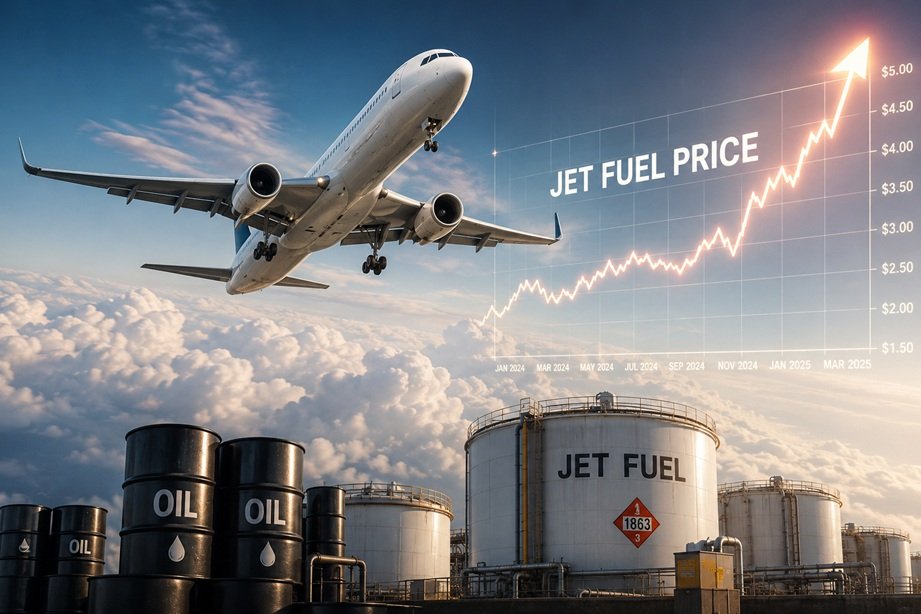
Recent transportation statistics indicated that US airlines allocated around $6.5 billion for jet fuel in April. A particularly notable detail from the report is that airlines actually used a bit less fuel than they did in the previous year. Nevertheless, the overall spending rose sharply due to a significant increase in fuel costs.
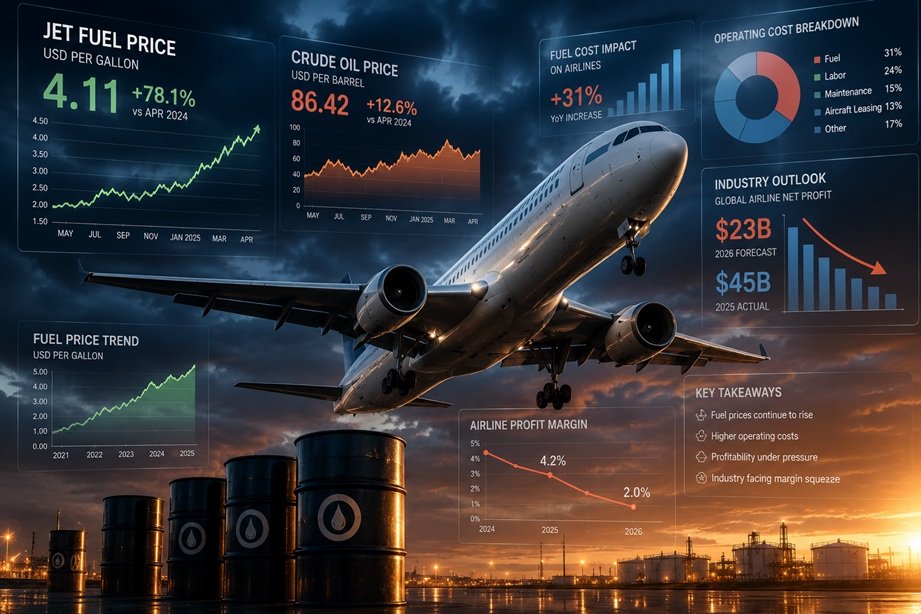
In April, the average price of jet fuel reached approximately $4.11 per gallon, in contrast to about $2.31 per gallon in the same month last year. This signifies one of the most considerable year-over-year hikes seen in recent airline history.
For carriers operating thousands of flights every day, even a minor rise in fuel costs can result in billions of dollars in extra expenses. When fuel costs nearly double, the consequences become impossible to overlook.
Comprehending the Airline Fuel Cost Crisis
Fuel has consistently been among the largest costs for airlines. Often, it constitutes about one-fourth of the overall operating expenses. Nevertheless, this year, industry analysts project fuel to account for over 31% of airline operating costs.
The existing Airline Fuel Cost Crisis is influenced by several interrelated factors:
- Increasing crude oil prices
- Geopolitical conflicts impacting energy supply routes
- Higher refining margins for jet fuel
- Flight rerouting due to restricted airspace
- Limited fuel hedging options available for numerous airlines
These factors have come together to create a significant challenge for airline finances.
Industry executives assert that airlines are absorbing some of the heightened costs themselves while transferring a portion of these expenses to consumers through increased fares and additional fees.
How Global Events Instigated Higher Fuel Prices
The primary trigger for the recent fuel surge has been geopolitical unrest in the Middle East.
Disruptions in shipping through the Strait of Hormuz, a crucial route for energy transportation, have greatly influenced oil markets. Fears about potential supply interruptions have led to an increase in both crude oil and jet fuel prices across global markets.
For airlines, the repercussions go beyond merely incurring higher fuel costs.
Many airlines have been compelled to modify their flight paths to avoid restricted or closed areas in the sky. These longer flight paths mean higher fuel usage and increased travel times. Consequently, carriers experience a dual financial setback: they incur higher fuel costs per gallon and consume more fuel on specific routes.
This interplay of factors has magnified the strain on airline financial statements globally.
Significant Reductions in Global Airline Profit Predictions
The International Air Transport Association, known as IATA, has drastically adjusted its expectations for the profitability of airlines.
The organization now anticipates that airlines worldwide will achieve nearly $23 billion in net profits by 2026. Previous estimates suggested around $41 billion, while 2025 actually saw profits hitting approximately $45 billion.
This indicates that profitability within the industry is projected to decrease by almost fifty percent in merely one year.
Several fundamental financial metrics highlight the seriousness of this crisis:
- Net profit margins are forecasted to shrink from 4.2% to 2.0%
- Operating profits are expected to see a significant decline
- Profit per passenger is likely to drop from approximately $9.10 to $4.50
- Inflation in fuel expenditures might reach around $350 billion on a global scale
Although airlines are still predicted to maintain profitability overall, the reduction in profits highlights how susceptible the sector remains to fluctuations in fuel prices.
Reasons Airlines Struggle to Absorb Rising Costs
A common belief among passengers is that airlines seamlessly transfer increasing costs to ticket prices. However, the reality is much more complex.
Airlines function in a fiercely competitive landscape where pricing strategies can greatly influence their market presence. Increasing fares too much could diminish demand or shift customers toward rival airlines.
Therefore, airlines frequently take on a part of the rising costs themselves.
Industry leaders have pointed out that while ticket prices are climbing, simply raising fares is inadequate to counter the full effect of escalating fuel prices.
The current Fuel Cost Crisis in the airline sector is especially taxing because these companies are also grappling with other financial difficulties, such as:
- Labor costs
- Delays in aircraft deliveries
- Maintenance expenses
- Infrastructure charges
Effects on Major US Airlines
Large network airlines generally possess stronger financial health in comparison to smaller carriers.
Prominent airlines like:
- American Airlines
- United Airlines
- Delta Air Lines
have extensive route networks, more robust loyalty schemes, and a greater capacity to adjust ticket prices.
These strengths enable them to manage fuel price fluctuations more effectively than low-cost airlines.
Nonetheless, even the most prominent airlines are facing difficulties. Some have cut back on their flight schedules, delayed expansion efforts, or altered route plans to maintain profitability.
The situation poses a significant challenge for airlines operating on slimmer margins and with elevated debt levels.
Challenges Facing Budget Airlines
Low-cost and ultra-low-cost airlines are more vulnerable when fuel prices rise.
Their business strategies are heavily dependent on keeping operational costs exceptionally low. When fuel costs skyrocket, these airlines typically have fewer ways to safeguard their profits.
Market analysts suggest that the current conditions could increase the disparity between airlines with strong financial standings and their less robust competitors.
Some smaller airlines might need to:
- Scale back on routes
- Delay growth plans
- Seek extra financing
to endure this challenging climate.
What Passengers Should Anticipate
Passengers are already beginning to observe the repercussions of increased fuel prices.
Airlines around the globe have raised ticket prices and added extra charges aimed at countering rising operational expenses. Industry associations indicate that further fare hikes may be required if fuel costs stay high.
Travelers Might Notice:
- Elevated domestic ticket costs
- Higher international flight prices
- Decreased flight availability
- Fewer special rate offers
- More additional service charges
In spite of these alterations, the appetite for air travel remains robust, which has allowed airlines to sustain solid load factors and passenger volumes.
Changes to Routes and Flight Schedules
Numerous airlines have already altered their flight schedules due to surging operating costs.
Several carriers have halted specific routes, decreased flight frequencies, or postponed planned growth. These strategies enable airlines to allocate resources toward the most lucrative services while managing costs.
Travelers on less frequented routes may find fewer flights available compared to prior years.
Delays in Aircraft Deliveries Introduce Further Challenges
Fuel expenses are not the sole obstacle for airlines.
Delays in aircraft deliveries from major manufacturers are still impacting efforts to modernize fleets. Many airlines had intended to replace older planes with newer, more fuel-efficient ones.
Unfortunately, production limitations have delayed shipments, compelling carriers to keep older aircraft in operation for longer durations than anticipated.
Older planes typically use more fuel and incur greater maintenance costs, which increases operational expenditures during an already challenging time.
This situation has intensified the effects of the Airline Fuel Cost Crisis throughout the sector.
Varying Regional Perspectives in Air Travel
Not every airline market is equally impacted.
Based on industry projections, the majority of global regions are still anticipated to remain profitable despite diminished earnings. Nonetheless, airlines largely operating in the Middle East are experiencing the highest level of uncertainty due to ongoing operational challenges and restrictions in airspace.
North American carriers continue to thrive thanks to strong travel demand, while European and Asian airlines are adjusting their networks to align with evolving market trends.
Regional outcomes will predominantly hinge on fuel costs, geopolitical events, and the pace at which operational issues can be addressed.
Industry Revenue Stays Robust
A positive note in the forecast is the ongoing growth in airline revenues.
Predictions for the industry indicate that worldwide airline revenues may surpass $1.16 trillion by 2026, bolstered by solid passenger demand and expanded additional revenue avenues.
Airlines Are Earning More Money Than Before From:
- Upgrades to premium seating
- Fees for baggage
- Loyalty initiatives
- In-flight offerings
- Extra travel services
However, the boost in revenue is being eclipsed by rapid hikes in operating costs, particularly in fuel expenses.
Consequently, profitability is decreasing, even with unprecedented revenue figures.
Long-Term Consequences for the Aviation Sector
The current situation may speed up various long-term shifts in the aviation field.
Airlines are expected to focus even more on improving fuel efficiency, modernizing their fleets, and optimizing operations. Priorities may increasingly include:
- Sustainable aviation fuels
- Next-gen aircraft innovations
- Sophisticated route management systems
The crisis underscores the necessity of financial stability. Airlines that maintain solid financial positions, varied revenue streams, and premium customer demographics tend to be in a stronger position to handle economic disruptions.
On the other hand, weaker airlines may experience added pressure to merge, reorganize, or find new capital sources.
Final Thoughts
The aviation industry is facing one of its most significant cost challenges in recent years. In April alone, US airlines incurred around $6.5 billion in fuel expenses, reflecting a sharp increase in jet fuel pricing despite relatively unchanged fuel use. Simultaneously, industry forecasts predict global airline profits could decrease from $45 billion in 2025 to a mere $23 billion in 2026.
The Airline Fuel Cost Crisis showcases how swiftly external circumstances can transform the economic landscape of air travel. Geopolitical issues, supply chain interruptions, and rising energy costs have come together to exert significant pressure across the sector.
Even as passenger demand remains robust and revenues rise, airlines must manage increasing operating expenses while remaining competitive with their pricing strategies. The future months will reveal whether fuel markets will stabilize or continue to pose challenges to airline profitability on a global scale. For the time being, airlines, investors, and travelers are closely observing how the aviation sector maneuvers through an increasingly costly operational landscape.