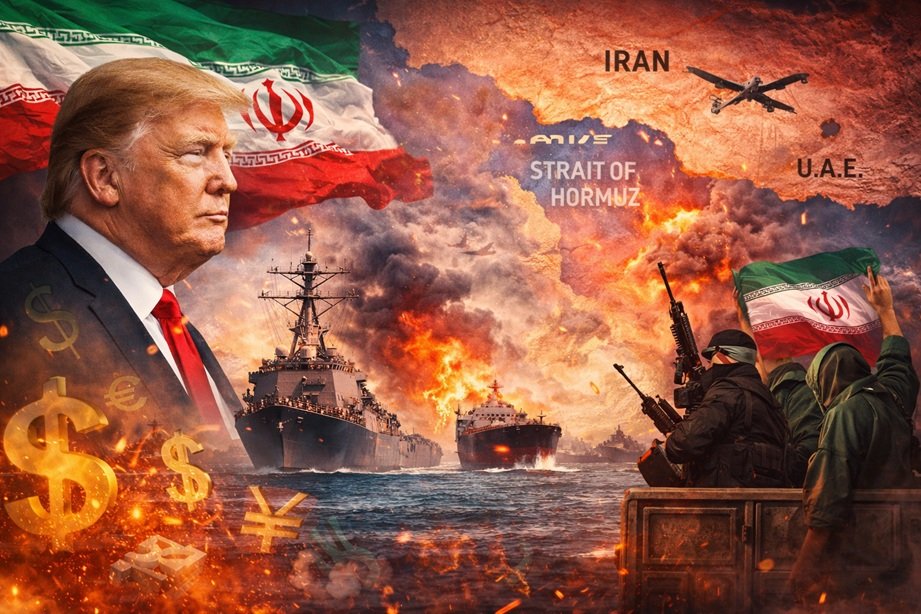

The phrase Trump using blockade Iran deal has quickly become one of the most talked-about geopolitical developments of 2026. What started as a diplomatic deadlock has now escalated into a bold—and risky—strategy involving naval power, economic pressure, and global consequences.
But here’s the real question: Does a blockade actually force a deal, or does it push things closer to a wider conflict?
Let’s break this down in a way that actually makes sense—no jargon overload, no boring textbook tone—just clear, real-world analysis.
What Does “Blockade Strategy” Actually Mean?
At its core, a blockade is simple: restrict access.
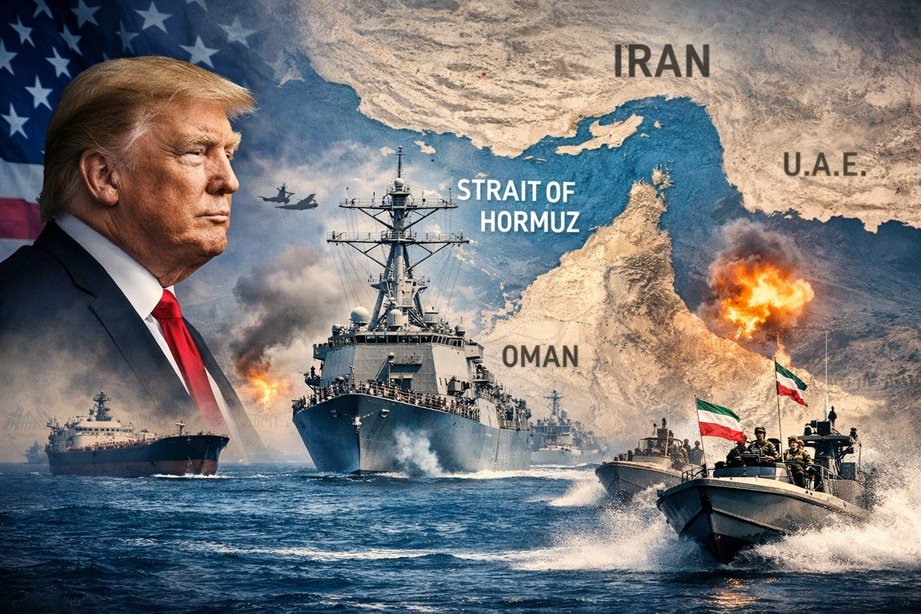
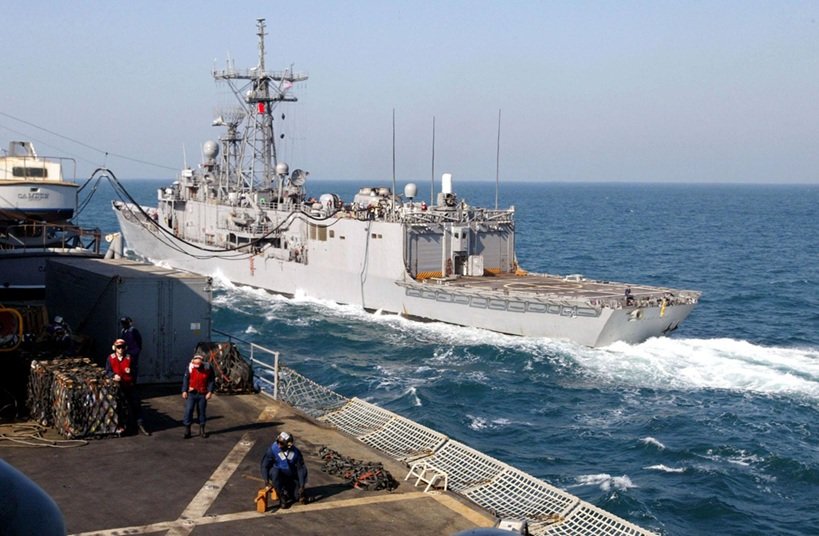
In this case, the United States is targeting ships entering or leaving Iranian ports, especially around the Strait of Hormuz—a narrow but incredibly important waterway through which a huge portion of the world’s oil flows.
This isn’t just a military move. It’s economic pressure in its purest form.
- Cut off oil exports
- Limit revenue streams
- Force political concessions
According to recent reports, Iran could lose hundreds of millions of dollars daily due to restricted oil trade.
So yes, the logic behind Trump using blockade Iran deal is straightforward: apply pressure where it hurts most—the economy.
Table of Contents
- Introduction: Understanding the Strategy
- What Does “Blockade Strategy” Actually Mean?
- Why Trump Chose a Blockade Over Diplomacy
- Economic Pressure: The Real Weapon
- The Global Ripple Effect
- Military Risks: Walking a Thin Line
- How Iran Is Responding
- Can a Blockade Really Force a Deal?
- Comparison with Past US-Iran Strategies
- The Role of Global Powers
- Legal and Ethical Questions
- The Energy Crisis Angle
- Possible Outcomes: What Happens Next?
- Strategic Gamble or Calculated Move?
- Final Conclusion
Why Trump Chose a Blockade Over Diplomacy
Diplomacy didn’t exactly go smoothly.
Negotiations in Pakistan collapsed after long hours of talks failed to produce an agreement.
That’s when things shifted.
Instead of continuing endless negotiations, the strategy pivoted toward coercion. The idea? If Iran won’t agree at the table, maybe it will under pressure.
The Strategic Thinking
- Military action risks escalation
- Sanctions alone weren’t enough
- Blockade sits in the “middle zone”
It’s aggressive—but not outright war.
Experts describe this as a gamble: pressure Iran enough to negotiate, but not so much that it retaliates militarily.
Economic Pressure: The Real Weapon
Let’s be honest—this isn’t about ships. It’s about money.
Iran’s economy relies heavily on oil exports. Disrupt that, and you disrupt everything.
Recent analysis suggests:
- Iran exports millions of barrels daily
- Storage capacity is limited
- Revenue losses escalate quickly
Within weeks, the pressure could start showing serious cracks.
That’s exactly why Trump using blockade Iran deal is centered around economic choke points rather than direct combat.
The Global Ripple Effect
Here’s where things get complicated.
A blockade doesn’t just affect Iran—it shakes the entire world.
Oil Prices
The Strait of Hormuz handles around 20% of global oil supply. Disruptions here? Prices shoot up fast.
Inflation
Higher oil prices = higher transportation costs = higher prices for everything.
Trade Tensions
Countries like China, heavily dependent on Iranian oil, aren’t exactly thrilled.
In fact, some tankers have already turned back due to enforcement actions.
So while the strategy targets Iran, the consequences go global.
Military Risks: Walking a Thin Line
This isn’t a zero-risk strategy.
Iran has already warned that any blockade could be treated as an act of war.
And here’s the tricky part:
- Naval encounters can escalate quickly
- Miscalculations can trigger conflict
- Regional tensions are already high
There have even been warnings about fast-attack boats and potential retaliation scenarios.
So yes, Trump using blockade Iran deal might avoid full-scale war—but it’s definitely playing close to the edge.
How Iran Is Responding
Iran isn’t just sitting back.
Its response strategy includes:
Economic Adaptation
- Using stored oil reserves
- Exploring alternative trade routes
- Leveraging “shadow fleets”
Political Messaging
Iran has labeled the blockade as “piracy” and illegal under international law.
Strategic Threats
There are repeated warnings about disrupting global shipping if pressure continues.
This creates a classic standoff: both sides waiting for the other to blink first.
Can a Blockade Really Force a Deal?
This is the million-dollar question.
History offers mixed answers.
When It Works
- If economic pain is immediate and severe
- If leadership prioritizes stability
When It Fails
- If the country adapts
- If nationalism strengthens resistance
- If external allies step in
Experts suggest Iran may hold out longer than expected due to internal resilience and strategic leverage over shipping routes.
So the success of Trump using blockade Iran deal is far from guaranteed.
Comparison with Past US-Iran Strategies
Let’s rewind a bit.
2015 Nuclear Deal
- Diplomacy-focused
- Multilateral agreement
- Long negotiation timeline
2018 Withdrawal
- Reintroduced sanctions
- Increased tensions
2026 Blockade Strategy
- Direct economic coercion
- Military-backed pressure
- Faster but riskier
Each approach reflects a different philosophy.
This latest move? It’s the most aggressive hybrid yet.
The Role of Global Powers
No major geopolitical story exists in isolation.
China
Iran’s biggest oil buyer. Not happy about disruptions.
Europe
Wants stability, not another energy crisis.
Middle East
Already volatile—this adds fuel to the fire.
Even diplomatic signals, like China limiting support to Iran, are being closely watched.
So while it’s framed as US vs Iran, it’s really a global chessboard.
Legal and Ethical Questions
Blockades aren’t just strategic—they’re controversial.
Under international law, a blockade can be considered an act of war depending on how it’s implemented.
Critics argue:
- It risks civilian economic harm
- It may violate maritime norms
- It escalates conflict unnecessarily
Supporters counter:
- It avoids full-scale war
- It pressures without invasion
- It creates leverage for negotiation
This debate is central to understanding the broader implications of Trump using blockade Iran deal.
The Energy Crisis Angle
Let’s talk real-world impact.
If this continues:
- Fuel prices could rise globally
- Supply chains could slow down
- Emerging economies could take the hardest hit
India, for example, relies heavily on imported oil—meaning any disruption hits consumers directly.
So even if you’re far from the conflict, you’re not really “out of it.”
Possible Outcomes: What Happens Next?
There are a few realistic scenarios:
1. Iran Returns to Negotiations
Economic pressure works, and talks resume.
2. Prolonged Standoff
Neither side backs down, leading to long-term instability.
3. Military Escalation
A single incident spirals into conflict.
4. Global Intervention
Other nations step in to mediate or de-escalate.
Right now, all four are on the table.
Strategic Gamble or Calculated Move?
Here’s the honest take.
The idea behind Trump using blockade Iran deal isn’t random—it’s calculated. But it’s also a gamble.
It assumes:
- Iran will prioritize economic survival
- Global backlash won’t outweigh benefits
- Military escalation can be controlled
That’s a lot of assumptions.
And in geopolitics, assumptions don’t always hold up.
Final Conclusion
The strategy behind Trump using blockade Iran deal ultimately comes down to pressure versus patience. On one side, the United States is betting that economic strain will push Iran back to the negotiating table quickly. On the other, Iran appears determined to withstand the pressure and avoid conceding under force.
So far, the situation remains tense but unresolved. The blockade has clearly disrupted oil flows and sent a strong signal globally, yet it hasn’t delivered an immediate diplomatic breakthrough. Instead, it has created a fragile balance where both sides are testing limits without crossing into full-scale conflict.
The real outcome will depend on how long each side can hold its position. If economic pressure intensifies, negotiations could restart. But if tensions escalate, the risk of a wider conflict cannot be ignored.
In the end, this is not a quick win scenario—it’s a high-stakes geopolitical standoff where every move matters, and the final result is still uncertain.