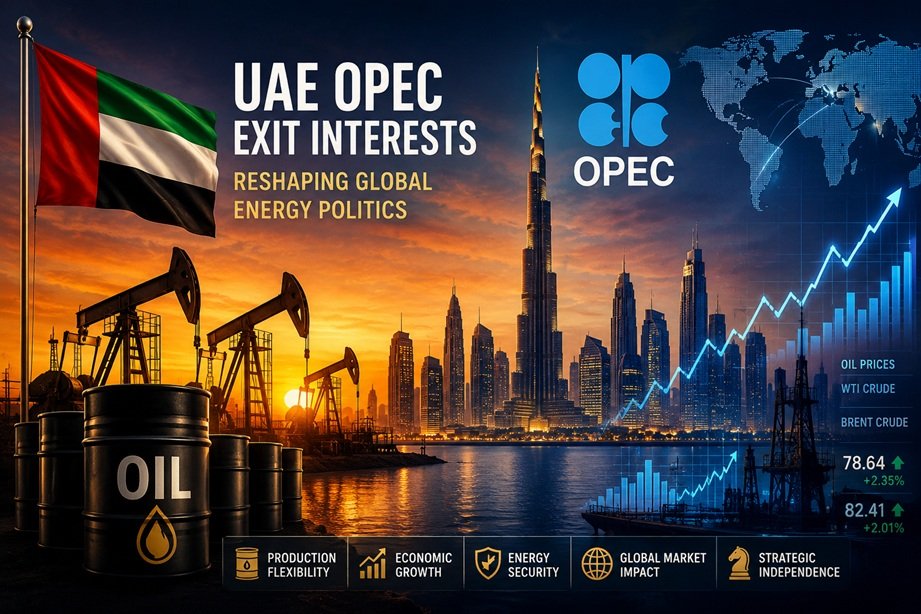

A significant transformation occurred in the global energy sector when discussions about the UAE’s interest in exiting OPEC started to dominate worldwide conversations. For many years, the United Arab Emirates was instrumental in the Organization of the Petroleum Exporting Countries, influencing strategies regarding oil output and pricing. However, recent events suggest a noteworthy shift in their priorities.
Authorities in Abu Dhabi have stated that their exit was a strategic action reflecting national interests and long-range economic planning, as opposed to any political conflicts. Sources indicate that this decision followed a comprehensive assessment of their production policies and future growth objectives.
The implications of this decision extend well beyond the Gulf region. Traders in oil, policymakers, investors, and nations that import oil are attentively monitoring ensuing developments because changes involving a significant producer can have far-reaching effects on global markets.
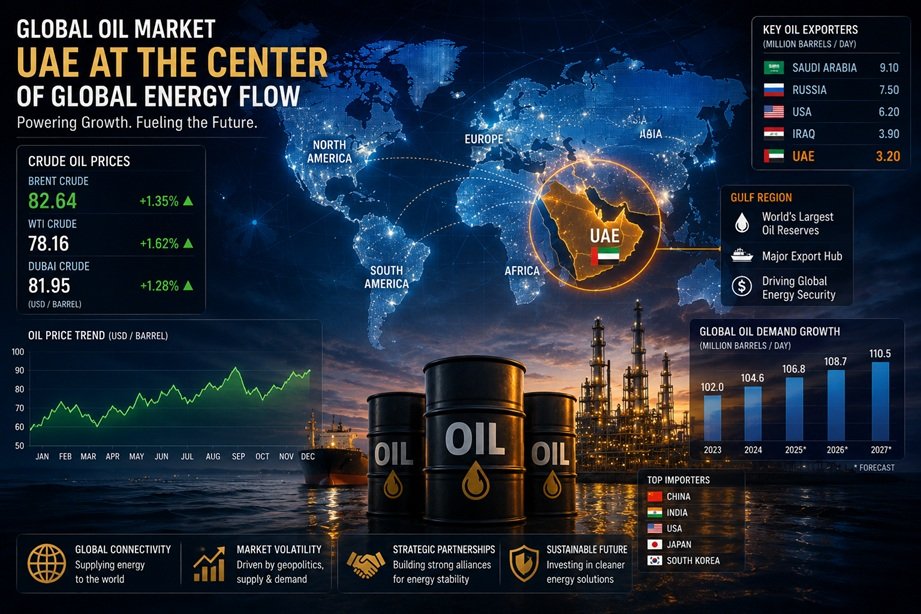
Understanding OPEC and Why Membership Matters
Before delving into the strategy behind the UAE’s OPEC exit interests, it is essential to comprehend OPEC’s role and influence.
The Organization of Petroleum Exporting Countries was established to align the petroleum policies of significant oil-producing nations and to impact global oil supply. Throughout the years, it has transformed into one of the predominant energy organizations worldwide.
OPEC members typically work together to regulate production levels to affect prices and ensure market stability. Being a member provides several advantages:
Key Advantages of OPEC Membership
- Enhanced coordination among oil producers
- Collective influence over market dynamics
- Unified production strategies
- Efforts towards stabilizing prices
- Cooperation on geopolitical strategies
Nevertheless, these advantages might also come with certain drawbacks.
Production limits can sometimes hinder individual nations from increasing their output in line with their domestic aspirations.
For rapidly developing economies, these constraints can become increasingly challenging.
Why the UAE Reached a Turning Point
The United Arab Emirates has evolved beyond being merely an oil exporter. In recent years, it has diversified its economy by focusing on sectors such as tourism, logistics, technology, finance, and global investments.
Non-oil industries now constitute a significant segment of economic endeavors, thereby decreasing reliance on oil revenues. Experts believe this diversification has granted the UAE greater autonomy in chasing independent energy goals.
Therefore, the discourse regarding UAE OPEC exit interests reflects a larger national evolution rather than a mere event within the oil market.
The nation’s strategy increasingly focuses on:
- Domestic industrial development
- Flexibility in production
- Long-term competitiveness
- Increased investment
- Comprehensive energy security strategies
This approach resonates with the broader economic framework of Abu Dhabi.
National Interests Over Group Priorities
Energy Minister Suhail Al Mazrouei characterized the decision as sovereign and strategic, affirming that it was not driven by political reasons. Officials highlighted that this choice arose from national interests and a comprehensive economic vision.
This perspective is crucial for understanding UAE OPEC exit interests.
Nations are increasingly confronted with challenging questions:
- Should national objectives take precedence?
- Or should collaborative organizations continue to dictate production decisions?
The UAE seems to have provided a definitive answer to that inquiry.
For decision-makers in Abu Dhabi, having more control over output could open up avenues that collective agreements often hinder.
Production Ambitions Changed the Equation
One of the most compelling factors influencing this decision is production capacity.
The UAE has made significant investments in expanding and improving its oil infrastructure. ADNOC and other energy organizations have set ambitious expansion goals aimed at greatly enhancing their production capacity. There are indications that they are prepared to increase capacity even further if necessary.
When a country enhances its production capacity, constraints tend to become more evident.
In a coordinated output framework, member nations may not always make full use of their production potential.
This tension seems to be a key factor driving UAE’s interests in leaving OPEC.
Expansion of Capacity Establishes New Priorities
The capability to produce oil provides strategic advantages.
A nation with the ability to generate a larger oil output can:
- Quickly adapt to fluctuations in demand
- Expand its export possibilities
- Gain a larger share of the market
- Enhance flexibility in revenue generation
The desire for expansion naturally leads to a demand for policy autonomy.
For the UAE, the increase in production capacity might make current agreements seem limiting.
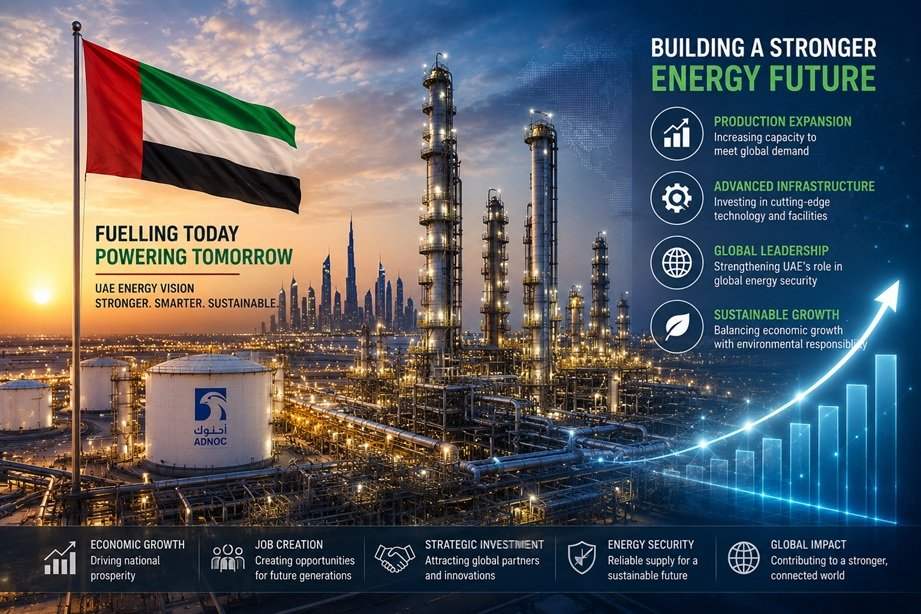
Regional Dynamics Have Also Influenced the Situation
Decisions regarding energy rarely occur in a vacuum.
Ongoing political and economic changes throughout the Gulf are continuously altering alliances and strategic approaches.
Sources suggest that significant divisions are emerging among Gulf nations regarding economic strategies, regional power, and energy policy focus.
Some experts interpret the UAE’s interest in leaving OPEC as part of a wider trend where regional powers seek to adopt more autonomous paths.
The competition now encompasses more than just oil.
Nations are vying for:
- Foreign investments
- Leadership in tourism
- Technological innovation centers
- Attraction of skilled talent
- Financial dominance
Economic competition is increasingly influencing strategic decisions.
What Impacts Global Oil Prices?
This question is of great importance to nearly everyone.
Oil prices influence:
- Transportation expenses
- Airline costs
- Manufacturing expenses
- Inflation rates
- Family budgets
If the UAE increases its production without being constrained by quotas, a surge in supply could impact prices.
Many analysts predict that a rise in Emirati oil output could exert downward pressure on prices over time.
This prospect has amplified discussions regarding UAE’s interests in exiting OPEC.
However, forecasting oil markets is notoriously complex.
Numerous factors affect pricing:
- Conflicts
- Shipping disruptions
- Cycles of demand
- Sanctions
- Global economic growth
Market movements are rarely caused by a single factor.
Consequences for OPEC’s Long-Term Strength
Historically, OPEC’s strength has depended on cohesion.
The larger and more unified the organization, the stronger its impact.
Given that the UAE was a key player within OPEC, its departure is particularly noteworthy. Analysts argue this departure diminishes collective bargaining power.
This reality prompts significant inquiries regarding UAE’s intentions in leaving OPEC and the future of cooperative production arrangements.
Could more countries reconsider their participation in the organization eventually?
Some analysts believe evolving energy dynamics may push nations to focus more on their domestic aims.
Others maintain that OPEC still wields considerable power.
The outcome remains unclear.
Reasons Why India and Asian Buyers Are Paying Attention
This development is highly relevant for major importers.
India is a significant importer of crude oil and has strong energy connections with the UAE.
Sources indicate that increased production flexibility might lead to more advantageous pricing options.
As a result, the implications of the UAE’s departure from OPEC reach far beyond the Gulf region.
Countries throughout Asia are closely observing:
- Reliability of supply
- Shifts in pricing
- Shipping routes
- Future contracts
Maintaining energy security remains a key strategic goal.
Consumers May Experience Indirect Impacts
A common belief is that decisions regarding oil solely influence governmental bodies.
However, the ramifications typically extend to consumers as well.
Fluctuations in crude oil prices can ultimately affect:
- Fuel costs
- Airfare charges
- Transportation expenses
- Imported products
- Trends in inflation
The interconnected nature of the world means energy-related decisions spread rapidly.
The Energy Shift Introduces Additional Complexity
The global landscape is changing fundamentally.
- Renewable energy sources are still on the rise
- Electric vehicle adoption is increasing
- Nations are more frequently discussing carbon emission goals
In this context, the interests surrounding the UAE’s exit from OPEC gain even more significance.
The UAE seems to be managing two realities at once:
It is continuing to invest in oil expansion while also getting ready for long-term economic diversification.
This dual approach exemplifies a practical method.
Instead of completely moving away from hydrocarbons, the nation appears to aim at enhancing value as broader transitions take place.
Importance of Strategic Independence is Rising
A growing number of nations are placing greater value on flexibility.
Economic disruptions, geopolitical instability, and changing trade dynamics prompt governments to maintain more control over domestic resources.
Analysts are increasingly linking the UAE’s OPEC departure interests to wider global movements advocating for strategic independence.
Worldwide examples can be seen, such as:
- Reshoring of supply chains
- Initiatives for domestic manufacturing
- Pursuits of energy independence
- National investment strategies
Countries are increasingly striving for resilience.
The realm of energy policy is no exception.
Investor Responses and Market Sentiment
Market reactions are often driven by perception as much as by reality.
News involving major oil producers tends to create uncertainty.
Investors start raising questions right away:
- Will output increase?
- Will partnerships change?
- Will prices fluctuate?
- Could other producers follow suit?
The rising interest in the UAE’s OPEC exit has sparked many of these conversations.
Financial markets generally dislike unpredictability, especially in the realm of commodities.
Nevertheless, investors typically adjust over time as new trends emerge.
Could Other Nations Follow Similar Directions?
Historical patterns indicate that significant changes can sometimes trigger ripple effects.
When a prominent country alters its course, others may reconsider their existing arrangements.
Nonetheless, each country faces its own unique situation.
The economic framework, fiscal demands, domestic priorities, and geopolitical conditions can vary greatly.
This suggests that the UAE’s OPEC exit interests might be specifically Emirati rather than indicating a global trend.
Yet, observers will keep a close watch.
Conclusion
The narrative surrounding the UAE’s OPEC exit interests extends well beyond mere organizational withdrawal.
It signifies a broader transition towards strategic independence, production adaptability, and economic modernization.
Officials maintain that the decision reflects national priorities rather than political motives, stressing long-term goals.
Whether this choice will ultimately reshape the global energy landscape remains to be seen.
However, it is evident that when a significant oil producer recalibrates its strategy, the consequences ripple far beyond its borders.
Governments, investors, industries, and consumers around the globe will remain attentive to the developments that follow.