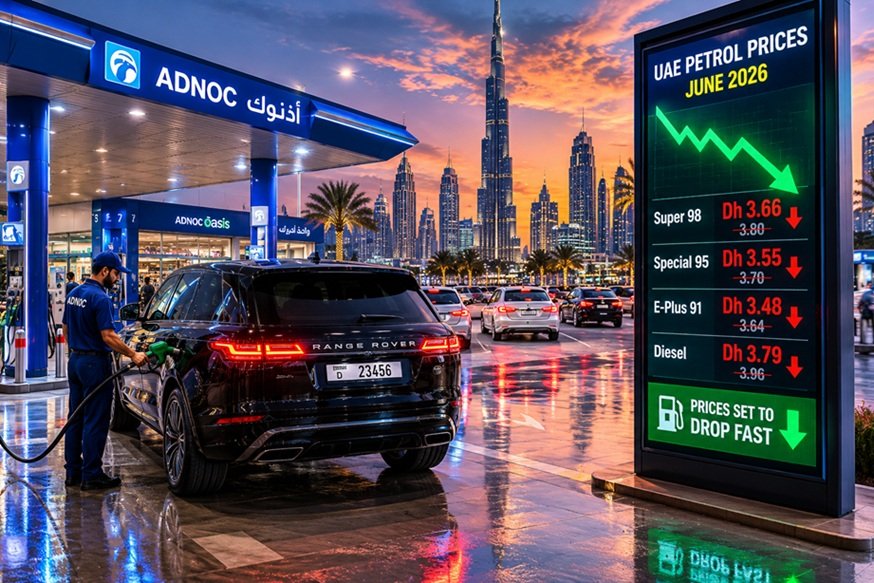

UAE petrol prices June 2026: The Middle Eastern fuel sector is once again receiving significant global focus. Individuals in the UAE are keenly observing whether petrol prices will finally stabilize after enduring months of frustrating hikes. Recent events concerning the United States and Iran have generated renewed optimism that crude oil prices might fall significantly, which could have a direct effect on fuel costs throughout the Emirates.
For an extended period, people in Dubai, Abu Dhabi, Sharjah, and other emirates have faced increasing transportation expenses. From those who own personal vehicles to logistics firms and taxi drivers, nearly everyone has experienced the strain of high fuel prices. Now, as reports hint at potential diplomatic advancements between Washington and Tehran, experts suggest that a swift adjustment in oil markets might arrive sooner than anticipated.
The crucial question remains: will UAE motorists experience some relief in June 2026?
Reasons Behind the Rising Fuel Prices in the UAE
The UAE operates under a system of deregulated fuel pricing. Prices for petrol and diesel are revised monthly in accordance with fluctuations in international crude oil prices, refining costs, transportation rates, and overall global demand.
This indicates that local drivers are significantly affected by events occurring on the international political stage. Whenever global crude prices increase, fuel costs in the UAE generally reflect a similar trend.
This year has been particularly tumultuous due to the conflict with Iran and disruptions in the Strait of Hormuz — one of the crucial maritime routes for oil transportation. Approximately twenty percent of the world’s oil trade transits through this narrow passage, making it exceptionally sensitive to global energy markets.
Oil prices escalated swiftly after tensions intensified in early 2026. Brent crude experienced several surges beyond the $100-per-barrel threshold, raising concerns of a potential global energy crisis.
Consequently, petrol prices across the Emirates consistently rose for several months.
Recent Fuel Price Increases in May 2026
Recent reports show that in May 2026, fuel prices increased markedly in all significant categories:
- Super 98 reached Dh3.66 per litre
- Special 95 rose to Dh3.55
- E-Plus 91 climbed to Dh3.48
These hikes represented some of the steepest monthly increases seen recently.
How US-Iran Negotiations Could Alter the Situation
Energy market traders closely observe political situations due to the substantial connection between oil prices and global stability. Recent news suggests that diplomatic dialogues between the US and Iran might be improving following a lengthy period of uncertainty.
Reports released this week indicated that crude prices decreased sharply as markets reacted favorably to the prospect of peace talks. Brent crude dipped below the $100 per barrel mark amid growing optimism surrounding a possible agreement involving Iran and the reopening of oil transit routes.
This holds major significance for Gulf nations.
If tensions diminish, several outcomes could occur rapidly:
Potential for Increased Oil Supply
Iran is a key oil producer. Any alleviation of sanctions or restoration of shipping routes could boost supply in international markets. An increase in supply typically leads to a reduction in prices.
Possible Decrease in Shipping Expenses
Insurance premiums for tankers in the Gulf region surged significantly during the conflict. Should the region become more stable, transportation costs may decrease, alleviating pressure on fuel prices.
Market Panic May Alleviate
A significant part of the recent increases in oil prices has stemmed from anxiety and unpredictability instead of actual shortages. Once traders restore their confidence, the pace of speculative purchasing usually diminishes.
This mix could lead to a notable decrease in oil prices over the next few weeks.
Is It Possible for Petrol Prices to Fall in June?
There is increasing hope that June could present lower prices than those in May, although analysts remain careful in their assessments.
Several energy experts suggest that crude prices might continue to decline if diplomatic efforts stay positive. News agencies like Reuters and other international sources reported that oil markets responded quickly when indications of progress between the United States and Iran surfaced.
Nevertheless, the situation stays uncertain.
Although crude prices briefly went below $100, the market remains very sensitive. Any escalation in military action, disruption in shipping, or breakdown in negotiations could instantly alter the trend.
That being said, there are factors that may provide some relief for motorists in the UAE:
Crude Prices Have Started to Decrease
Recent trading statistics showed a drop in crude oil exceeding 5% in one session as optimism for de-escalation rose.
Global Markets Are Becoming Steadier
Stock indices and currencies showed positive reactions to the potential decrease in conflict, signaling that investor confidence is improving.
Fuel Surges May Have Reached Their Peak
Some experts now think that the peak of panic buying and supply worries might already be behind the market.
However, no one anticipates fuel prices to suddenly revert to the lower rates seen earlier in the year.
Reasons Why Prices May Not Plummet Completely
While numerous drivers yearn for a significant drop, experts caution that several long-term issues persist.
Concerns in the Strait of Hormuz Persist
Even if talks progress positively, disruptions in the Gulf shipping routes could continue for many months. The CEO of ADNOC recently indicated that full normalization of oil flows through Hormuz might not occur until 2027.
This situation suggests that global supply chains could maintain their vulnerability despite improved diplomatic relations.
Oil Stocks Are Limited
The International Energy Agency and leading analysts have cautioned that global oil stocks are being rapidly drawn down following months of disruptions.
Demand Remains Robust
Summer travel, industrial activity, and air transportation needs continue to sustain crude prices worldwide.
Due to these influences, analysts believe that any potential reduction in fuel prices in the UAE may be limited rather than substantial.
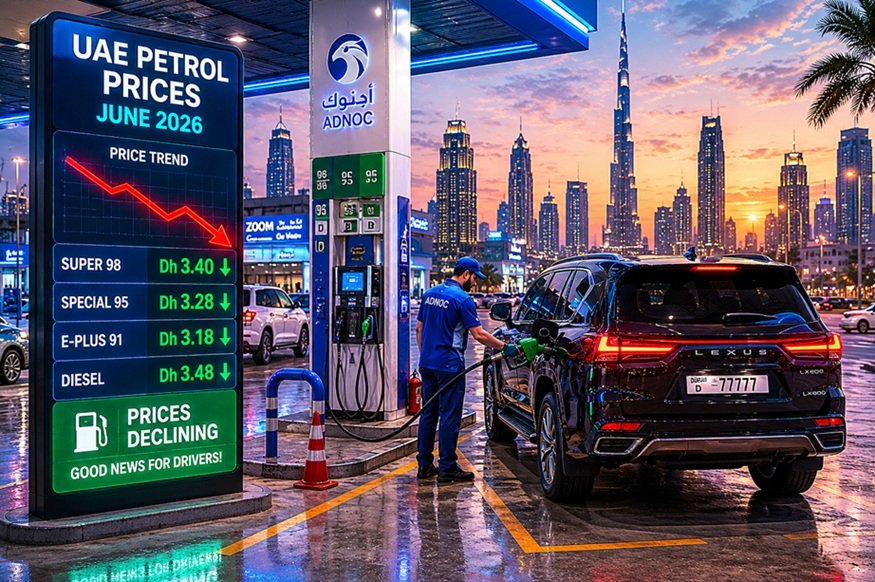
What UAE Motorists Anticipate
Residents throughout the Emirates are currently discussing the potential for reductions in monthly fuel announcements.
Numerous drivers hope that even a slight decrease could alleviate household expenditures, particularly for those commuting long distances on a daily basis between emirates.
Ride-hailing operators and delivery services have been among the most impacted groups. Increased petrol costs directly diminish earnings since transportation expenses rise immediately, while prices for customers often remain unchanged.
Families are also under pressure.
Monthly fuel costs for SUV owners and larger family vehicles have risen significantly compared to early 2026. Many residents are now planning their budgets more carefully regarding transportation.
If fuel rates decrease in June, even marginally, it could enhance consumer confidence and spending sentiments across the nation.
How the UAE Determines Monthly Fuel Prices
In the UAE, the Fuel Price Committee assesses fuel prices each month. This committee establishes retail prices based on several international reference points.
Key Elements Consist Of:
- Overall average prices for crude oil worldwide
- Costs related to refining and operations
- Expenses associated with transportation and logistics
- The global balance of supply and demand
- Geopolitical situations in various regions
Typically, the concluding prices are revealed at the end of every month and take effect on the first day of the subsequent month.
Due to the UAE’s energy trading within a global context, domestic prices swiftly adjust to changes in international circumstances.
This is the reason why geopolitical news from Washington, Tehran, Israel, and the Strait of Hormuz has an immediate impact on drivers in Dubai or Abu Dhabi.
Could Fuel Become More Affordable by Late 2026?
Certain analysts speculate that the latter part of 2026 might witness more stable energy prices, provided diplomatic relations advance.
There are various scenarios that could lead to decreased fuel expenses:
A Formal US-Iran Accord
Should both parties reach a long-term agreement, the crude markets could stabilize significantly.
Enhanced Shipping Access
Reestablishing secure trade routes could alleviate transportation chokepoints.
Increased Global Production
OPEC+ and Gulf nations might boost output if the market conditions stabilize.
Decreased Panic Purchases
Speculative trading in energy might diminish if investors perceive the crisis is concluding.
Nevertheless, professionals warn that oil markets seldom exhibit linear movement. Even favorable trends can undergo abrupt changes.
Effects on Enterprises and the Economy
Fuel pricing impacts much more than only private drivers.
In the UAE, high fuel costs also affect:
- Delivery and logistics service providers
- Food transportation expenses
- Operating costs for airlines
- Pricing in the construction industry
- Taxi and ride-sharing services
- Transportation related to tourism
When fuel prices rise, companies typically transfer increased expenses to their customers.
Consequently, fuel inflation can indirectly cause higher prices for groceries, online delivery services, and even dining out.
A drop in petrol prices could thus promote broader economic stability throughout the Emirates.
What Analysts Forecast for June 2026
Most predictions at present imply one of three potential scenarios:
Scenario 1: Minor Decrease
This is generally regarded as the most probable outcome if diplomatic efforts continue to improve.
Scenario 2: Steady Prices
If oil markets stay unpredictable, officials might keep rates near May figures.
Scenario 3: Renewed Price Surge
Any abrupt military conflicts or shipping interruptions could lead crude prices to rise once more.
Currently, markets seem tentatively optimistic.
Recent reductions in crude oil have shown traders are anticipating lower geopolitical threats, at least for the time being.
How UAE Residents Can Handle Increasing Fuel Prices
Even if there’s a slight price decline, fuel is expected to stay quite costly in comparison to previous months. As a result, numerous drivers are modifying their behaviors to economize.
Some Effective Strategies Include:
- Combining several errands into a single trip
- Employing fuel-efficient driving practices
- Avoiding unnecessary acceleration
- Keeping tyre pressure at the correct level
- Carpooling for daily commutes
- Utilizing public transit when feasible
Interest in electric and hybrid vehicles has surged significantly during the recent fuel hike.
More residents are considering alternatives as long-term fuel volatility persists.

Global Oil Markets Stay Vulnerable
Despite more favorable sentiments, specialists caution that the market remains precarious.
Recent months have demonstrated how swiftly energy prices can soar amid geopolitical conflicts. Oil prices surged quickly following attacks, shipping issues, and escalating tensions in Hormuz earlier this year.
Even at present, analysts continue to caution that the situation could deteriorate again if peace talks fail.
This uncertainty clarifies why investors remain wary despite the recent drops in prices.
Conclusion
The next few weeks will be pivotal for drivers across the Emirates. Indications of diplomatic advancements between the US and Iran have already led to a decline in global oil prices, fostering optimism that fuel expenses in the UAE may finally decrease by June.
While no one can assure significant reductions, existing market patterns indicate that the relentless upward pressure might be finally tapering off.
For individuals who have endured several months of increasing travel costs, even a minor reduction would be a welcomed source of comfort.
The upcoming official fuel report is expected to attract significant attention throughout Dubai, Abu Dhabi, Sharjah, and other regions, as motorists are eager to find out if June will finally present lower petrol prices following one of the most unstable times in recent history.
Current fluctuations in the oil market suggest that negotiations — rather than merely availability — might influence what drivers in the UAE will be charged at fuel stations next month.